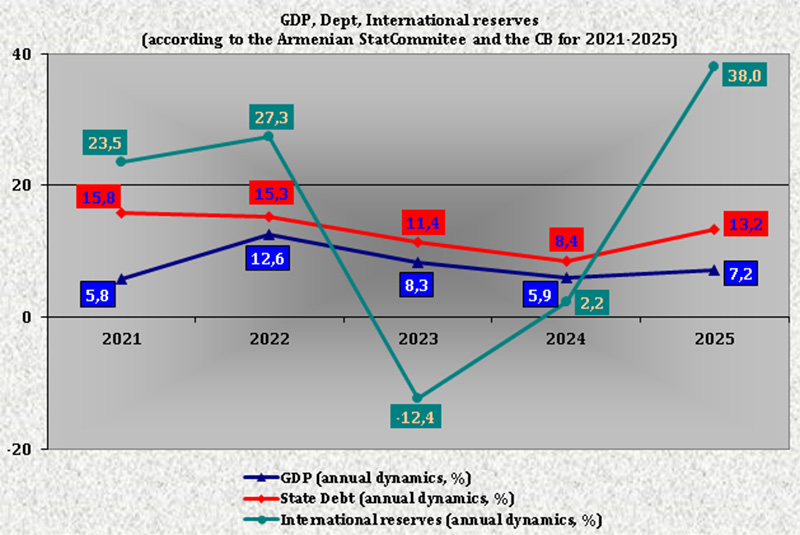


ArmInfo. During the rule of Armenia’s second and third presidents, Robert Kocharyan and Serzh Sargsyan, Armenia’s state debt increased 6.6-fold and 5.8-fold, respectively. Against this background, the opposition’s accusations that the state debt has doubled under the current authorities cannot but raise questions. Prime Minister of the Republic of Armenia Nikol Pashinyan stated this from the rostrum of the National Assembly of the Republic of Armenia on November 20, adding that under the current government the state debt increased 1.7-fold, not twofold.
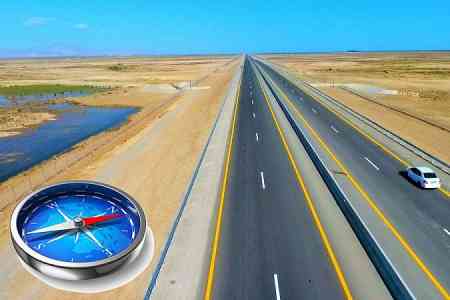
At the same time, as the head of government noted, there was no COVID epidemic during their time, during which the country’s economy was simply brought to a standstill. Pashinyan noted that, unlike the former rulers, the current authorities are, for example, building the "North-South" transport corridor. If this route did not exist, Armenia’s state debt would be at a much lower level. Moreover, the current authorities managed to reduce the amount of the state debt several times. For example, they managed to buy back expensive Eurobonds that had been issued under the former rulers, acquiring less debt. What is interesting, as the prime minister emphasized, is that it was the former authorities who signed the documents on the construction of the "North-South" road. That is, this is their state debt, not to mention the debts of the "Electric Networks of Armenia", about which the opposition prefers to remain silent. This company attracted so many loans that now, in the process of nationalizing the company, we have faced a serious problem. The debt it attracted is so significant that "ENA" practically has no value today, since its liabilities significantly exceed the value of its assets. Moreover, the owners of the networks took out loans from Armenian banks, after which they redirected them to their relatives interest-free." — Pashinyan said.
Earlier, ArmInfo reported that as of July 1, 2026, the state debt was estimated at $14.543 billion. By mid-2026, the per capita debt burden amounted to about $4.7 thousand per resident (an increase of 4.3% over the year compared with $4.5 thousand a year earlier), with $2.4 thousand accounting for domestic debt and $2.3 thousand for external debt. At the same time, a trend toward the predominance of domestic debt over external debt is beginning to emerge (from mid-2025 and throughout 2026, the share of domestic debt exceeded 50%).