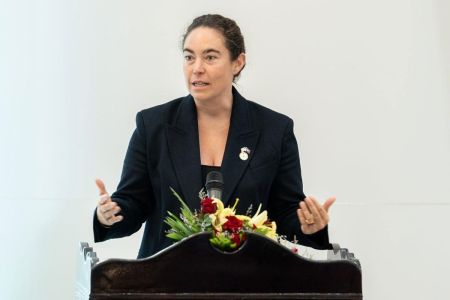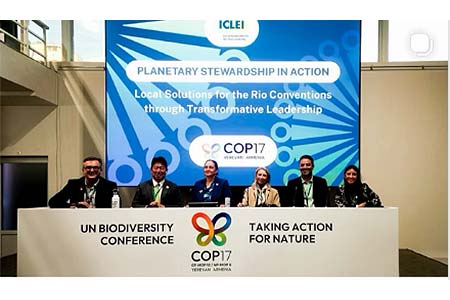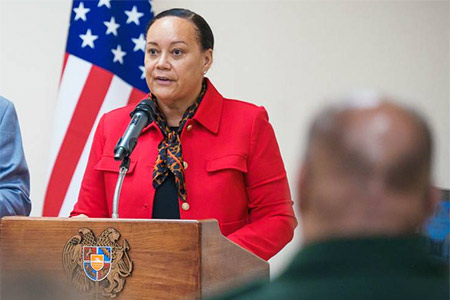



ArmInfo. In 2025, 40.2 billion drams were allocated from the state budget for the development of research and development (R&D), which is approximately 2.8 times higher than the 2018 figure. This was announced by Armenian Minister of Education, Science, Culture, and Sports Zhanna Andreasyan, speaking at the 7th Biodiversity Science and Policy Forum, which is being held as part of the 17th Conference of the Parties to the UN Convention on Biological Diversity (COP17). She also reported that salaries for certified researchers have increased by up to 300%, and approximately 20 billion drams have been allocated for the modernization of scientific infrastructure over five years. According to Andreasyan, approximately 20 grant programs were implemented in Armenia annually, more than 40 scientists from leading international research centers have relocated to the country, and another 60 are remotely managing new research departments at Armenian universities and research organizations. "The computing power of the supercomputer center opened at Yerevan State University can also be used to analyze environmental data and model climate processes," said the head of the Ministry of Education, Science, Culture, and Sports.
According to the minister, environmental research is also included in grant competitions of the Committee on Higher Education and Science, including research support programs aligned with the priorities of the EU's European Green Deal, as well as joint Armenian-German scientific programs.
Summarizing her speech, the Minister of Education, Science, Culture, and Sports emphasized the key role of education and science in preserving biodiversity, noting the importance of studying changes occurring in nature and making decisions based on scientific findings.
It is extremely important for us to have an education and scientific research system that will serve the implementation of the biodiversity and nature conservation agenda. "It is essential that the results of scientific research serve as the basis for the decisions we make," Andreasyan noted.
According to the MESKS, welcoming speeches were also delivered by Astrid Schoemaker, Executive Secretary of the Convention on Biological Diversity, and representatives of UNESCO, the International Union of Biological Sciences, the University of Tokyo, the Humboldt Institute, and the Smithsonian Institution.
According to the MESKS, 17 thematic sessions are planned over the two-day forum, covering the interrelated issues of biodiversity, climate change, natural resource management, food security, and public health.
The discussions will focus on ecosystem management and restoration, biodiversity monitoring, the responsible use of environmental data and artificial intelligence, and the financing of conservation initiatives.
Participants will also discuss mechanisms for translating scientific data into policy decisions, expanding the network of protected areas, international scientific cooperation, and ecosystem restoration after natural disasters and conflicts.