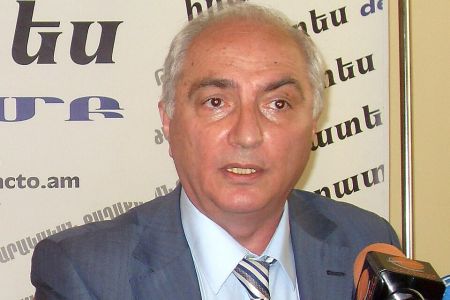


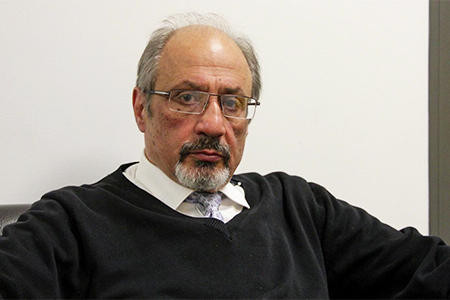
ArmInfo. The Russian proposal to build a new nuclear power plant (NPP) in Armenia is the most technically and economically sound today and for the next five years. Energy expert Ara Marjanyan stated this on October 14 in an interview with an ArmInfo correspondent on the sidelines of the "Atom - Energy of the Future" educational seminar in Yerevan.
According to the expert, from an engineering and economic perspective, Armenia currently needs a new power unit based on a pressurized water reactor (VVER) with an installed capacity of at least 1,000 MW. "I believe the sequential construction of two such power units is appropriate: the first should be commissioned in 2036-2037, the second between 2035 and 2038. "At the same time, as of today and for the next five years, I consider the Russian proposal to be the most mature," Marjanyan emphasized.
He noted that proposals involving the use of small modular reactors are neither justified from an engineering standpoint nor economically viable. He noted, for example, that modular reactors, such as those used on nuclear submarines, are operated for four to five years. "After that, the submarine is taken to dry dock, where very complex nuclear fuel reloading operations are carried out for a year or a year and a half. Therefore, there is currently virtually no experience operating modular nuclear reactors in the civilian energy sector. Consequently, no one can say with certainty what the nuclear fuel reloading cycles will be like or what unforeseen complications might arise in this regard. "Therefore, I don't believe they deserve serious attention," the expert explained.
Russia's choice, Marjanyan noted, seems reasonable for a number of reasons. First of all, according to the expert, there is successful experience accumulated over decades. "Furthermore, in the field of nuclear energy development, Armenia and Russia have bilingual engineering schools. Neither Russia nor Armenia share common technological barriers, language barriers, or cultural limitations. Most importantly, Russian technologies are justified from both an engineering and economic perspective. They will ensure reliable nuclear power generation in Armenia and will help preserve one of the country's core national security principles: Armenia must have continuously operating nuclear power generation," the energy expert noted.
Meanwhile, according to Marjanyan, the risks of small modular reactors lie in the fact that there is currently insufficient operating experience with such nuclear power plants. "There are only a few reactors installed in Russia and China, and their operating experience is still limited. Time will tell how successful the modular nuclear reactor development programs in France, the USA, Canada, the UK, and other countries will be. At the same time, I believe that choosing the Russian proposal will provide Armenia with a long-term strategic perspective in relations with Russia," the expert concluded.
As a reminder, Armenian Prime Minister Nikol Pashinyan previously stated that there are opportunities to extend the service life of Unit 2 of the Armenian Nuclear Power Plant for another 10 years after 2036. He noted that the plant is currently in the process of extending the service life of Unit 2 until 2036. Taking into account the additional 10 years, the unit will be able to operate until 2046. During this period, a decision on a new plant should be made. At the same time, nuclear reactor models proposed by Russia, the United States, France, China, and South Korea are being studied. "We are conducting transparent negotiations with all partners. Our decision, which will be strategic in nature, must be based on the most advantageous offer that meets the interests of the republic," the head of government said.
He emphasized the importance of conducting research on the international nuclear technology market. Pashinyan recalled that the current tariff for electricity generated at the ANPP is the lowest in the country. However, as the prime minister noted, today the world's fuel reserves for nuclear power plants will last for 70 years. For this reason, it is crucial to know how much 1 kWh of electricity will cost in 40 years. This raises the question of economic feasibility and the potential for recouping investments. However, as the prime minister noted, there is already experience in re-enriching used fuel. In any case, Pashinyan emphasized, the issue must be about the price.
It should be noted that since May of this year, the Armenian Nuclear Power Plant has been shut down for a five-month scheduled maintenance. During this period, the main work on the second life extension program for Unit 2 of the Armenian Nuclear Power Plant was completed. $165 million saved from the first extension program was allocated to this task. The country's authorities previously announced the adoption of a conceptual decision to build a nuclear power plant with small modular reactors.