

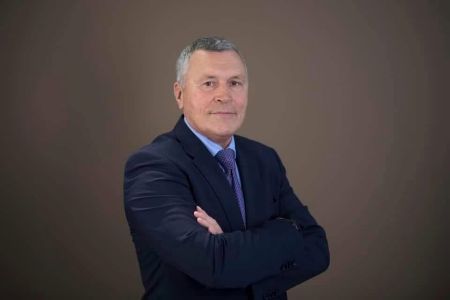
ArmInfo. Over the past six years, GPM Gold has faced significant operational and organizational challenges. The company fundamentally changed its approach to developing the Sotk deposit, transitioning to underground mining, restructuring its production processes, and strengthening its focus on safety. Today, the Sotk mine is operating at its designed capacity, while the Ararat Gold Recovery Plant processes ore from the Sotk and Meghradzor deposits. We spoke with Anatoly Gogotin, General Director of GPM Gold, about how the company navigated this challenging period, the priorities for the Ararat Gold Recovery Plant, and the strategic areas that will shape GPM Gold’s next stage of development.
Mr Gogotin, Armenian Mining and Metallurgy Association is celebrating its 20th anniversary. What would you like to wish the Association on this important milestone?
First and foremost, I would like to sincerely congratulate the Armenian Mining and Metallurgy Association on its 20th anniversary and thank its leadership and team for their longstanding work in support of the industry.
Over the past two decades, the Association has established itself as an important platform for professional dialogue, industry cooperation, and constructive engagement between business and government. For a strategically important sector such as mining and metallurgy, a strong and professional industry association plays a particularly important role.
I wish the Association continued growth, new initiatives, constructive cooperation with government institutions, and every success in advancing Armenia’s mining and metallurgical industry.
The past six years have been challenging for GPM Gold. How would you describe this period?
It was a period of significant challenges. We operated in a constantly changing environment, faced both operational and organizational difficulties, and had to make decisions that would have a lasting impact on the company’s future.
The most important achievement, in my view, is that we managed to preserve both our production assets and our team while making the changes necessary to transform our production system.
The challenges we faced also gave us an opportunity to reassess the way we operate, rethink a number of our approaches, and build a stronger foundation for more stable and sustainable operations.
One of the most important decisions was the transition of the Sotk deposit to underground mining. How is the mine performing today, and what did it take to implement this project?
Since 2020, operations at the Sotk deposit had been disrupted. We therefore needed to find a solution that would provide a safe and sustainable basis for long-term production.
In 2021, we made the decision to transition to underground mining. This was a major undertaking that required a comprehensive transformation of our production system—from infrastructure and technical solutions to workforce organization and specialist training.
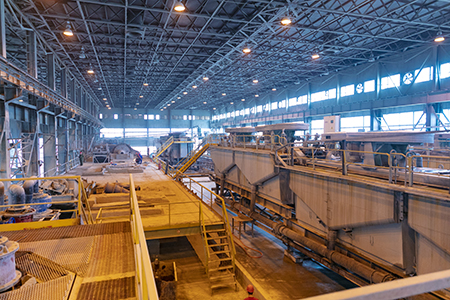 We placed particular emphasis on adapting the existing infrastructure and preparing our employees for the new operating environment. Underground mining requires specialized expertise and, above all, a rigorous approach to safety. We therefore developed and implemented a dedicated technical safety policy and strengthened our safety practices accordingly.
Today, the Sotk mine is operating at its designed capacity of approximately 400,000 tonnes of ore per year. This is an important milestone for us and demonstrates that the new mining approach has enabled us to restore stable operations.
What is the current status of the Ararat Gold Recovery Plant, and what are its priorities for the future?
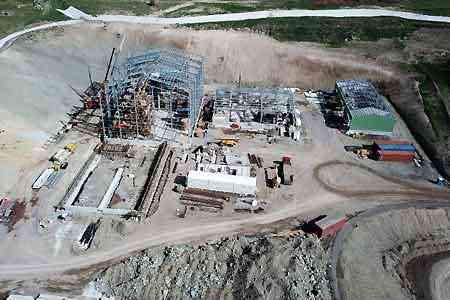
The Ararat Gold Recovery Plant remains a key link in our overall production chain. At present, the plant processes ore from both the Sotk and Meghradzor deposits.
At the same time, we are exploring ways to make greater use of the plant’s existing capacity. In particular, we are assessing potential cooperation with smaller deposits that could provide additional volumes of ore for processing.
We are also continuing to develop our tailings reprocessing project at the Ararat Gold Recovery Plant, including the preparation of the required environmental impact assessment documentation.
We see this project as having both economic and environmental value. On the one hand, it could allow us to recover additional resources; on the other, it offers an opportunity to reduce the environmental footprint associated with existing tailings.
GPM Gold operates in the Gegharkunik and Ararat regions and is one of the major employers in these areas. How does the company approach its social responsibility today?
Social responsibility is an integral part of our business. We understand that our operations have a direct impact on the communities where we work. For many local residents, our company provides employment and a stable source of income.
We fulfill all statutory obligations, make local payments to communities, and implement the social commitments stipulated by our license agreements. However, we believe that responsible business practices should go beyond mandatory payments.
That is why we place particular emphasis on projects that deliver a tangible, long-term benefit to local communities.
For example, we participate in community subsidy programs aimed at developing essential infrastructure. These include projects related to irrigation and drinking-water systems, gasification, the renovation of kindergartens and cultural centers, as well as the improvement of parks and public spaces.
Our objective is to support projects that genuinely improve people’s quality of life while creating opportunities for communities to develop further.
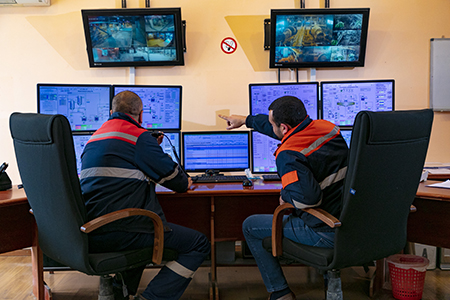 At the same time, we believe our most important social contribution remains the creation of stable jobs, the development of our employees’ professional skills, and maintaining a responsible and constructive presence in the regions where we operate.
Can we now say that the period of turbulence is behind the company and that GPM Gold has entered a new stage of development?
I would say that we have overcome the most challenging stage and now have a solid foundation for stable operations and further growth.
Over the past six years, we have transformed our production strategy, restructured our operating processes, invested in workforce development, and introduced new approaches to safety.
Today, the Sotk mine is operating at its designed capacity, while the Ararat Gold Recovery Plant continues to process ore from the Sotk and Meghradzor deposits. At the same time, we are actively exploring opportunities to increase the plant’s utilization and develop new projects.
The next stage of our development will focus on improving operational efficiency, using resources responsibly and efficiently, strengthening our human capital, and pursuing new areas of growth.
I am confident that GPM Gold has strong potential for further development. The key to that potential is our people—the professional and experienced team that successfully navigated a very difficult period and played a crucial role in restoring the company’s operational stability.
Today, we look to the future with confidence. We are ready to continue developing the company while contributing to the sustainable development of the regions where we operate and to the long-term growth of Armenia’s mining and metallurgical industry as a whole.