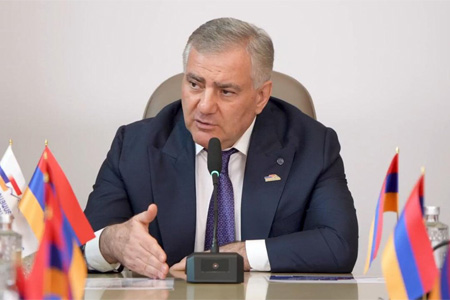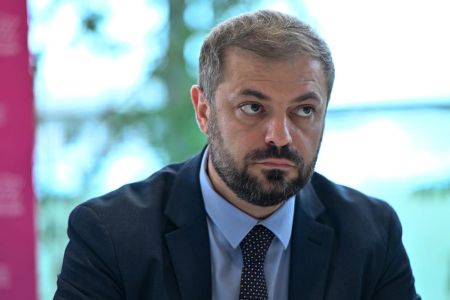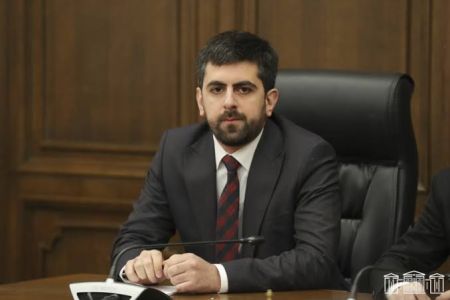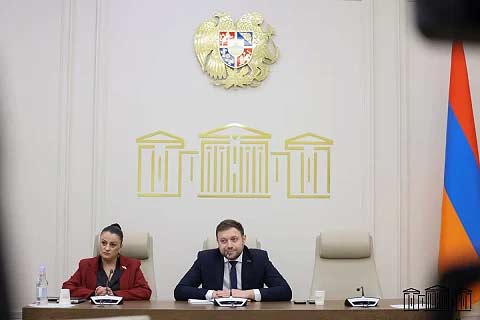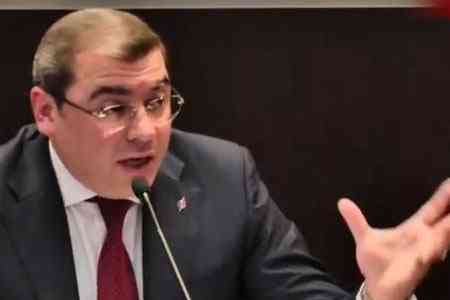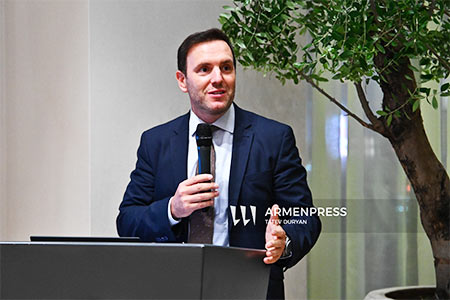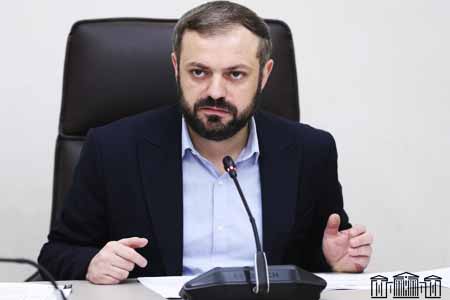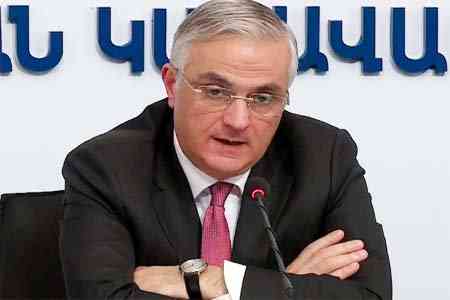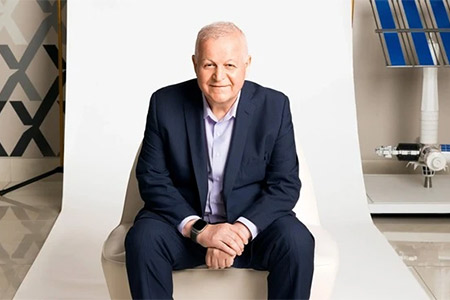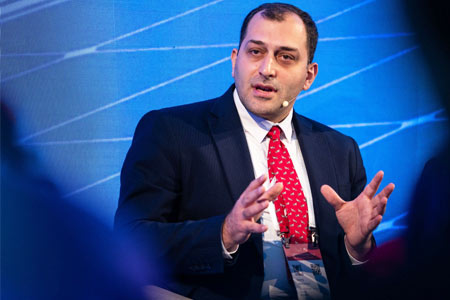


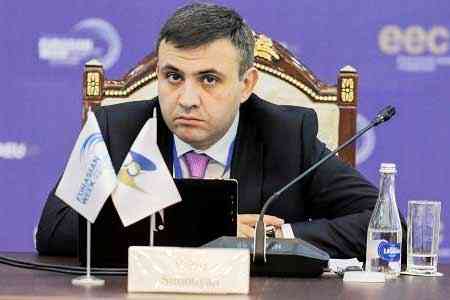
ArmInfo. Varos Simonyan, who oversees certification at the Eurasian Economic Commission (EEC) and serves as minister for internal markets, informatization, and information and communication technologies, may have influenced the effective disruption of the deadlines for implementing the Integrated Information System (IIS) — a unified digital service for services within the framework of the EAEU. This is reported by «Izvestia» in an extensive article titled «Gray Coordinator: How an EEC Minister from Armenia May Have Arranged the Certification of Counterfeit Supplies to Russia».
The article says that goods that have not passed quality control are reaching Russian stores and marketplaces under the protection of high-ranking EAEU officials, «Izvestia» has found. According to the publication’s sources, they are acting in the interests of dozens of laboratories that issue documents allegedly confirming product quality without conducting any tests or research. Criminal cases have already been opened over the issuance of 15,000 such certificates by organizations from Armenia and Kyrgyzstan. According to «Izvestia», EEC Minister for Internal Markets Varos Simonyan may be behind the lobbying of the interests of such entities. He has already been publicly accused of effectively sabotaging the full-scale implementation of the EAEU Integrated Information System, aimed at combating counterfeit goods.
Citing an unnamed source close to the EAK, «it appears that the issuance of gray certificates was put on a production-line basis in Armenia back when Varos Simonyan worked at the republic’s Ministry of Economy (he served as deputy minister from 2019 to 2021. — «Izvestia»). Before moving to the EEC, he oversaw the activities of Armenia’s National Accreditation Body (ARMNAB),» the «Izvestia» source said. The sale of EAEU certificates and declarations of conformity to Russian customers in Armenia has effectively turned into a well-established business. A document issued by an accredited Armenian certification body is valid throughout the union, and therefore makes it possible to legally import and sell goods in Russia. At the same time, for Russian customers Armenian certificates are generally cheaper than Russian ones. Various platforms offer product certification services in Armenia from 2,000 rubles «turnkey». The actual testing, however, may often not be conducted at all.
If the Armenian regulator suspends or terminates the accreditation certificate of one body, another appears almost immediately in its place: with a new name and a new legal entity, but with the same executives — «Izvestia» managed to trace several such chains. Several certification bodies may be registered to one person (a certain Karen Tumagyan – Ed.). Such backup entities make it possible to continue operating even if one of the bodies has its accreditation revoked.
However, these claims against Simonyan were also made publicly. In 2022, State Duma deputy Anton Tkachev, a member of the Committee on Information Policy, Information Technologies and Communications, wrote on social media: «Suddenly <…> Varos Simonyan decided for some reason to change the operating scheme of the EEC’s subordinate IT department, specifically the mechanism for procurement and tenders with contractors. These decisions are causing serious concern among many EEC employees and lawyers, as they could lead to new unjustified expenses and also postpone the full-scale launch of the EAEU IIS for an indefinite period.»
Essentially, the delay in implementing the IIS is one of the factors benefiting unscrupulous players in the certification market.
"Moreover, as an EEC minister, Simonyan is opposed to stripping laboratories caught engaging in fraud of their accreditation, despite the thousands of false certificates they have issued. All this may become the subject of a serious investigation, including a criminal one, into the EEC minister and the removal of his immunity," believes an «Izvestia» source close to the EEC’s activities.
According to the «Treaty on the Eurasian Economic Union», an EAEU official may be deprived of immunity if there are claims related to professional activities exceeding the scope of his authority. In this case, these could be criminal cases involving laboratories whose interests Varos Simonyan may be promoting, the «Izvestia» source noted.
"If it is proven that decisions were deliberately made in the interests of specific commercial entities, for example, intermediaries were created, control mechanisms were blocked, or remuneration was received for this, then one can speak of a full criminal-law investigation," Alexey Gavrishev, attorney and managing partner at AVG Legal, commented to «Izvestia» on the situation.
According to him, as an EEC minister, Simonyan does indeed have immunity from criminal prosecution. However, it may be lifted by a decision of the Supreme Eurasian Economic Council if there is real evidence of the official’s involvement in a crime.
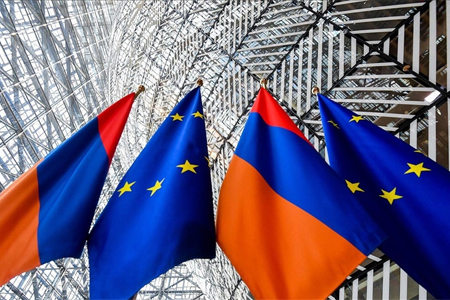
Meanwhile, «Izvestia» sources discerned a geopolitical context in Simonyan’s conduct. As the article says, a situation is emerging in which Armenia is simultaneously creating a common certification system with the EU while sabotaging its implementation in the EAEU. Varos Simonyan may well be an instrument of this policy. From 2005 to 2011, he was responsible for cooperation specifically with the EU in various positions at Armenia’s Ministry of Economy. From 2011 to 2019, he worked first as the republic’s trade representative and then as its trade attaché to the EU. In the West, he also obtained a second higher education degree at the University of Bradford in the United Kingdom, which specializes in global conflicts.
Overall, the priority given to work with the EU fits into the general policy of the country’s current authorities, «Izvestia» concludes.