


ArmInfo. Expenditures aimed at safeguarding the interests of the Republic of Armenia in international courts and ensuring the enforcement of adopted rulings and decisions have increased significantly. This is according to a report by the Luys Foundation, which analyzed the execution report of the state budget of the Republic of Armenia for the first half of 2026.
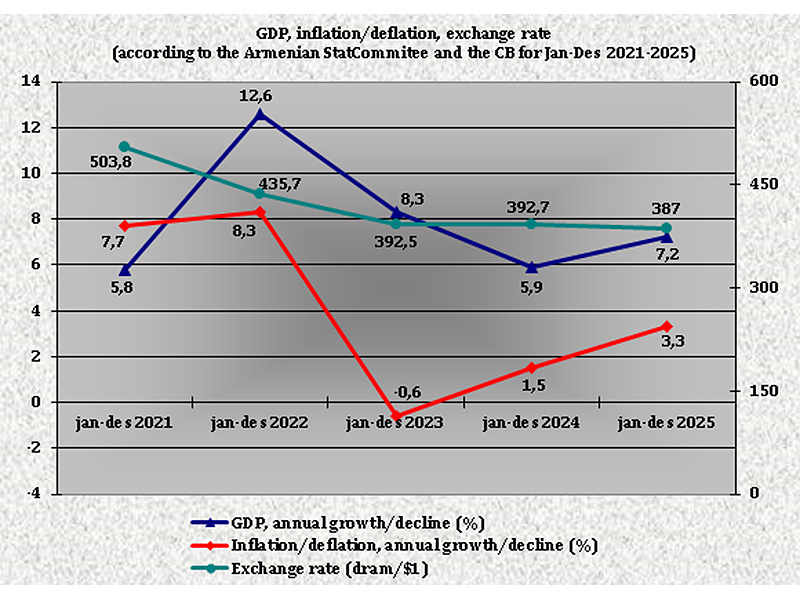
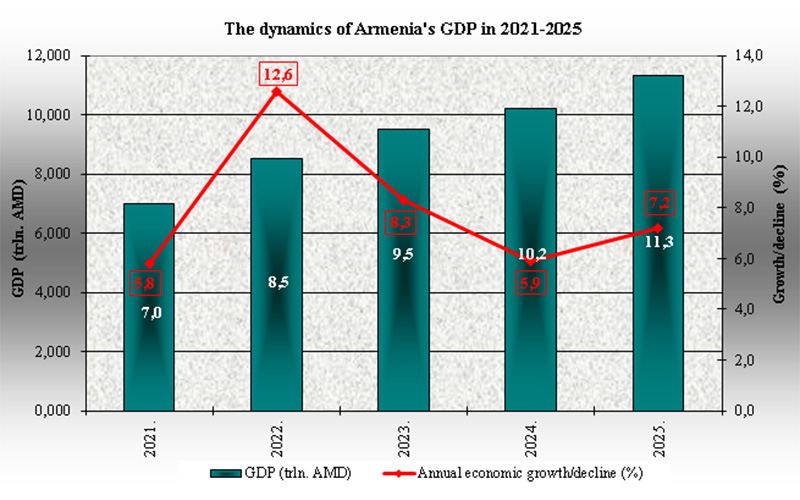
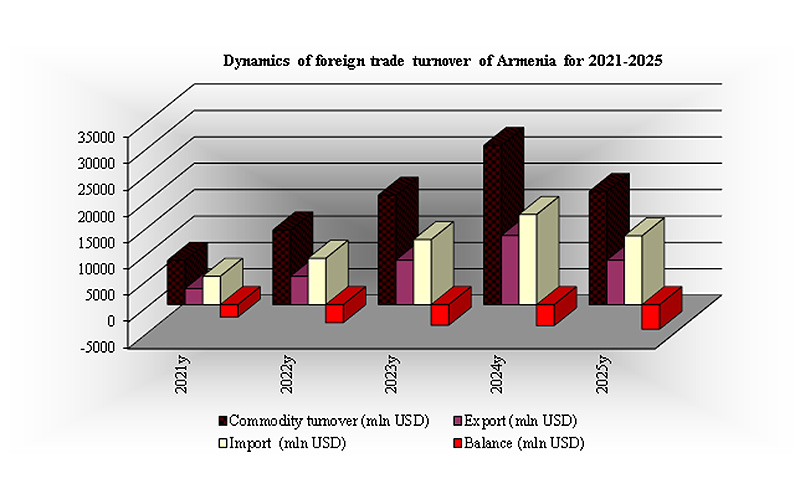
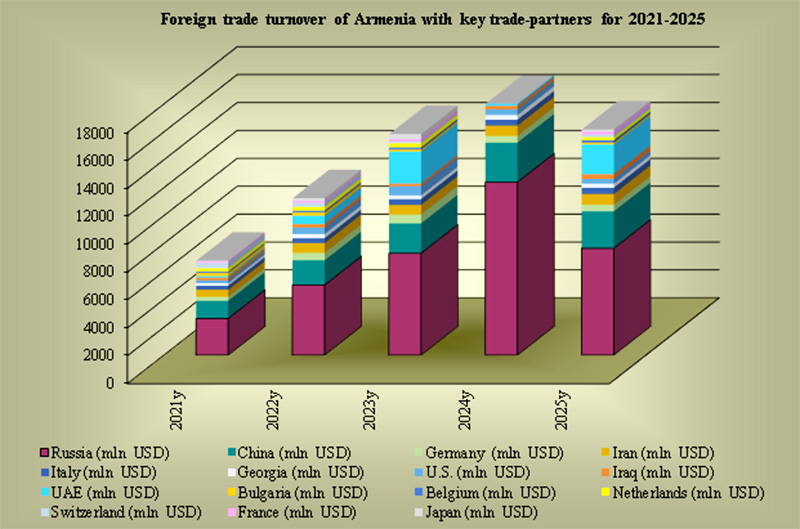
The Foundation's statement, received by ArmInfo, notes that Armenia's economic activity grew by 7.9% in the first half of 2026, but the structure of the growth raises concerns: the main drivers of economic activity were the services sector, industry, and construction, while agriculture recorded an 11.9% decline. "The growth rate of the trade sector is extremely low and gradually slowing. In the reporting period, it amounted to 0.9%, contributing only 0.1 percentage points to economic growth. The development of foreign trade further increases concerns about the stability of economic growth. In the first half of the year, exports in dollar terms decreased by 6.7%, imports increased by 4%, and real import volumes declined by 10.3%. As a result, the negative foreign trade balance worsened by 21.6%," the analytical report states.
At the same time, Luys noted that trade turnover with Armenia's largest trading partner, the Russian Federation, decreased by 20.9%. Both imports and exports declined. Moreover, the dynamics of foreign trade could deteriorate further under the restrictions imposed by the Russian Federation. "High figures were recorded for Armenia's state budget revenues. In the first half of the year, actual revenues amounted to 1,643.2 billion drams, 14.7% higher than in the same period last year, while the plan fulfillment under the revised program was 106.0%. However, high revenue figures alone cannot indicate the sufficient effectiveness of fiscal policy, as their overfulfillment occurred simultaneously with a significant lag in government expenditures," the analysis continues.
The fund noted that the efficiency of state budget expenditures remains one of the most problematic areas. It is noted that in the first half of the year, the fulfillment of total expenditures under the established program was only 83.2%. The shortfall amounted to 317.4 billion drams. A significant portion of the shortfall is attributed to programs implemented under the jurisdiction of four ministries: the Ministry of Territorial Administration and Infrastructure, the Ministry of Labor and Social Affairs, the Ministry of Education, Science, Culture and Sports, and the Ministry of Defense: 59.5 billion drams, 58.9 billion drams, 56.2 billion drams, and 42.2 billion drams, respectively.
"Very low capital expenditure efficiency was recorded only 56.4%. Moreover, capital expenditures also significantly decreased compared to the same period last year by 28.3%. The low efficiency of a number of strategically important programs is a serious concern, and this is not simply due to random or technical deviations in individual programs, but rather points to systemic problems in the effectiveness of budget planning, implementation, and program management. It turns out that the state plans expenditures but fails to ensure their full and timely execution, limiting the impact of fiscal policy on economic growth, infrastructure development, and the implementation of stated public policy priorities," the fund further noted. Luys emphasized that, given the serious ineffectiveness of the aforementioned strategic programs, it is extremely alarming that, compared to the same period last year, expenditures under the program "Representation and protection of the interests of the Republic of Armenia in international courts, international arbitration tribunals and other international bodies, ensuring the execution of their decisions" have sharply increased by 41.9% (reaching 2.7 billion drams, with a level of implementation of 91.4%). "The main reason for this unprecedented growth is likely the recent large-scale government crackdown on companies associated with several prominent businessmen with opposition views. The overfulfillment of budget revenues and underfulfillment of expenditures resulted in a significant surplus instead of the projected deficit. Instead of a deficit of 342.4 billion drams envisaged in the revised program for the first half of 2026, a surplus of 67.3 billion drams was actually recorded, meaning budget execution deviated from the plan by approximately 409.7 billion drams," the Foundation stated.
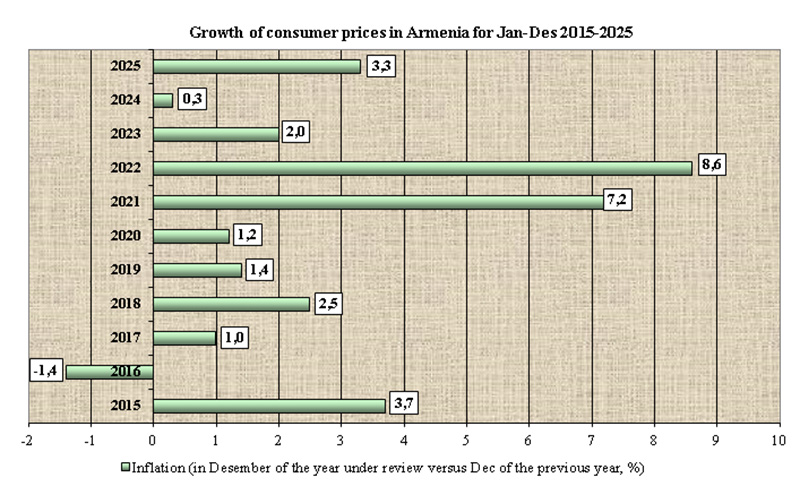
Luys also noted that, although the budget was in surplus for all six months of the first half of the year, the previously planned deficit increased even further as a result of revisions throughout the year, and actual expenditures were even less than the approved budget figure by 253.8 billion drams. "According to the report on the execution of the state budget of the Republic of Armenia in the first half of 2026, along with high economic growth and overfulfillment of budget revenues, significant underfulfillment of public expenditures and significant deviations from the budget were recorded. The structure of economic growth, the deterioration of the foreign trade balance, persistent inflationary pressure, declining capital expenditures, the low effectiveness of strategic programs, and the huge deviation of the actual budget balance from the plan indicate that the main intractable problem remains not so much the availability of resources as ensuring the effectiveness of public economic policy and management.
Without significant improvements in this area, the positive indicators of high economic growth and budget revenues cannot, in themselves, translate into qualitative progress in sustainable economic development," the Foundation concluded.