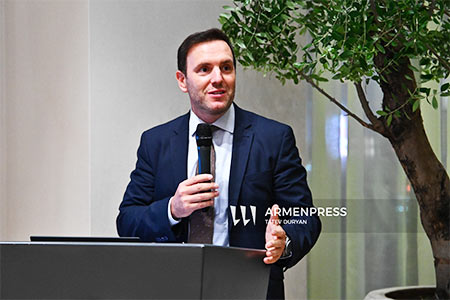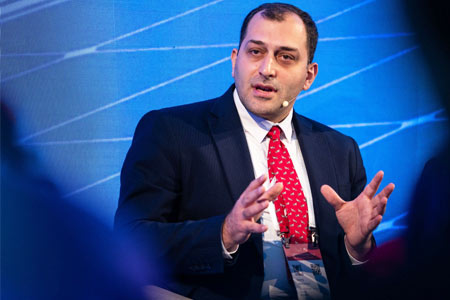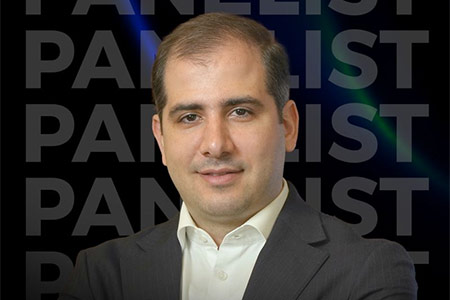


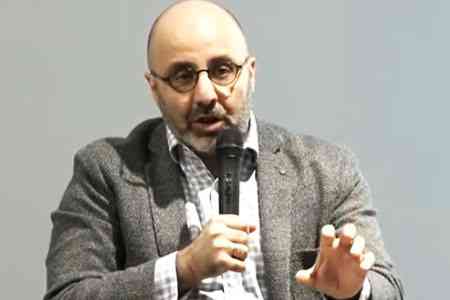
ArmInfo. Armenia currently exhibits the highest level of societal readiness for demographic changes among countries in the region, including Turkey, Iran, Georgia, and Azerbaijan. This was stated by Tigran Jrbashyan, Director of Management Consulting Services at Ameriabank, on June 26 in Almaty during a session at the EDB (Eurasian Development Bank) Annual Meeting and Business Forum, which marked the bank's 20th anniversary.
Touching on Armenia's desire to overcome the issue of policy coherence by linking its 2024-2040 demographic strategy with five other key sectoral strategies—employment, migration, social housing, and integrated social services—Jrbashyan noted that today, virtually all politicians—both in the EDB countries and globally—are talking about a people-centered approach and a people-oriented public policy.
He noted that while "human-centric" policy is a common theme globally and among EDB member states, it requires a deep understanding of demography to be effectively implemented. "We began developing the Demographic Strategy in 2021. It took nearly two years of rigorous analytical work to understand the underlying causes of demographic processes and population behaviors," Jrbashyan explained. "We analyzed how people respond to various changes—from industrialization and urbanization to shifts in food security, healthcare, and other areas.. This allowed us to gain a much deeper understanding of the processes of population change and structure," he emphasized.
Jrbashyan highlighted the use of advanced methodologies, most notably the National Transfer Accounts (NTA) system. He expressed regret that while this tool is recognized globally, it is rarely utilized directly in the design of public policy. "Its essence lies in analyzing the system of national accounts by gender and age. This allows us to see, for example, how spending on healthcare, education, and other types of consumption is distributed, and to understand how demographic structure influences the economy. In my opinion, this is one of the most undervalued tools in public policy from a demographic perspective. This was the first study we conducted," he noted.
According to him, their second study, even more modern and innovative, was the National Time Transfer Accounts, based on a time-use survey. Jrbashyan added that the study was completed this year and noted that Armenia is among the very few countries in the world that have fully implemented this international methodology.
The bank's representative emphasized emphasized that the National Time Transfer Accounts research is critical for assessing the volume of unpaid labor. This is particularly significant regarding gender inequality, as women perform the vast majority of this work, which—despite being unpaid—creates substantial real economic value. " "To give you an idea of the scale: in Armenia, the so-called 'care economy' is effectively one of the largest segments of the country's economy," Jrbashyan noted. "Unfortunately, I am not certain that there is a full understanding of the scale of this sector in Central Asian countries or other EDB member states. Its volume is truly impressive, and it is an issue that requires significantly more attention.
As for future work, our countries are facing two fundamentally different demographic trends. On the one hand, there are aging societies – Russia, Armenia, and, to a certain extent, Kazakhstan and Turkmenistan. On the other hand, there are countries currently experiencing a so-called demographic dividend, primarily Tajikistan and Uzbekistan." He argued that most international organizations, including the EDB, have yet to adequately differentiate their programs and investment policies to address these diverging realities. According to Jrbashyan, because these societies possess different population behavioral models, state policies must be crafted in fundamentally different ways. He stressed the urgent need to integrate granular demographic data into the policy-making process for both governments and international partners.
To clarify, from an investment perspective, how other EDB member states, as well as countries outside the Bank, can use Armenia's integrated strategic architecture to more effectively plan long-term investments, including in human capital, Jrbashyan touched on Armenia's current stage following the adoption of its Demographic Strategy in 2024.
He noted that the government began implementing key elements of the strategy even before its formal approval. "Today, we can say that among the countries in our region—I'm referring to Turkey, Iran, Georgia, and Azerbaijan—Armenia already exhibits the highest level of societal readiness for demographic change. This is one of the signs that society is ready to respond if the state implements the right policies. The second important point is that the strategy is built around four key areas. In my opinion, these four areas should be considered when developing any demographic strategy. The first area is related to family and fertility—family support, childbirth, and childcare. The second area, which many countries have not yet given sufficient attention, is premature mortality and the early loss of human capital due to various health problems, road accidents, and psychological and mental disorders," he stated. He believes this component is undervalued, as it is important not only to ensure the creation of new human capital but also to maintain people's health throughout their lives.
"The third area is active longevity." Jrbashyan emphasized that increased life expectancy does not equate to a withdrawal from economic contribution. For aging societies like Armenia, Russia, and Belarus, fostering the active participation of the elderly in economic and public life is essential to maximizing the efficiency of the available human capital. While this may be less urgent for younger nations, it remains a critical priority for those facing demographic aging. The final pillar addresses the multifaceted impact of immigration, emigration, and shifting migration flows. Jrbashyan noted that managing these movements is fundamental to the long-term stability and development of human capital in the region.
It should be noted that Armenia's population will reach 3.097 million by 2026, an increase of 0.7%, or 20.8 thousand people, compared to 2025, according to data from the Statistical Committee of the Republic of Armenia. Yerevan's population increased slightly by 0.6% over the reporting year, reaching 1.148 million. This means the capital accounts for 37.1% of the country's total population. According to statistics, the urban population by 2026 was expected to reach 1.981 million, with an annual growth rate of 0.5%. The rural population increased by 1% over the reporting year, exceeding 1.116 million. Urban residents account for 64% of Armenia's total population (58% of which are residents of Yerevan), while rural residents account for 36%.