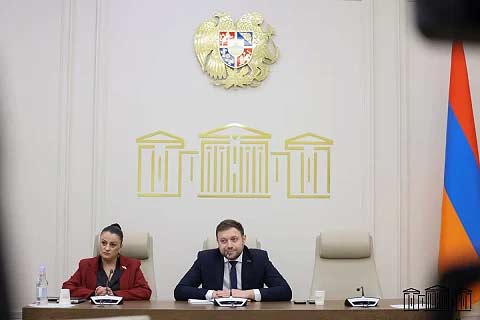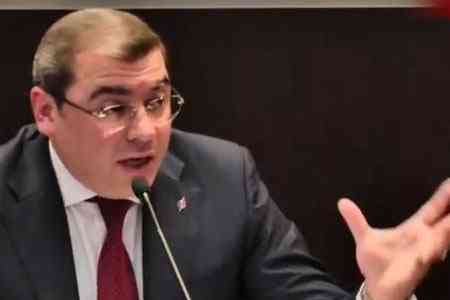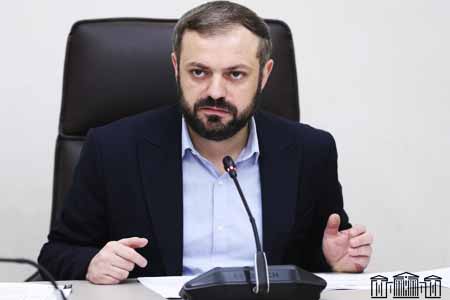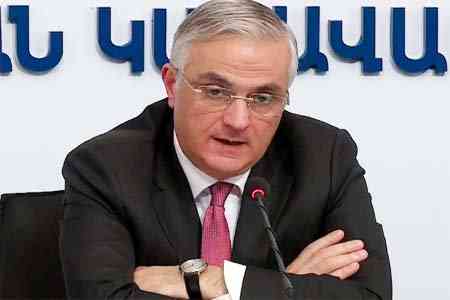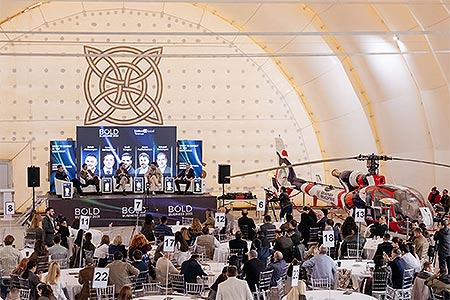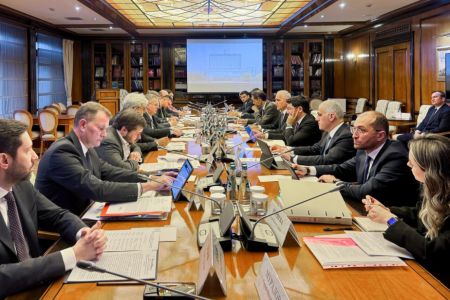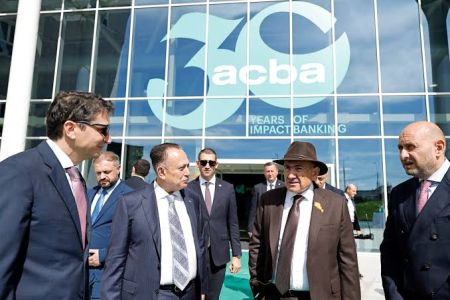


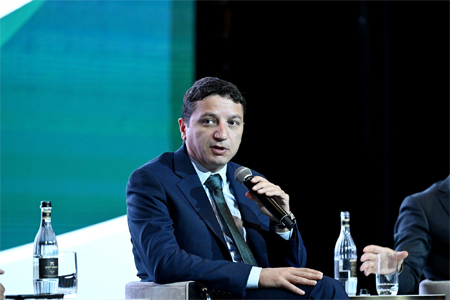
ArmInfo.The priorities of the Eurasian Development Bank (EDB) within the new strategy for 2027-2031 are critical for Armenia's future. This was stated by Armenian Finance Minister Vahe Hovhannisyan on June 25 at the annual meeting and business forum dedicated to the 20th anniversary of the Eurasian Development Bank in Almaty.
He noted that over these two decades, the bank has proven that it is not just a financial institution, but has become a truly systemically important, strategic partner for Armenia. "We highly value the results of our joint work. We have achieved record-breaking results during the strategy implementation period. In 2022- 2026, we have already financed approximately $400 million in Armenia. Key initiatives have been launched in the energy sector. New jobs have been created in the agro-industrial complex and the real sector. The Bank actively supports the development of public-private partnerships. In my opinion, the EDB is financing the most interesting projects in Armenia," Hovhannisyan added.
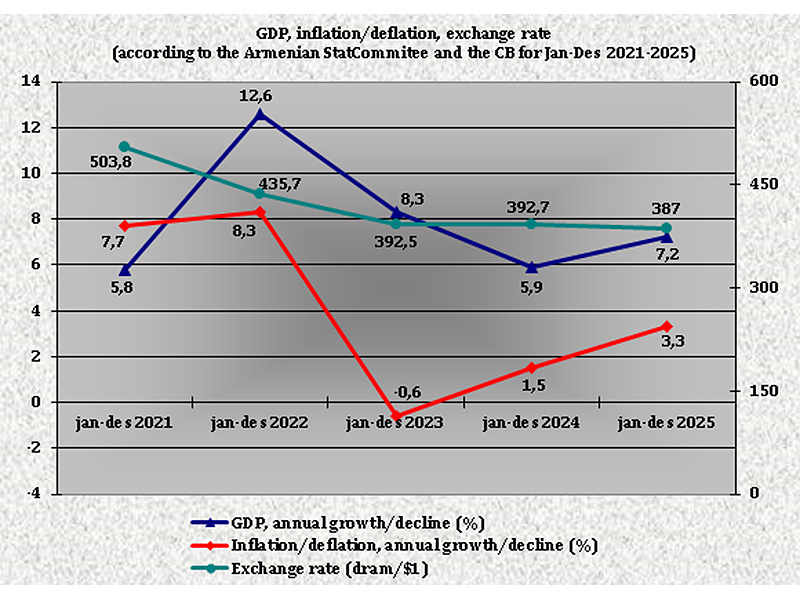
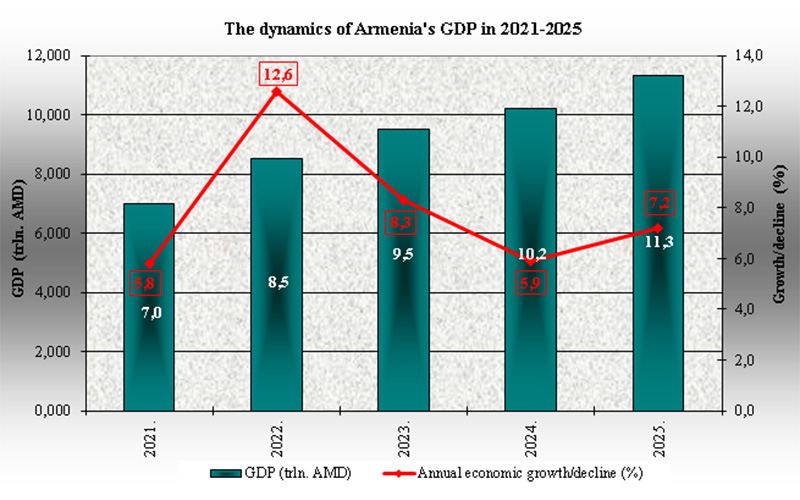
At the same time, the head of the Armenian Ministry of Finance noted that for the effective functioning of the economy and the activities of international banks in the country, the most important task is to ensure the sustainability of key fiscal indicators and the ability to undergo rapid and flexible structural transformation. In this regard, he emphasized that the Armenian economy has grown at an impressive rate over the past five years, averaging 7.9% per year.
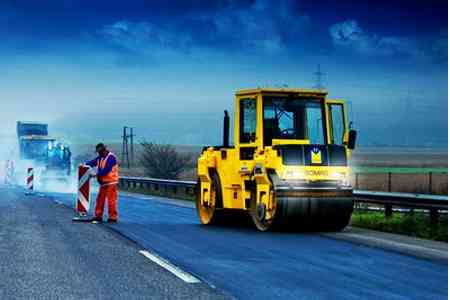
Furthermore, he noted that in 2022-2025, we recorded an acceleration in economic growth, with real GDP increasing by 7.1%. This result was achieved both by the highly dynamic growth in the services sector and by the truly smart construction sector, which grew by a record 20.9%.
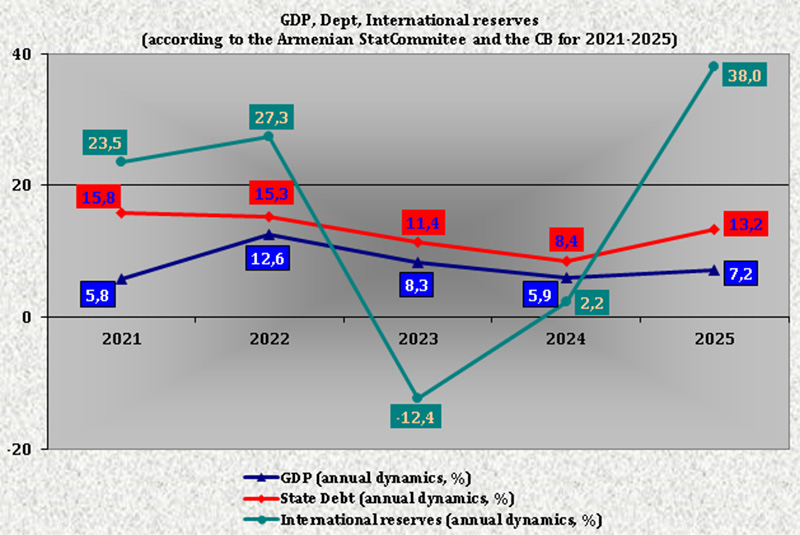
"In the medium term, we forecast stable growth of 5.4-5.6% annually, which is fully consistent with the current potential of our economy. At the same time, the Armenian government strictly adheres to the principles of macroeconomic stability and debt sustainability. In 2025, the budget deficit amounted to 3.7% of GDP, and over the past five years, it has averaged 3.2%, despite global economic turbulence and regional geopolitical instability. The public debt-to-GDP ratio has decreased to 47.2%. This is within the absolutely safe zone according to our fiscal rules and gives us the necessary fiscal maneuverability to finance capital expenditures, which, incidentally, reached 6.2% of GDP in 2025. In the medium term, we plan to systematically reduce the deficit to 2.8% in 2028, keeping debt below 50%," Hovhannisyan continued.
He emphasized that this macroeconomic foundation represents an opportunity for Armenia to make a fundamental shift. Hovhannisyan stated that Armenia is purposefully moving away from a model of exporting raw materials. "Our unconditional priority is an economy of high margins and complex, knowledge-intensive services. The rapid modernization of the private sector, supported by the government, has created a strong foundation for such a shift. We have been able to maintain this momentum thanks to a prudent fiscal policy. However, today, our main task is to go beyond simply maintaining quantitative indicators. The government's key priority is the qualitative transformation of economic growth, which presupposes deep diversification of the economic structure, the development of high-tech industries, and strengthening the country's overall economic self-sufficiency," the Armenian Minister of Economy continued.
The official noted that, to turn this enormous potential into reality, the Armenian government is building reliable infrastructure pillars, most importantly transport connectivity and new logistics.
"All our large-scale plans," be they logistics, energy, or industry, require enormous resources to operate as a unified, efficient mechanism. The economy requires long-term capital, flexible financial instruments, and deep institutional partnerships. This is where we see the Eurasian Development Bank's crucial strategic role-helping structure complex projects, share risks, attract private capital, and integrate Armenian enterprises into Eurasian high-value chains. In conclusion, I would like to note that the EDB's priorities within the new strategy for 2027-2031, which is currently being developed, are fully aligned with our national development agenda. These are the areas the Bank identifies as strategically critical for Armenia's future," Hovhannisyan concluded.