

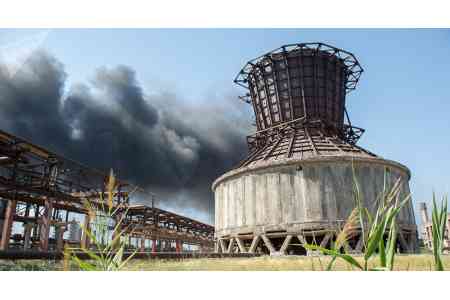
ArmInfo. The Renewable Energy and Energy Efficiency Fund will address environmental issues at the Yerevan Nairit chemical plant and neutralize chemical waste. At its May 27 meeting, the RA government reallocated budget funds allocated for the preparation of an environmental rehabilitation and restoration program for the Nairit plant.
The rationale for the draft decision notes that the Fund will implement the project through a special implementation group (SIG), which has not yet been established. On June 27, 2025, the Republic of Armenia and the International Bank for Reconstruction and Development signed a grant agreement for the preparation of this program, which provides for the neutralization of equipment and chemical waste. The purpose of the document is to assist in the preparation of the proposed project to eliminate the risks to public health and the environment arising from the plant's operations. The justification emphasizes that the costs stipulated by the agreement include goods, consulting services (for the acquisition of consulting services involving local and international consulting organizations, as well as individual experts), and training, including taxes. The deadline for disbursement of funds under the agreement is December 31, 2026. Following discussions, it was proposed to appoint the Ministry of Territorial Administration and Infrastructure of the Republic of Armenia as the responsible body for coordinating the aforementioned activities.
To ensure the effective implementation of the program, and based on its extensive experience and capabilities in implementing similar programs, the Ministry proposed entrusting its implementation to the Renewable Energy and Energy Efficiency Fund of Armenia through the SIP.
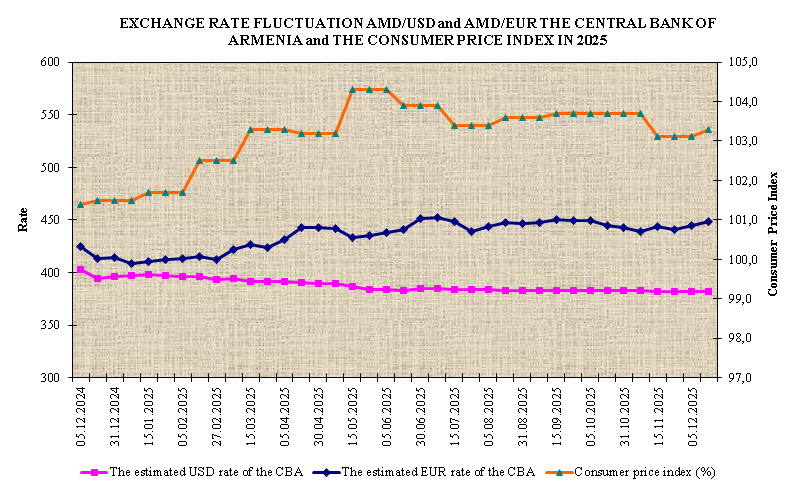
To carry out the environmental rehabilitation of the plant, amendments and additions to the 2026 state budget of the Republic of Armenia are proposed. These amendments allocate 574 million drams to the "Radioactive Waste Management" program, including 57 million drams for the first half of 2026 and 516 million drams for the first nine months of this year (calculated at an exchange rate of 1 US dollar = 382.65 drams).
Earlier, in an interview with ArmInfo, the late Academician of the National Academy of Sciences of Armenia, Academician-Secretary of the Department of Chemistry and Science and Earth Sciences, Doctor of Chemical Sciences, and Honored Scientist of the Republic of Armenia Levon Tavadyan noted that proposals to resolve the existing problem had been received from the Russian side, but the issue was never addressed. Most importantly, the Russian colleagues' initiative offers solutions for all waste streams, excluding the disposal of ethynol varnish, of which approximately 1,200 tons have accumulated. This mixture is extremely dangerous due to its explosive nature. The academician emphasized that when the plant was built, it was outside the city limits of Yerevan, whereas today the enterprise is part of the Armenian capital, and the presence of such hazardous substances could lead to unpredictable consequences. "The shelf life of ethynol varnish, which is heterogeneous in composition and distribution, is several times longer than the established norm. The substances are stored in rusted tanks and pose an extreme danger to the surrounding area. If a fire hazard arises, a detonation effect may occur, and simply burning them is impossible, just as it is impossible to remove the waste due to the deterioration of the containers," said Levon Tavadyan. He emphasized that the Armenian government has proposed that the National Academy of Sciences, and in particular, the Department of Chemistry and Geosciences, study this issue. "A special commission was created to study the problem, and serious discussions were held with experts at the Problems Council under the Presidium of the National Academy of Sciences and the Scientific Council on Seismology, Earthquake-Resistant Construction, and Natural and Man-Made Disasters, during which issues of decontamination and disposal of these substances were considered," the academician noted.
The Nairit plant, built in the 1930s, was one of the six largest global producers of synthetic rubber, accounting for 10% of the global market. The plant is currently bankrupt and has been idle for a long time.