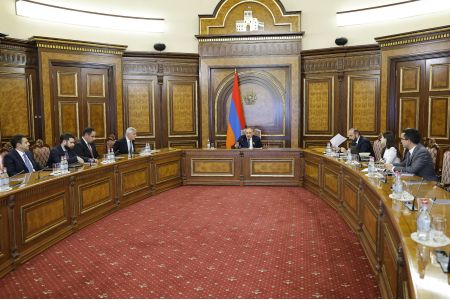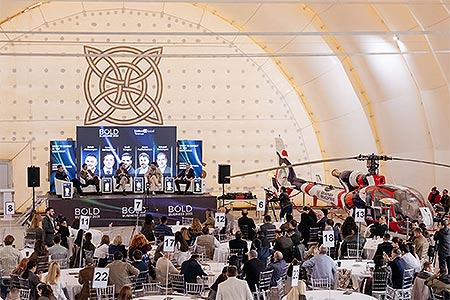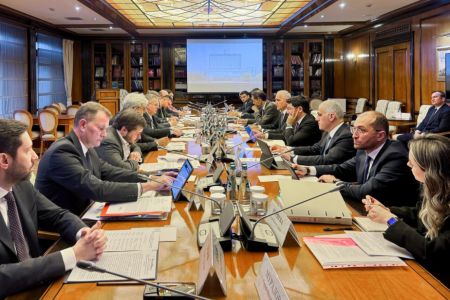



ArmInfo. On the sidelines of the New Development Bank's annual meeting, the Eurasian Development Bank (EDB) organized a seminar, "How Can Multilateral Development Banks (MDBs) Finance Innovation?"
According to the Bank's press service, the EDB brought together high-level representatives from the Islamic Development Bank (IsDB, Saudi Arabia), Peking University (PKU, Beijing), the Multilateral Cooperation Center for Development Finance (MCDF, Beijing), and the Institute for Economic Growth (IEG, India).
The Bank noted that Eurasian countries have demonstrated significant progress over the past decades: the economies of EDB member states have grown by an average of 3.6% per year, while Central Asian countries have grown by approximately 6% per year, outpacing global indicators. Further development requires a transition to a more complex economic growth model based on innovation, an industrial base, and human capital.
Innovation has already become a cross-cutting element of all areas of activity for multilateral development banks (MDBs), from infrastructure to energy and healthcare. In this context, the role of MDBs is being rethought.
The discussion was structured around three ideas proposed by the Eurasian Development Bank (EDB): strengthening the innovation environment through grants and technical assistance; financing high-tech industry; and developing new types of infrastructure.
The speakers emphasized that to effectively finance innovation, development banks need to go beyond traditional lending and more actively utilize co-financing mechanisms, venture debt financing instruments, and investing in corporate equity.
Participants noted the importance of MDBs working with riskier projects and the role of industry experts in MDB activities.
The discussion also focused on promising technological waves that multilateral development banks should consider in their work. In particular, according to the Eurasian Development Bank (EDB), the biotechnology market, currently valued at $2 trillion, could grow to $6 trillion by the mid-2030s, becoming a key driver of global growth.
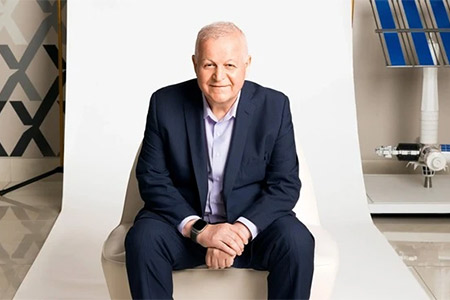
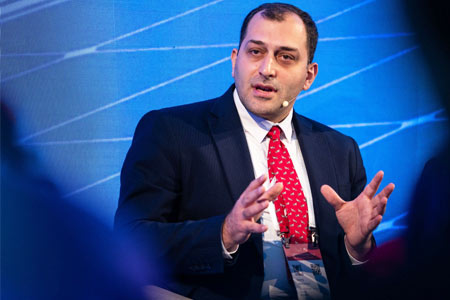
Deputy Chairman of the Management Board and Chief Economist of the Eurasian Development Bank (EDB), Evgeny Vinokurov, emphasized that the world is entering a new phase of technological transformation, where AI, biotechnology, robotics, and several other high-tech areas are becoming growth drivers. "But innovation doesn't occur in a vacuum. It requires infrastructure, institutions, and long-term financing. Here, multilateral development banks can play a systemic role: not by replacing venture capital, but through investments in industry and infrastructure, creating the conditions under which new technologies can become real sectors of the economy," he emphasized. Maria Prozorova, Managing Director and First Deputy Head of the Project Unit at the Eurasian Development Bank (EDB), noted that innovation enables developing countries to unlock their economic potential. "The best way is to finance industrial projects, and technical assistance can greatly enhance this effect. Industry is a driver of growth and integration. It is no coincidence that its share in the EDB portfolio is almost 40%," she said.
The Eurasian Development Bank (EDB) is a multilateral development bank investing in Eurasia. For 20 years, the EDB has been promoting the strengthening and expansion of economic ties and the comprehensive development of its member countries. By the end of December 2025, the EDB's accumulated portfolio included 326 projects with a total investment volume of $19.6 billion. The majority of the EDB's portfolio is made up of projects with an integration effect in transport infrastructure, digital systems, green energy, agriculture, industry, and mechanical engineering. The Bank is guided by the UN Sustainable Development Goals and ESG principles. As part of its 2022-2026 Strategy, the Eurasian Development Bank (EDB) is implementing three megaprojects: the "Central Asian Water and Energy Complex," the "Eurasian Transport Framework," and the "Eurasian Commodity Distribution Network."