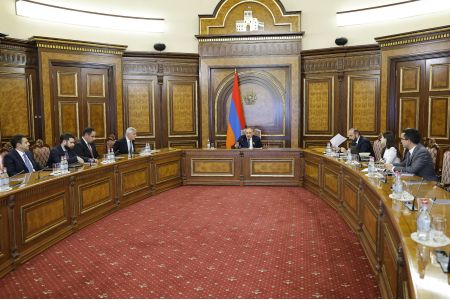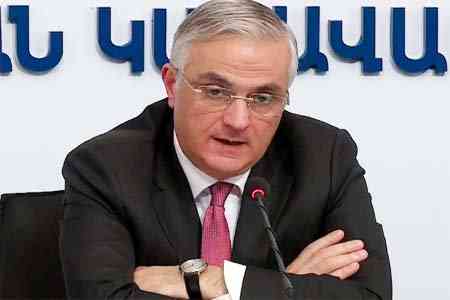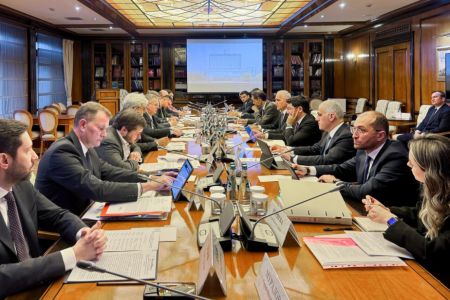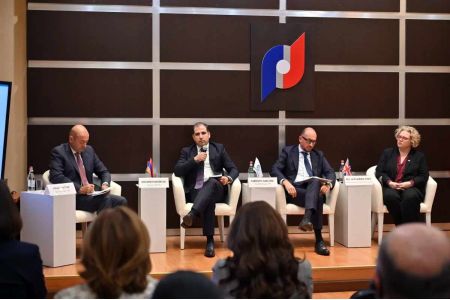


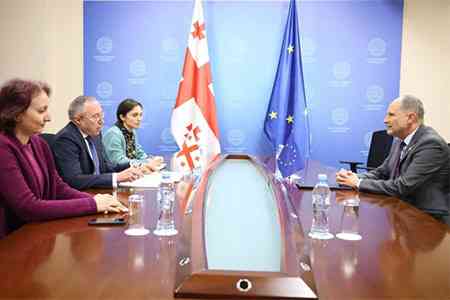
ArmInfo. Tbilisi hopes the European Union will not include the Georgian port of Kulevi in the 20th package of sanctions against Russia, as such a decision would harm the Middle Corridor, a key route that provides Europe with access to raw materials and energy resources in the South Caucasus and Central Asia. This was stated by Georgian Deputy Foreign Minister Giorgi Zurabashvili at a meeting with EU Ambassador Pavel Gerchinsky.
Zurabashvili positioned the port of Kulevi as a link in the strategic Caspian-Black Sea-Europe corridor. At the same time, he assured Gerchinsky that Georgia complies with all EU sanctions against Russia and prevents attempts to circumvent them. "The information circulated in the media about the possible inclusion of the Kulevi Seaport on the EU sanctions list is completely incomprehensible, unfounded, and has no factual basis, as not a single case of the arrival of a sanctioned vessel or the circumvention of sanctions has been recorded at the Kulevi port," the Foreign Ministry press service quoted Zurabashvili as saying.
He added that, to date, EU institutions have not received any questions or comments regarding the functioning of the Kulevi port, and that Brussels and Tbilisi have established a "good practice" of cooperation on restrictive measures.
"The Georgian side expressed hope that EU institutions and member states will take into account the objective facts and Georgia's extensive actions to comply with restrictive measures and prevent the circumvention of sanctions, and will not harm the strategic corridor and the EU's Middle Corridor initiative, of which the Kulevi port is an integral part," the Foreign Ministry noted, according to Georgian News.
Western media reported this week that the EU, as part of a new sanctions package against Russia, intends to impose restrictions on third-country ports - Kulevi in Georgia and Karimun in Indonesia - for the first time. The reason for this is operations involving Russian oil.
EU High Representative for Foreign Affairs and Security Policy Kaja Kallas declined to comment on the matter, emphasizing that specific proposals have not yet been agreed upon.
Kulevi is home to Georgia's only oil refinery. The project is being implemented with the participation of the state-owned Georgian Development Fund and Cartu Bank, owned by Bidzina Ivanishvili, founder of the ruling Georgian Dream party.
In October 2025, Reuters reported the first oil delivery to the new refinery in Kulevi - the cargo was shipped by the Russian company RussNeft. The Georgian Tax Service confirmed the delivery, stating that the vessel, its owners, sender, and recipient were not subject to international sanctions. In early February 2026, the tanker Silvari entered Georgian territorial waters. Ukraine considers it part of Russia's so-called "shadow fleet" and imposed sanctions against it in December 2025. According to iFact, the vessel delivered up to 32,000 tons of oil and petroleum products to Kulevi. The tanker was later transferred to the ownership and management of an Indian company. The Georgian Maritime Transport Agency dismissed reports of the vessel's "questionable history" as disinformation.