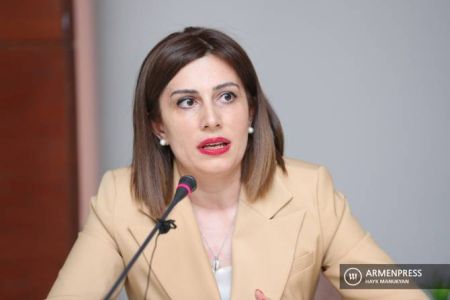



ArmInfo. Deputy Minister of High-Tech Industry and Artificial Intelligence of the Republic of Armenia Tatev Aslanyan participated in the AI Agora conference, held as part of the national initiative "Artificial Intelligence Days 2026."
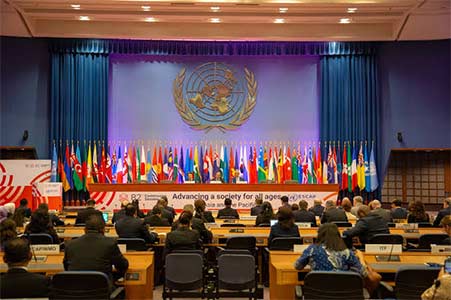
According to the ministry’s press service, the event, titled "An Inclusive Future with Everyone’s Participation," was dedicated to the safe and responsible use of artificial intelligence and brought together representatives of the public administration system, science, education and technology on one platform.
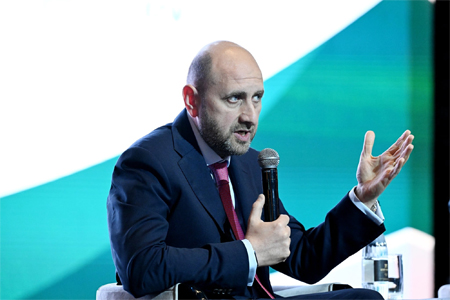
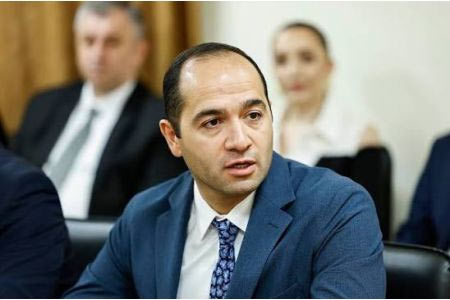
As part of AI Agora, Tatev Aslanyan participated in a panel discussion on the topic "What Is the Potential of AI in Armenia and What Is Needed to Realize It?" The discussion was also attended by NVIDIA senior research scientist Eric Arakelyan and Enterprise Incubator Foundation (EIF) Director Bagrat Yengibaryan.
During the discussions, Tatev Aslanyan addressed the priorities for developing Armenia’s potential in the field of artificial intelligence, emphasizing the importance of effectively using computing infrastructure, developing human capital and transforming scientific potential into competitive technological solutions.
Presenting the work being carried out by the Ministry in this direction, the Deputy Minister noted that the availability of high-performance computing resources (GPU) is not sufficient in itself: it is necessary to create an environment around them for cooperation among researchers, engineers, product specialists and business professionals. In this context, Tatev Aslanyan presented the concept of creating a national network of technology transfer offices (TTOs), which should promote the commercialization of scientific results, strengthen ties with investors and industry, and bring research results to market. Incidentally, the concept has already been submitted to Berlin Economics for professional evaluation and further practical implementation.
Tatev Aslanyan emphasized the importance for Armenia of developing deep scientific fields and creating large-scale applied solutions, particularly in the areas of biotechnology, biology, chemistry, quantum physics, energy storage and healthcare. According to the Deputy Minister, the development of such fields requires a high level of scientific potential and closer ties between science and industry. The Deputy Minister also addressed the issue of readiness to adopt AI, emphasizing that it is not limited solely to technological infrastructure or the ability to use AI tools. According to her, AI literacy, relevant professional skills, high-quality data, institutional readiness and the selection of the right technologies for the right tasks are also necessary.
In this context, Tatev Aslanyan emphasized that the availability of large-scale computing resources (GPU) in Armenia is an important prerequisite for developing AI capabilities and creating sovereign AI, but the availability of these resources alone is not sufficient. They are an important, but only one, component in the formation of a sovereign AI ecosystem, the effective use of which also requires appropriate models, tools, professional capabilities and an environment for cooperation.
Referring to the work carried out to assess the readiness of state institutions to adopt AI, Tatev Aslanyan noted that she had visited state institutions for this purpose. As a result, an individual picture was formed for each institution concerning its level of digitalization, readiness to use AI, opportunities for applying AI tools and existing obstacles. The purpose of this work is to identify the problems that need to be overcome in order to transition to an AI-oriented approach in the public administration system and ensure the effective use of AI tools.
The Deputy Minister also attached great importance to developing Armenia’s own technological capabilities and creating "sovereign AI." She emphasized that Armenia needs its own Armenian-language AI models for processing text, speech and images, which is important from the perspective of the country’s technological sovereignty and national security. According to the results of a vote held as part of AI Agora, 61 percent of participants also attached great importance to developing sovereign AI in Armenia.
Tatev Aslanyan also emphasized the importance of the safe and responsible use of AI, data protection and management of risks associated with technological dependencies, noting that although Armenia still does not have comprehensive legislative regulation concerning AI, the Ministry has already begun developing an AI risk management concept, which is planned to be introduced into the public system at the initial stage.
Tatev Aslanyan also addressed the possible risks of using artificial intelligence, particularly children’s digital safety and the problem of cyberbullying. She noted that, at present, Armenia still does not have comprehensive legislative regulation on managing the risks associated with the use of AI.