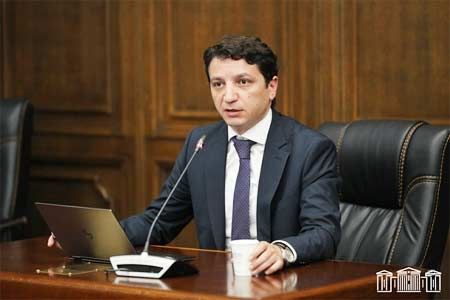



ArmInfo. Science development in Armenia should be driven by both public and private sector investment. This was stated by RA Minister of Education, Science, Culture, and Sports Zhanna Andreasyan at a government meeting on November 5, presenting a program for the development of physical artificial intelligence.
According to the minister, the program is aimed at encouraging private sector investment in scientific development. Over the past decade, technological capabilities in integrated circuit design, software development, and information technology have developed in Armenia. A rapidly developing technological area is the intersection of robotics and artificial intelligence, or physical artificial intelligence (PAI). Armenia's educational and scientific potential in mathematics, physics, and engineering, as well as opportunities for engaging international professional networks, can serve as the basis for developing relevant research and educational opportunities.
The minister also noted that the program will allow for more active development of scientific activity in the country's higher education institutions through research, which will improve the universities' rankings.
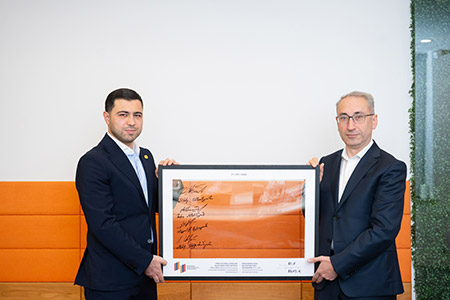
The program itself, as Zhanna Andreasyan noted, is designed to last seven years. It will be implemented as a public-private partnership in collaboration with the ba-GIN Foundation - Center for Science and Artificial Intelligence, which was established at the initiative of the Armenian Cultural and Scientific Association to support educational, research, and development activities in Armenia.
The Foundation operates in Engineering City, and as part of its programs, educational and research activities are also carried out at the American University of Armenia, Yerevan State University, and the National Polytechnic University of Armenia. The Foundation's activities include educational and research initiatives in mathematics, robotics, and artificial intelligence.
The program is expected to receive at least $14 million in investment over seven years, half of which will be contributed by the state and the other half by the private sector.
During the specified period, a permanent mechanism will be established at the universities.
In the fall of 2025, nine free courses were held at various universities, attended by approximately 80 students. A robotics laboratory was established, and the corresponding laboratory facilities are used for teaching and research activities at the National Polytechnic University of Armenia and the American University of Armenia. During the project's launch, administrative, teaching, and research staff were involved in the Foundation's activities, including scientists, lecturers, and teaching assistants working on long-term and short-term basis. Based on the scientific results of the three scientists participating in the project, at least 13 scientific articles have been published in international scientific journals and conferences since 2025. The Foundation plans to expand the participation of international scientists by also attracting scientists and researchers conducting professional activities abroad on a short-term basis annually. Further development of the existing potential in physical AI requires the development of an appropriate research and development workforce, sustainable funding, the attraction of highly qualified scientists and researchers on a long- and short-term basis, and the development of a modern scientific and technical infrastructure. The goal of this program is to promote the development of scientific, educational, and technological potential in the field of physical AI in the Republic of Armenia and the formation of a long-term institutional foundation through cooperation between universities, research organizations, the private sector, and international professional networks. The intersection of robotics and artificial intelligence (physical AI) has become a technological direction of strategic importance in terms of national security, economic competitiveness, and the modernization of public services. Armenia has a rich historical tradition in mathematics, engineering, and computer science, as well as a rapidly developing information technology sector. However, the lack of specialized research capabilities at the intersection of robotics and AI limits the country's ability to create internationally competitive scientific results and technologies. Academic and industrial collaboration remains fragmented, reducing the potential for commercialization of research results. The proposed program, approved by the Armenian government, aims to address this problem.