

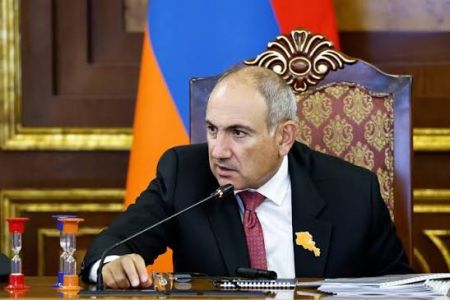
ArmInfo. At a meeting of the State Investment Committee chaired by Armenian Prime Minister Nikol Pashinyan, projects in the fields of water management, road infrastructure, rescue services, and digitalization were approved.
According to the government press service, the participants reviewed projects for the use of water from the Gerger reservoir using the reverse feed method, the rehabilitation of sections of the M-6 Vanadzor (intersection with the M-3) - Alaverdi - Armenian border (Bagratashen) interstate highway after natural disasters, the construction of a new tunnel in Dilijan, the overhaul and modernization of the Pushkin tunnel, strengthening the management capacity of Yerevan's rescue services, and the creation of the National Spatial Data Infrastructure of Armenia.
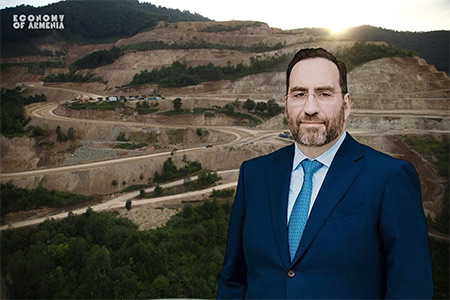
During the meeting, Aramazd Galstyan, Chairman of the Water Management Committee of the Ministry of Territorial Administration and Infrastructure of Armenia, discussed the program related to the Gerger reservoir. The project is aimed at providing irrigation water to 12 settlements in the Vayots Dzor region, or 2,440 hectares of land. The construction of the water pipeline will make it possible to efficiently use the 26 million cubic meters of water accumulated in the reservoir annually, increase the area of irrigated land, ensure a stable supply of irrigation water, and also direct an additional 10-13 million cubic meters of water to Lake Sevan.
The next item on the agenda was introduced by Kristine Galechyan, Deputy Minister of Territorial Administration and Infrastructure of Armenia. She reported on the post-disaster rehabilitation projects for sections of the M-6 Vanadzor (intersection with the M-3) - Alaverdi - Armenian border (Bagratashen) highway, the construction of a new tunnel in Dilijan, and the overhaul and modernization of the Pushkin Tunnel as part of the second program to improve the sustainable and inclusive road network.
In particular, according to her, in addition to restoring damaged sections of the road, the project also envisages enhancing the resilience of vulnerable sections to possible future flooding of the Debed River by constructing retaining walls and implementing rockfall protection measures.
Kristine Galechyan also presented the project for the construction of a new tunnel in Dilijan. The project envisions construction parallel to the existing tunnel, approximately 50 meters to the left, with a length of 2,365 meters. The new tunnel will be equipped with modern engineering systems, safety equipment, and automated control systems, while the existing tunnel will be converted into an evacuation tunnel.
The evacuation tunnel will connect to the new one every 500 meters, allowing for the prompt evacuation of road users in emergency situations.
The Deputy Minister also presented details of the overhaul and modernization project for the Pushkin Tunnel. This project includes the restoration and modernization of the tunnel's structural elements, the improvement of its engineering systems, and the implementation of modern road and fire safety solutions.
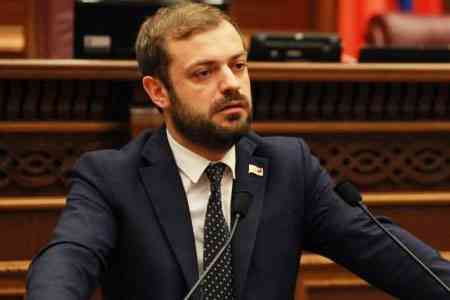
Armenian Deputy Minister of Internal Affairs Armen Mkrtchyan presented a project to strengthen the capacity of the Yerevan Rescue Service. According to him, the fire and rescue equipment used by the department's units has not been updated since 2010. In recent years, numerous high-rise residential and public buildings have been constructed in Yerevan and its environs. In addition, the city contains hazardous industrial facilities and critical infrastructure. Effective fire suppression at such facilities requires aerial ladders with a minimum reach of 35 meters.
As part of the agenda, Suren Tovmasyan, Head of the Cadastre Committee of Armenia, presented a project for the creation and development of the country's National Spatial Data Infrastructure. This project includes the creation of a unified geodetic reference system, aerial surveys of the entire country and mapping using LiDAR technology, the development of highly detailed 3D city models, mobile road mapping, bathymetric surveys of water bodies, standardization of cadastral data, the creation of thematic datasets and digital services, and the modernization of the National Geoportal while ensuring reliable information security.
Following the discussions, all presented projects were approved.