


ArmInfo. By July 2026, the number of virtual POS terminals (vPOS) in Armenia reached 6,258,000, of which 50.6%, or 3,169,000, were used in retail, catering, and service outlets. The number of vPOS terminals increased by 17.8%, or 945 units, and traditional POS terminals by 16.1%, or 14,349 units. This is clearly explained by the increased use of cashless payments, which became mandatory with the introduction of legislative restrictions on cash transactions in July 2022. This is evidenced by data from the Central Bank of the Republic of Armenia.
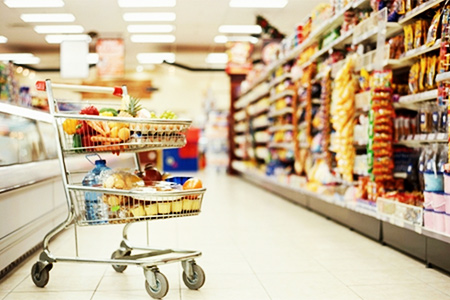
Thus, by July 2026, 60,049 POS terminals (including 2,298 vPOS terminals) were in use at wholesale and retail outlets (supermarkets, stores, markets, and fairs), with an annual increase of 14.2%, or 7,487 units. At the same time, the number of ATMs at these locations decreased by 2.5%, or 15 units, to 596. At the same time, banks, while optimizing their ATM networks at their branches (57 ATMs were dismantled), increased their POS network by 27 units. (11 regular POS terminals and 16 vPOS terminals).
As of July 2026, there were 109,493 POS terminals in Armenia, of which 103,235 were regular POS terminals. Bank head offices and branches house 1,169 units (including 123 vPOS terminals), while retail, catering/services (hotels, restaurants, cafes, bistros), and healthcare (hospitals, dental clinics, pharmacies) facilities house 79,187 units (including 3,375 vPOS terminals). By July 2026, there were 1,401 ATMs in Armenia, a year-on-year decrease of 9.1%, or 140 units. Of these, 908 were in the capital, and 493 in the regions, with a year-on-year decrease of 56 and 84 ATMs in both the capital and regions, respectively. The dismantling of this number of ATMs was recorded both at banks and their branches, as well as at retail outlets and service points, with banks reducing their number of ATMs more significantly-by 13%, or 57 units. The Central Bank's report also indicates the number of payment terminals-11,444 units, of which 5,131 were installed in the capital and 6,313 in the regions. Of these, 917 were installed at banks, while the majority-10,527 units-were in the regions. - Payment and settlement organizations were "scattered" across large shopping centers, busy streets of the capital, and in the regions. Year-on-year, the number of payment terminals decreased by 154 units, with 57 units in the first half of the year alone. After an increase of 22 units in the first quarter, the number fell by 79 units in the second quarter. Both banks and payment and settlement organizations reduced the number of payment terminals.
According to the Central Bank, by July of this year, there were already 5.5 million cards in Armenia (with a year-on-year growth of 20.2%), and the volume of plastic transactions (including foreign transactions using cards issued by Armenian banks) in the first half of 2026 exceeded 3.8 trillion drams ($10.4 billion, with a year-on-year growth of 12%). Of this volume, non-cash transactions account for 60.7%, or over 2.3 trillion drams ($6.3 billion), dominated by transactions via virtual POS terminals, accounting for 58.4%, or 1.4 trillion drams ($3.7 billion).
It's worth noting that for the third consecutive year, the growth of plastic transactions has been supported by high activity via POS terminals, particularly virtual and mobile POS terminals, and more recently, QR terminals. While cash transactions traditionally dominated overall plastic transactions, since the legislative restrictions on the latter (July 2022), the situation has shifted in favor of non-cash card transactions, which already dominated in 2023 and will further strengthen their position to 56.8% by 2026.