


ArmInfo. In Armenia, the industrial price index increased significantly in January-July 2026 compared to the same period in 2025, from 102.5% to 108.8%. This was observed against the backdrop of improved annual growth in the industrial sector, moving from a 9.8% decline to 9.5% growth, reaching 1.8 trillion drams ($4.8 billion). This is according to preliminary data from the RA Statistics Committee.
A similar increase in the industrial price index was observed in July 2026 compared to July 2025 - from 104.3% to 108.5%. During this period, the industrial sector also demonstrated growth, albeit relatively restrained - 3.1% compared to 4.2% a year ago.
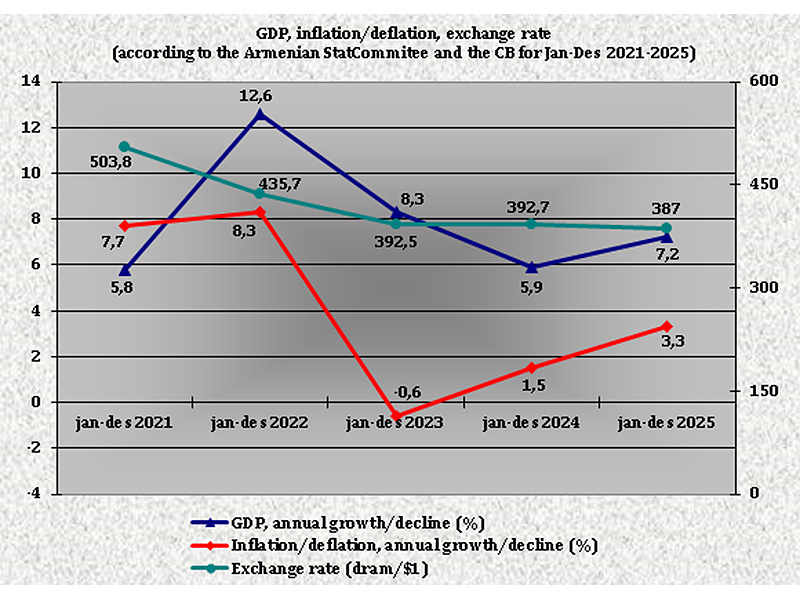
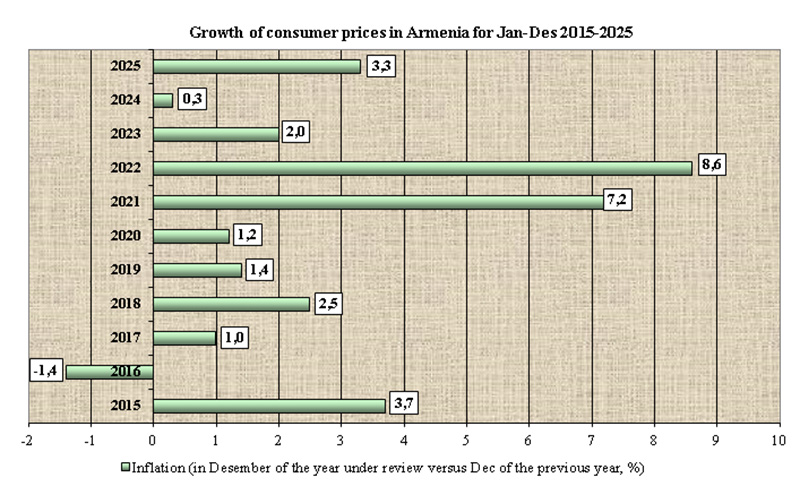
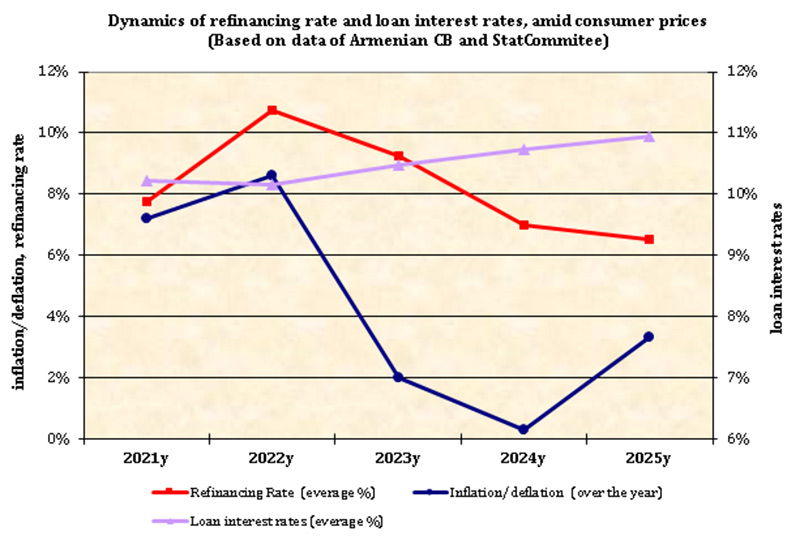
It is noteworthy that inflation was recorded in the Armenian consumer market during these periods. Specifically, in January-July 2026 compared to the same period in 2025, and in July 2026 compared to July 2025, inflation was a consistent 4.5%, compared to 3.2% and 3.4%, respectively, in the same periods a year earlier.
Moreover, inflation in the consumer market was mainly supported by the increase in food prices: in January-July 2026 compared to the same period in 2025, and in July 2026 compared to July 2025 - by the same 7.5%, whereas a year earlier in the same periods food prices increased less noticeably - by 5.1% and 4.9%, respectively. At the same time, the growth of tariffs for services weakened - to 2.6% per annum in January-July 2026 and to 1.8% per annum in July 2026, from 3% and 3.6%, respectively, in the same periods a year earlier. At the same time, non-food prices began to rise: by 1.6% per annum in January-July 2026 and by 2.5% per annum in July 2026, compared to a year-on-year decline of 0.6% in January-July 2025 and a meager 0.1% annual growth in July 2025.
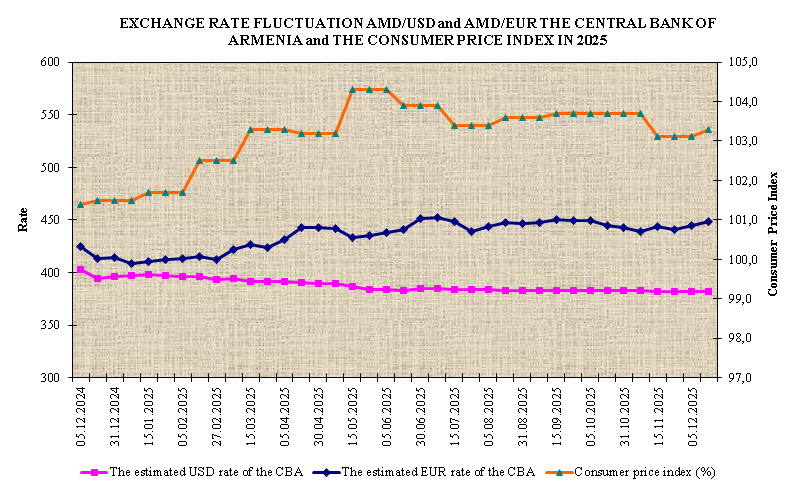
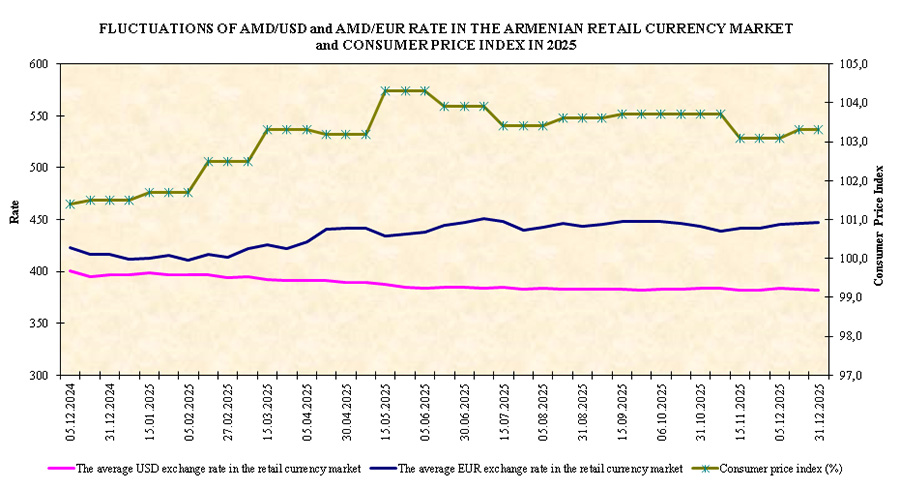
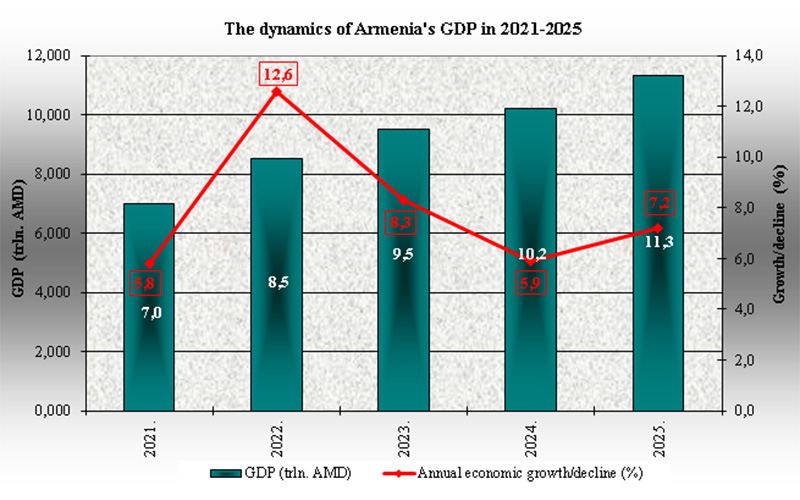
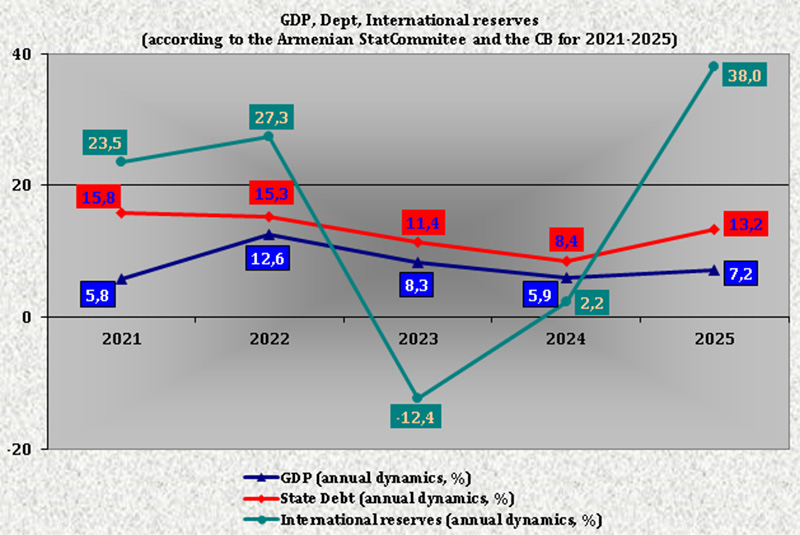
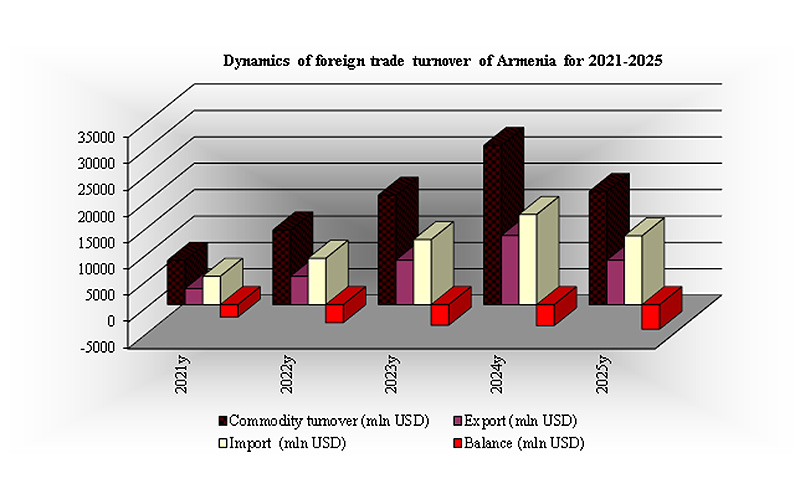
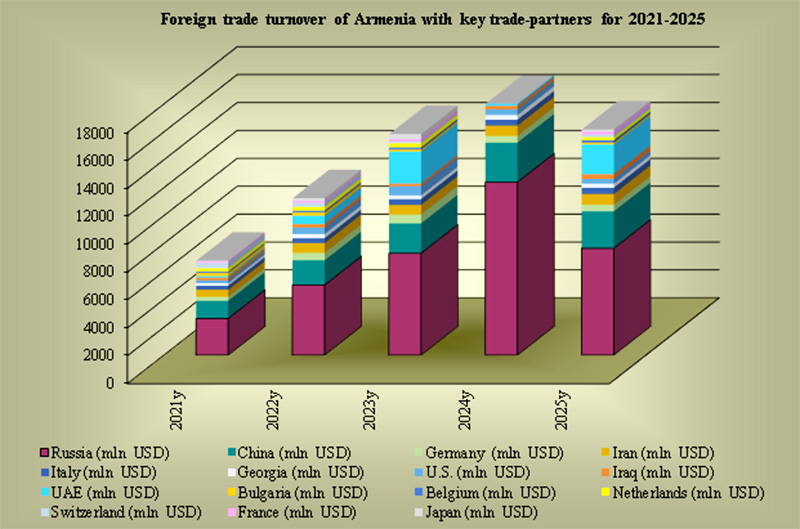
It is worth noting that this is accompanied by an acceleration in economic activity growth in Armenia in January-July 2026 from 7.1% to 7.7% per annum, followed by a slowdown from 8.9% to 6.5% in July 2026 and July 2025. At the same time, an improvement in the annual dynamics of foreign trade turnover is observed: in January-July 2026 - from a 42% decline to 1.7% growth, and in July 2026 compared to July 2025 - from a 16.1% decline to 6.7% growth. In particular, in January-July 2026, the decline in exports slowed from 49.6% to 7.9% per annum, while the import dynamics went from a 35.8% decline to 7.7% growth, and in July 2026 compared to July 2025, an improvement in the import dynamics from a 16.5% decline to 21.5% growth was accompanied by an acceleration of the export decline from 15.4% to 15.7%. (The average exchange rate for the dram in January-July 2026 was 373.26 drams/$1, compared to 390.27 drams/$1 a year ago)