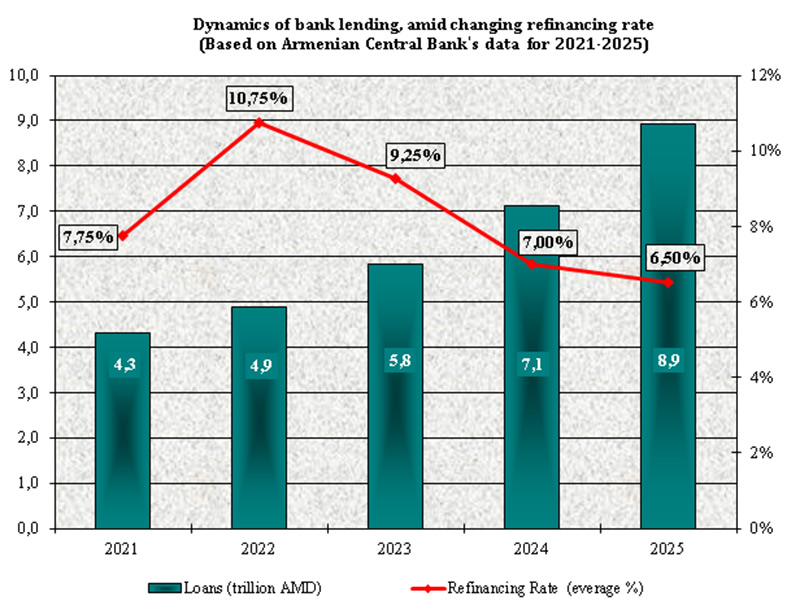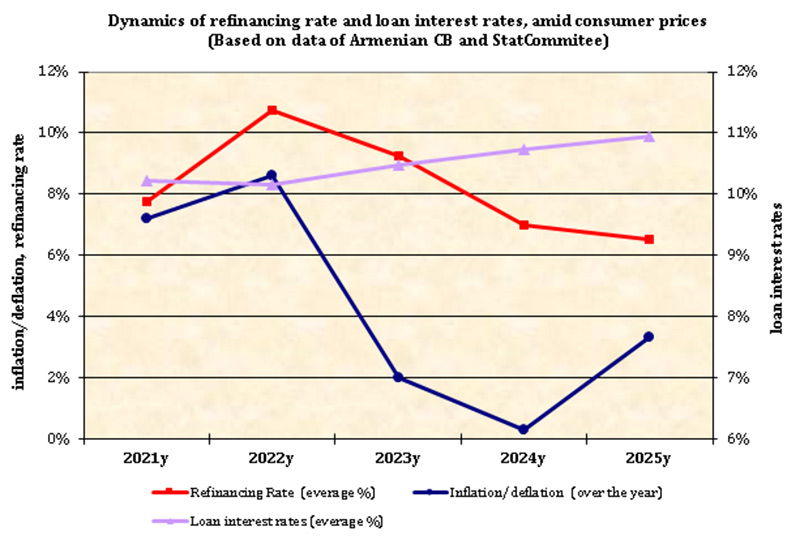


ArmInfo. As a result of problems arising in certain export markets, the risk of a decline in income in the Armenian economy has increased, as well as the formation of an excess supply of certain goods, which has a predominantly deflationary impact, as noted in the Central Bank of Armenia's justification for its decision to maintain the refinancing rate at 6.5% this time.
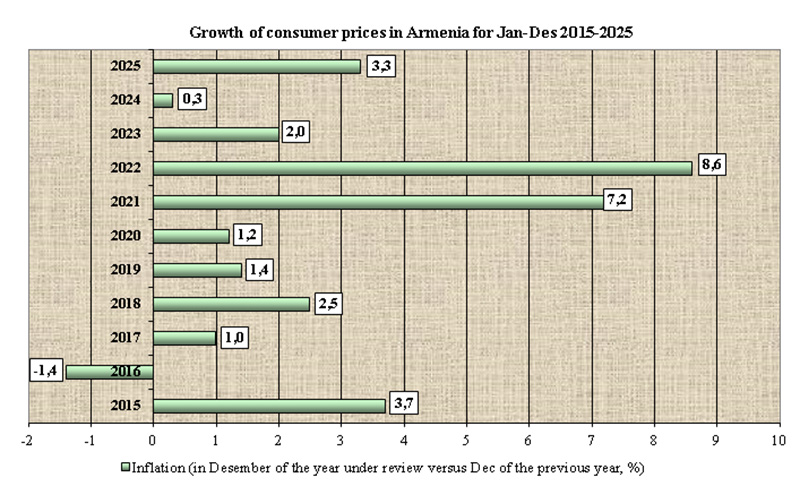
This justification indicates that annual inflation in June 2026 increased to 5.1% (from 3.9% a year earlier). This was also observed in core inflation, the annual rate of which increased in June of this year to 4.9% (from 3.1% a year ago). Amid geopolitical uncertainty and high energy prices, global demand continued to weaken in the second quarter of 2026, and its outlook worsened. Economic growth in the US has slowed somewhat in recent quarters, despite continued strong consumer activity. At the same time, risks of a higher US government debt trajectory and, consequently, prolonged high long-term interest rates remain significant. In the Eurozone and Russia, despite a weak economic recovery in the second quarter, structural problems are gradually deepening, further deteriorating medium-term growth prospects. At the same time, high uncertainty remains around the outlook for commodity and food prices. In this context, given the current high inflation environment and the significant uncertainty surrounding its outlook, the risks of prolonged maintenance or hikes of current interest rates by central banks in leading countries have increased.
In Armenia, the continued high economic activity in the second quarter of 2026 was significantly driven by the development of the construction and services sectors. High activity in the service sector also points to conditions of established strong demand in the economy. Moreover, there are noticeable signs of expansion in external demand, primarily reflected in the growing number of visits to Armenia. This is also reflected in rising wages and accelerating inflation in the relevant sectors. In this situation, the impact of aggregate demand on inflation is assessed as expanding, although supply-side factors continue to make a significant contribution. On the other hand, trends toward rising wages in the private sector and stabilizing inflation expectations continue.
Global economic growth prospects have worsened
Global economic growth prospects worsened in the second quarter of 2026 due to geopolitical uncertainty surrounding the conflict in the Middle East, as well as high and volatile energy prices. Amid geopolitical events and significant economic policy shifts, US economic growth has demonstrated significant volatility in recent quarters, generally weakening and settling at around 1.5% quarterly, seasonally adjusted, in the second quarter of 2026. However, private consumption and fixed capital investment, particularly in artificial intelligence (AI) infrastructure, are growing strongly, representing the main drivers of economic growth. Meanwhile, prolonged geopolitical tensions in the Middle East and disruptions to trade routes pose risks of further deterioration in economic growth prospects and a significant expansion of the inflationary environment. Risks to fiscal sustainability in the United States continue to mount. Specifically, the elimination of some tariffs set for 2025 significantly increases the US government's obligations to provide compensation. Under these circumstances, pursuing a more expansionary spending policy, including that driven by the need to increase defense spending, could lead to a higher public debt trajectory. This will contribute to further increases in long-term real interest rates or their prolonged persistence at elevated levels. Such developments could impact both the US Federal Reserve's monetary policy outlook and the neutral interest rate and capital flows to developing countries.
Both headline and core inflation in the US continue to hover well above target. Under these circumstances, the significant rise in global energy prices in recent months and the high uncertainty surrounding their prospects pose significant risks of a deterioration in the inflation environment. On the other hand, a comparison of various labor market indicators suggests a gradual easing of conditions. In this situation, financial markets expect a gradual increase in the policy interest rate by approximately 50 basis points in the near future.
After a slight decline in the first quarter of 2026, economic growth in the Eurozone accelerated slightly in the second quarter to 0.4% quarter-on-quarter. However, high uncertainty surrounding the growth outlook remains. This is due to the accumulation of structural problems, low productivity growth, and the negative impact of the conflict in the Middle East. With energy prices remaining high and supplies significantly vulnerable, the risks of a deterioration in the inflation environment are also increasing: annual inflation accelerated to 2.9% in July. At the same time, core inflation indicators are conveying mixed signals regarding demand conditions: annual inflation is close to the target of 2.5%, while service sector inflation remains well above target at 2.3% y/y, possibly reflecting still-tight labor market conditions. As a result, financial markets are pricing in a gradual increase in the ECB policy rate by approximately 50 basis points in the near future. Following a decline in the previous quarter, economic growth in the Russian Federation accelerated to 0.9% year-on-year in the second quarter of 2026. This is largely due to the development of demand-driven industries, likely reflecting the impact of stimulative fiscal policy. However, structural problems continue to deepen and gradually manifest themselves in certain sectors of the economy, particularly the real estate and financial sectors. On the other hand, prolonged high oil prices could contribute to the expansion of demand and, especially, fiscal space. At the same time, labor market conditions remain tight: unemployment remains at historically low levels, and real wage growth, despite a slight slowdown, remains high. Under these conditions, despite the slowdown in headline and core inflation, price increases in the service sector and inflation expectations remain significantly above target. This significantly complicates the Central Bank of Russia's task of effectively managing the inflation- growth tradeoff.
Oil prices, amid a gradual adjustment in global demand, increased supply from individual countries, and a relative easing of tensions in the Middle East, have declined slightly, although they remain significantly higher than at the beginning of the year. High energy prices and disruptions to trade routes are already impacting production costs in individual economies. It is also worth noting that, with additional production capacity in oil-producing countries reduced and global oil reserves significantly depleted, the global economy has become more vulnerable to fluctuations in oil supply. Disruptions to trade routes through the Strait of Hormuz affect not only energy but also commodities essential to agriculture, making inflation risks for certain food products quite significant.
Significant increase in tourist flows to Armenia is also contributing to growing demand
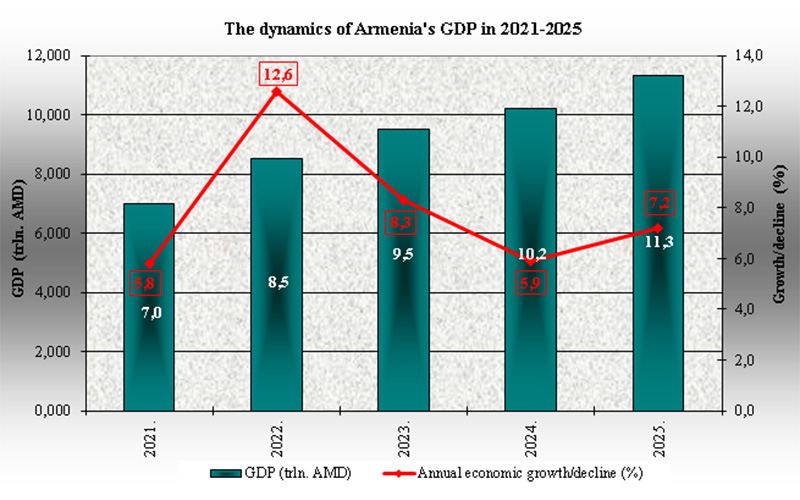
Economic activity in Armenia continued to develop in the second quarter of 2026, above its long-term stable level, reaching 7.7% in June. This strong economic activity continued to be driven largely by the development of the construction and services sectors. This is accompanied by a significant increase in retail trade and imports. Such events may indicate the existence of high demand conditions and their recent expansion.
A significant increase in tourist flows to Armenia is also contributing to increased demand. In the first half of 2026, flows increased by approximately 15%, reaching a historically high level. This increase may partially reflect the impact of restrictions on tourist destinations from Russia to the Middle East. However, the increase in inflows across countries is gradually becoming more comprehensive, accompanied by certain changes in the composition and structure of visitors. The Central Bank also notes that, amidst high uncertainty regarding the future of the Russian economy and the resolution of the Russian-Ukrainian conflict, there has been a recent increase in the flow of Russian citizens to Armenia, which is also reflected in increased demand for real estate, including rental apartments.
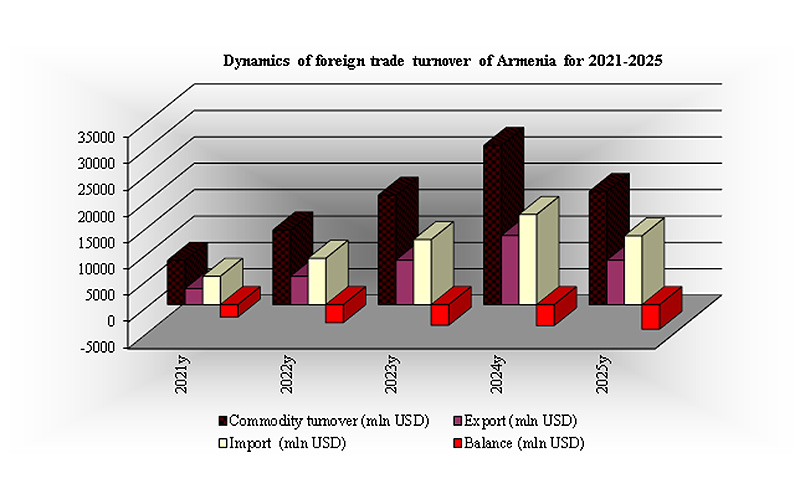
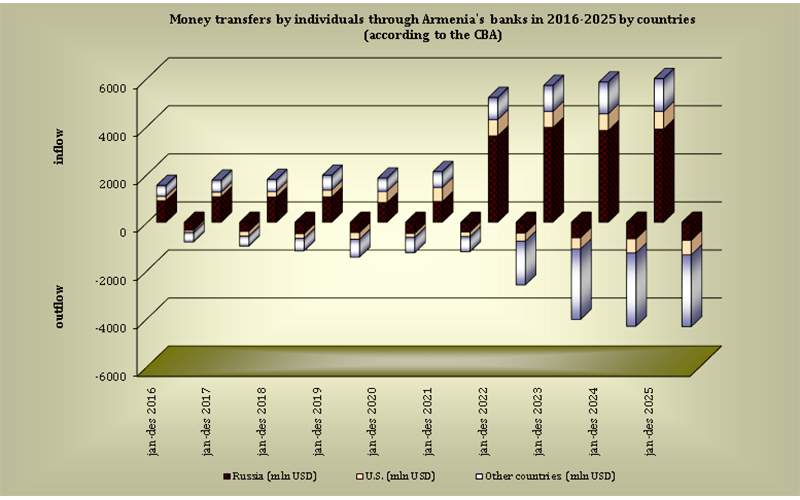
At the same time, problems arising in certain export routes have worsened the prospects for production and export growth in some export-oriented industries. In the manufacturing sector, growth rates have slowed somewhat, in part due to certain restrictions on trade routes amid ongoing tensions in the Middle East. These trends are particularly noticeable in the production and export volumes of tobacco products. Import restrictions by the Russian Federation on several agricultural and processed food product groups, coupled with unfavorable weather conditions, have already resulted in a significant decline in production and export volumes in this sector. Moreover, the prolonged persistence of existing problems in these export routes, given the limited availability of alternative export routes, could lead to a decline in revenues in the Armenian economy and a deterioration in the consumer and investment environment. Uncertainty surrounding seasonal migration trends to Russia and remittance methods remains. On the one hand, the widening gap in relative wages in the Russian and Armenian construction sectors could strengthen incentives for labor migration from Armenia to Russia. On the other hand, a significant weakening of economic growth, high uncertainty regarding the medium-term prospects of the Russian economy, and a tightening of migration policy could, to a certain extent, curb migration flows to Russia. This, in turn, will contribute to an increase in the labor supply in Armenia and the development of deflationary risks.
Consistent with high economic activity and an inflationary environment, tax revenues exceeded budget targets in the first half of 2026. On the other hand, state budget expenditures are under-executed, primarily reflecting significantly lower capital expenditure performance compared to historical trends. However, the risk of significantly higher-than-planned spending under the universal health insurance system, as well as the need to support certain export sectors and promote export diversification, has increased the risk of a more expansionary fiscal policy stance. At the same time, implementing these programs amidst "limited fiscal space" could also put pressure on Armenia's country risk premium.
More balanced conditions emerging in the labor market
Despite high uncertainty, a number of key indicators indicate that more balanced conditions are emerging in the labor market. The unemployment rate continues to fluctuate between 12-14%, and the number of officially registered workers is growing at a stable pace. The increase in the number of registered workers may also indicate structural changes in the economy, reflecting the labor force's shift from informal to formal employment. At the same time, the current unemployment rate may also reflect some excess demand in the labor market—especially given that, seasonally adjusted, the unemployment rate has likely remained below the estimated natural rate since the second half of 2025. However, the resulting risks to wages and inflation could still materialize due to wage rigidity. The recent increase in the number of non- resident workers may also indicate the presence of possible excess demand, to some extent masking the resulting inflationary pressure.
Nominal wage growth in the private sector (excluding the financial sector), despite the recent acceleration, continues to generally show signs of stabilization, stabilizing in the 6-7% year-on-year range. At the same time, the volume and quantity of non-commercial remittances from Russia to Armenia have increased in recent months. This may indicate that the strengthening ruble and labor shortages in Russia still outweighed the factors limiting migration flows, stimulating growth in labor flows. However, the gradual and ongoing tightening of Russia's migration policy carries the risk of weakening conditions in the Armenian labor market.
Inflation continues to remain high
Annual inflation in Armenia in the second quarter of 2026 continued to remain high, reaching 5.1% y/y in June. This acceleration was driven by significantly higher, unseasonably higher inflation dynamics for seasonal food products, reflecting, among other factors, the impact of unfavorable weather conditions and seasonal shifts. Core inflation also accelerated slightly during the quarter, reaching 4.9% y/y in June. This still primarily reflects the pass-through of inflationary pressure from imported and locally produced non- seasonal food products, driven by inflationary pressure transmitted from the global economy in recent quarters and individual supply factors in the domestic economy. At the same time, the acceleration of core inflation in recent months has been more widespread across product groups, which, in addition to supply factors, likely indicates strong demand conditions. In the near term, the main uncertainties surrounding inflation expectations in Armenia remain driven by the persistence of inflation trends emerging in global food and energy markets, and in this context, the speed and scale of domestic price adjustments. In particular, continued high commodity prices amid ongoing or intensifying geopolitical tensions in the Middle East, potential disruptions in energy supplies, and emerging restrictions on international trade routes could contribute to a further acceleration of inflation. Conversely, problems arising in certain export markets (the Middle East, Russia, etc.), given the difficulties of diversifying export destinations, especially in the short term, could lead to excess supply of certain goods in the domestic market, generating deflationary pressure. The Central Bank specifically notes that the initial effects of the aforementioned factors are already visible.
The price index for services and non-exportable goods characterized by sticky prices continues to grow around the target level, demonstrating certain acceleration trends. This, in comparison with the formation of wage growth in the private sector in the range of 5-6%, may indicate the stabilization of inflation expectations around the target indicator.
Financial market expects refinancing rate to remain unchanged in the medium term
Given the current macroeconomic developments, Armenian financial market participants expect the key rate to remain unchanged at 6.5% in the medium term. This is evidenced by the results of a survey conducted by the Central Bank of Armenia at the end of July of this year among financial market participants. Their expectations reflect the trajectory of the key rate remaining unchanged over the next eight policy decisions. Expectations of an increase in the refinancing rate trajectory are driven by market participants' concerns about risks arising from geopolitical events, and, in particular, aggregate demand and the inflationary environment in the Armenian economy. Following the June decision of the Central Bank of Armenia's Board, the medium- and long-term segments of the yield curve shifted slightly downward, likely reflecting the relative stabilization of the situation surrounding the conflict in the Middle East.
Armenia's country risk premium continued to form at a historically low level
Armenia's country risk premium continued to form at a historically low level. This may be due to both general trends in developing countries and factors specific to Armenia, in particular: A gradual easing of security risks; Continuous strengthening of macroeconomic stability; Armenia's relatively lower vulnerability to various geopolitical events; The presence of relatively stable sources of energy prices and supplies.
Ensuring price stability is the Central Bank's focus
As a result, noting the high probability of Type A scenarios (a possible increase in global neutral interest rates, the presence of excess demand in the domestic economy and the risks of its expansion, requiring a higher key rate trajectory compared to market expectations), but emphasizing the importance of managing the macroeconomic consequences arising from Type B scenarios (the prospect of a slowdown in global economic growth, a decline in revenues due to problems in certain export sectors, the formation of deflationary risks, and a fundamental reduction in Armenia's country risk premium, requiring a lower key rate trajectory compared to market expectations), the Board of the Central Bank of Armenia decided to leave the refinancing rate unchanged.
The Central Bank of Armenia's Board will continue to monitor economic development scenarios and is prepared to respond appropriately to ensure inflation at the target level of 3% and price stability in the medium term.