

ArmInfo.
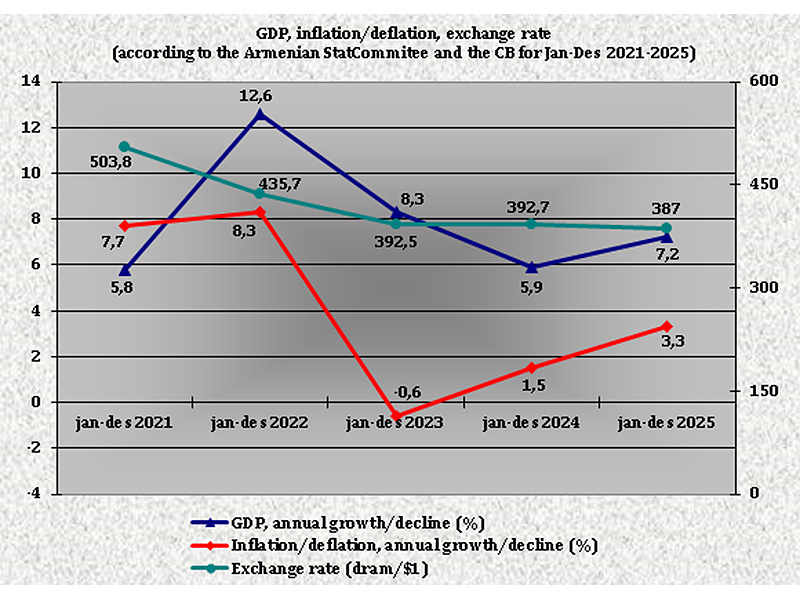
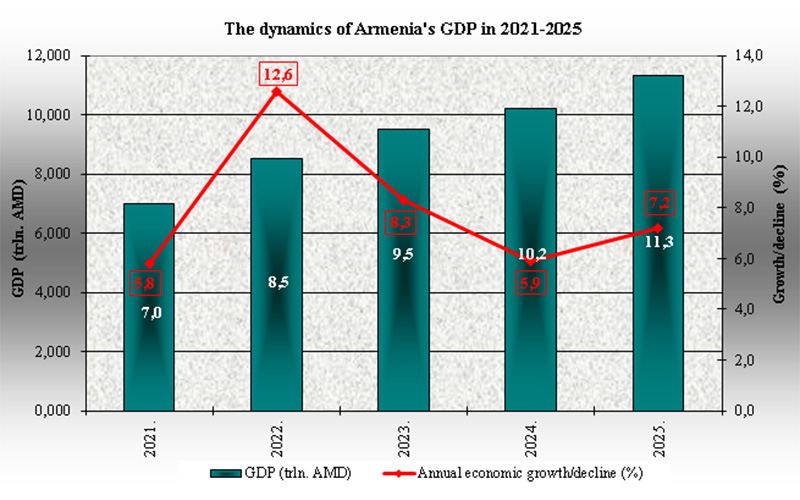
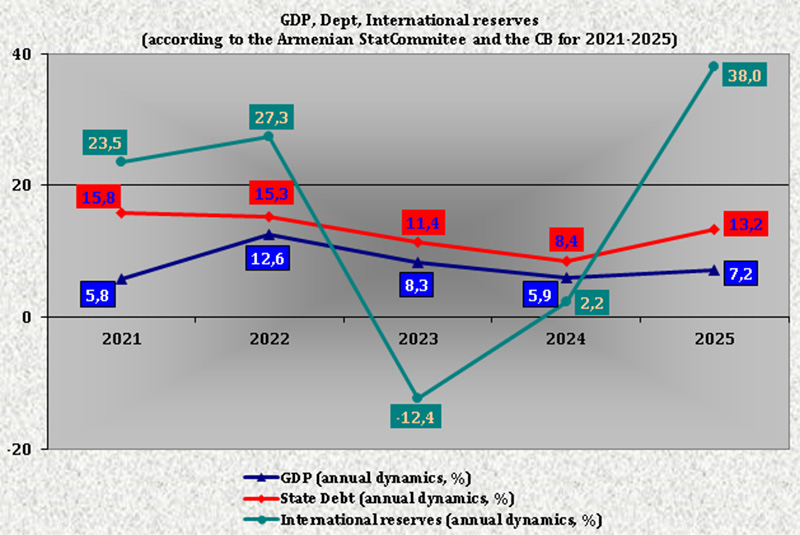
According to the World Bank forecast, Armenia's economy is transitioning from an exceptionally strong recovery in 2022-2025 to a more moderate growth trajectory of 5.3% in 2026 (compared to actual growth of 12.6% in 2022, 8.3% in 2023, 5.9% in 2024, and 7.1% in 2025), and will approach 5% by 2028. This slowdown is due to the normalization of consumption and investment levels following their sharp rise, as well as the gradual fading of the effect of the re-export surge that began in 2022. This was noted in the July World Bank report "Armenia's Economic Pulse: Pursuing Poverty-Reducing Growth through More Impactful Fiscal Policy."
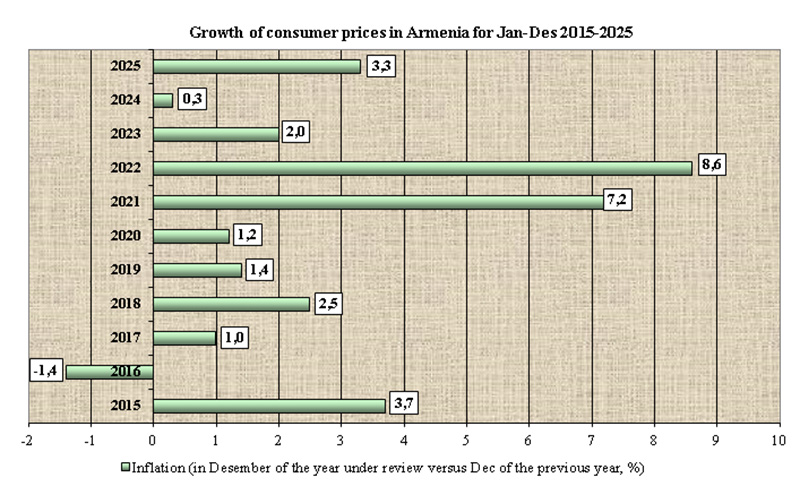
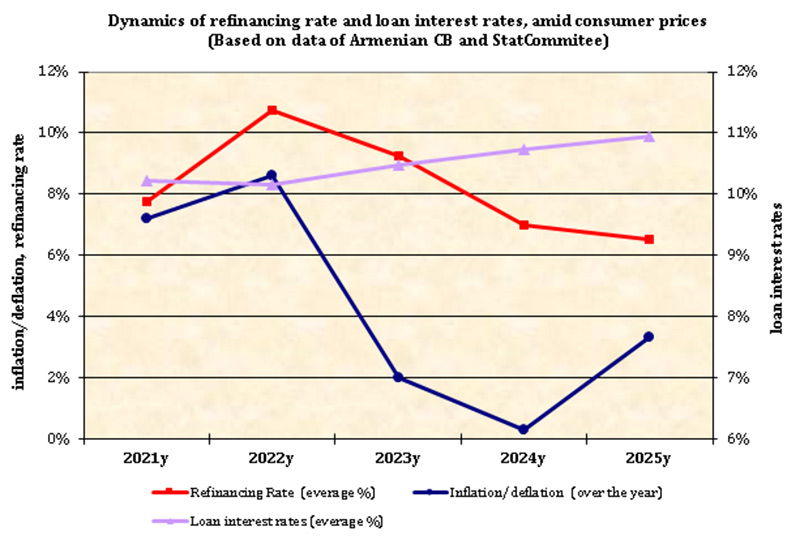
The World Bank states that inflationary pressures have recently increased and, amid heightened global tensions, could further worsen in the short term. The World Bank expects inflation to peak at 4.6% in 2026, before droping to 3.3% in the medium term. In the short term, inflationary pressures are expected to increase in the coming months, partly reflecting the potential impact of the conflict in the Middle East. The inflation forecast is driven by higher global prices, particularly oil price volatility, which is expected to cause widespread price pressure on consumer goods through supply channels. The baseline scenario assumes temporary disruptions in global energy supplies due to the Middle East conflict that began in late February 2026, leading to price increases throughout the year. Average increases for Brent crude oil and fertilizer prices are estimated at 36% and 20%, respectively, though this forecast remains subject to significant uncertainty.
According to the World Bank's forecast, the government budget deficit to GDP ratio will increase slightly in 2026 to 3.9% (from 3.5% in 2025), partially reflecting the pension increases that took effect in April 2026. However, this figure will then gradually decline to 3.6% in 2028, demonstrating the government's commitment to fiscal consolidation. The World Bank expects the public debt-to-GDP ratio, after declining from 48% to 46.8% in 2025, to rise to 50% in 2026 and then remain at 51.3% in 2027-2028, slightly exceeding the budgeted 50% threshold and requiring robust consolidation measures. Despite the planned fiscal consolidation trajectory, the World Bank forecasts that debt levels are expected to rise in the coming years, partly reflecting the replenishment of the stabilization fund and continued on-lending operations. The World Bank forecasts that the current account deficit to GDP, after rising significantly in 2025 from 4.6% to 7.2%, will gradually decline to 5.6% in 2026, 5.2% in 2027, and 4.8% in 2028, supported by normalized trade flows and increased export potential.
This baseline forecast already takes into account the impact of ongoing tensions in the Middle East on energy prices. Furthermore, a possible escalation of the conflict represents a key downside risk, which could significantly worsen economic growth, inflation, public finances, and external accounts. "Additional risks to Armenia's economy include escalating tensions with Russia and export restrictions, while unresolved border issues with Azerbaijan and Turkey could dampen investor confidence. These factors could delay investment decisions, despite progress in normalizing relations. However, if further progress is made in normalizing relations with neighboring countries, deeper regional integration and strategic investment commitments would contribute to stronger outcomes than envisaged in the baseline scenario," the World Bank report notes.
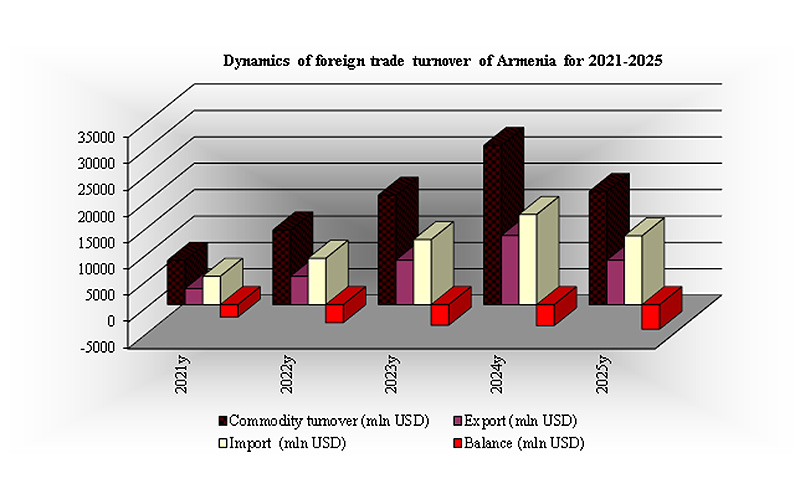
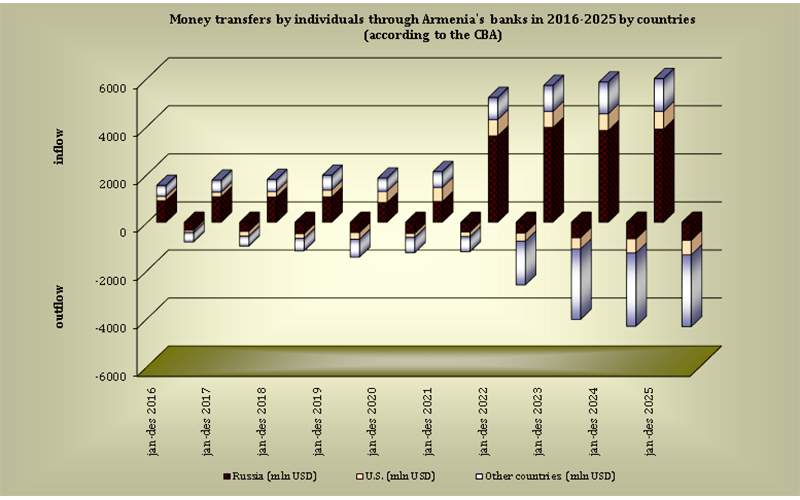
Transmission Channels for Armenia's Economy Global and regional economic processes impact Armenia through a number of transmission channels, transmitting external shocks to the domestic economy. According to the World Bank, these mechanisms encompass several factors: - Energy Prices: Armenia imports almost two-thirds of its liquid fuels from Russia and, increasingly, from Azerbaijan. Sharp spikes in global energy prices increase import costs and put upward pressure on domestic transportation tariffs and production costs, although Armenia's long-term contract with Russia's Gazprom for fixed-price natural gas supplies provides partial protection against gas price shocks; - Food Prices and Supply Chains: Inflation in global food prices is transmitted directly, exacerbated by the strengthening of the ruble, which increases the cost of food imports from Russia (Armenia's main food supplier) in AMD. Higher fertilizer prices also impact agricultural production costs; - Remittances: Russia accounts for approximately 54% of net remittance inflows in Q1 2026, and a slowdown in the Russian economy will directly reduce this crucial source of income for Armenian households; - Trade Normalization: The decline in re-exports of equipment (2023-2024) and precious metals and stones (second half of 2024-2025), which was the main factor behind the deterioration of the merchandise trade balance, reflects a decline in demand for transit trade through Armenia as economic activity in Russia normalizes after the post-crisis surge, combined with Russia's abolition of the export duty on precious metals, which was introduced at the end of 2023; - Logistics and Transport Connectivity: Disruptions to air travel, maritime shipping routes, and trade flows related to the conflict in the Middle East increase logistical costs for Armenia, an already landlocked economy with limited transit corridors. The opening of a transit route between Armenia and Azerbaijan in November 2025 and occasional trade will only marginally offset this impact by providing an alternative corridor.
What risks could affect economic growth?
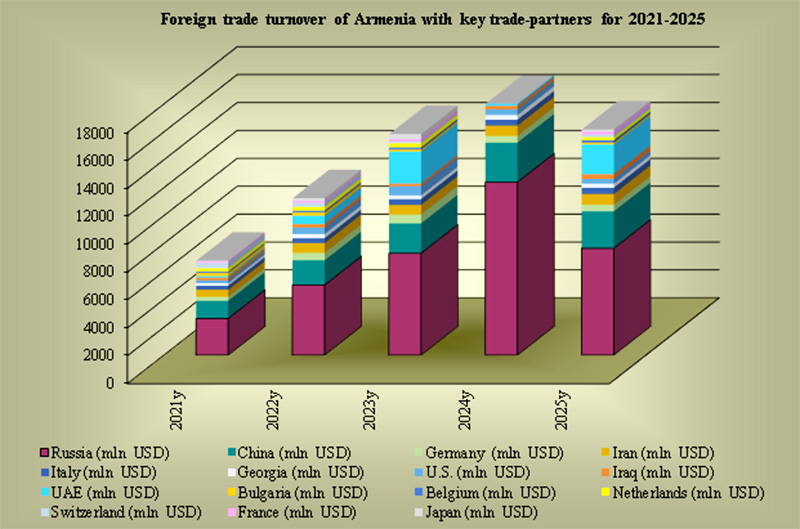
In a worst-case scenario, escalation of geopolitical tensions, spillover effects from the conflict in the Middle East, and domestic political tensions following the 2026 parliamentary elections could pose significant downside risks to Armenia's economic growth and other macroeconomic indicators. Escalating tensions with Russia expose Armenia to significant political and socioeconomic downside risks. In the parliamentary elections on June 7, 2026, the ruling Civil Contract party, led by Prime Minister Nikol Pashinyan, won a parliamentary majority. This confirmed Armenia's commitment to diversifying its security and economic partners, as well as reducing its dependence on Russia, which it currently remains heavily dependent on. Armenia's energy sector is heavily dependent on Russia, with the Russian Federation accounting for 36% of Armenia's total trade turnover, 33% of net foreign direct investment inflows, and 41% of total tourist arrivals. In this context, and following the recent elections, domestic political tensions could persist and trigger a degree of instability.
These factors negatively impact trust, may delay private sector investment decisions, and could reduce the predictability of government policy in the short term. At the same time, although significant progress has been made in improving relations with Azerbaijan and Turkey, unresolved border issues continue to pose downside risks, affecting investor sentiment and the structure of budget priorities, and delaying final investment decisions. These domestic and regional factors, combined with global uncertainty and tighter financial conditions, could weaken external demand, limit capital inflows, and lead to more moderate economic growth. The conflict in the Middle East also represents an increasingly significant external shock with multiple transmission channels for the Armenian economy. A prolonged escalation could lead to persistently high oil and food prices, disrupt supply chains, and redirect trade flows, particularly given Armenia's dependence on limited logistics corridors and its vulnerability to transit routes linked to Iran. These shocks could increase import costs, boost inflation, reduce real incomes, and negatively impact trade, tourism, and investment. While short-term impacts may be limited in the event of a short-lived conflict, its protracted nature will increase the macroeconomic vulnerability of an import-dependent economy.
On the positive side, normalizing relations with neighbors, deeper regional integration, and new strategic investment commitments from the US and EU could contribute to faster economic growth. Further progress toward normalizing relations with neighboring countries could reduce geopolitical risk premiums and support stronger investment, trade, and tourism flows. Developing regional transport connectivity, particularly through the practical implementation of strategic initiatives such as the TRIP Framework, could strengthen Armenia's role as a transit and trade hub, facilitating export diversification and investment inflows. In the medium term, deeper integration with Europe, new strategic investment commitments, and improved external economic integration could strengthen growth prospects beyond the baseline, provided implementation risks are managed and favorable geopolitical conditions remain.
In the long term, Armenia faces systemic risks such as population aging, digitalization-related changes, and the green transition, all of which could negatively impact poverty and inequality. Population aging poses new risks to the healthcare workforce, with Armenia reporting higher vacancy rates in healthcare than the national average. Furthermore, population aging will change the structure of the labor market, shifting demand toward more age-related services, such as personal care and social support. Generative artificial intelligence and the green transition are expected to impact a significant share of jobs, while the labor market supply is characterized by a significant shortage of digital and green skills. This hinders workers' transition to growing sectors of employment and potentially worsens labor market outcomes. Without targeted interventions and mitigation measures, these shifts could worsen unemployment, worsen human capital development outcomes, and undermine efforts to reduce poverty and inequality.