

ArmInfo.Legal entities and individuals in Armenia will soon be permitted to extract non-metallic mineral resources that are not included in the state balance sheet, provided the extraction occurs within their own land plots, involves no drilling or blasting, and follows procedures established by the government.
On June 17, the National Assembly debated a draft amendment to the Law "On Subsoil" in the first reading, presented by Asatur Vardanyan, Deputy Minister of Territorial Administration and Infrastructure.
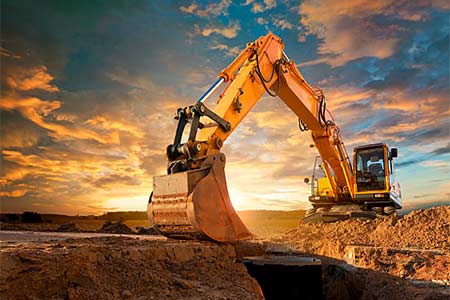
It was noted that with the adoption of the draft, Legal entities and individuals may extract non-metallic minerals from a depth of up to two meters exclusively for their own economic and household needs. Small- scale commercial extraction of solid non-metallic minerals will be permitted, capped at 20 cubic meters per calendar year. Extraction from depths specified in project documentation will be allowed for profit, provided that the proceeds are directed toward the construction of multi-apartment or public buildings. It should be noted that currently, over 670 solid mineral deposits with proven reserves—including 30 metallic ones—are registered on the state balance sheet. Of these, approximately 400 (including 22 metallic) are actively exploited.
Armenia ranks among the leading countries in the world for the wealth and diversity of its non-metallic ore reserves, with nearly every known ore mineral found within its borders. The territory is exceptionally rich in volcanic minerals, including tuffs, perlite, pumice, zeolites, and volcanic slags. Armenia holds some of the world's highest-quality, most expansive volcanic rock reserves. Proven reserves of "Aragats-perlite" alone amount to 150 million m?, with projected reserves reaching up to 3 billion m?. Over 100 deposits of basalt and andesite have been mapped across the country. Some are unique in composition, such as the Khaladzh basalt, which features an MgO content of up to 11%. The country also possesses significant, high-quality deposits of quartzite, carbonates, clays, bentonites, diatomites, and gypsum.