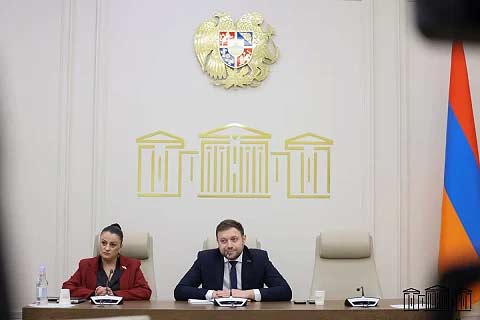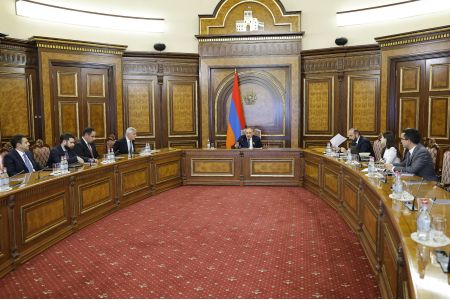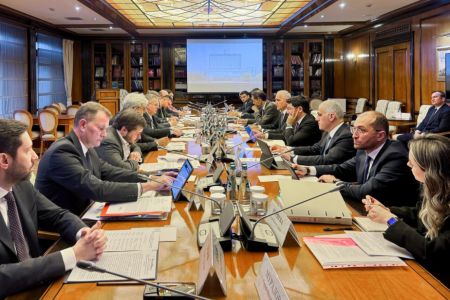


ArmInfo. Armenia intends to receive a EUR100 million loan from the French Development Agency (AFD). At its June 15 meeting, the National Assembly's Committee on Financial, Credit, and Budgetary Affairs approved the draft framework agreement submitted by the Armenian government for an unconfirmed credit line between the AFD and the Republic of Armenia.
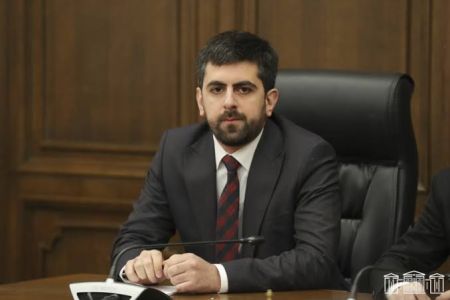
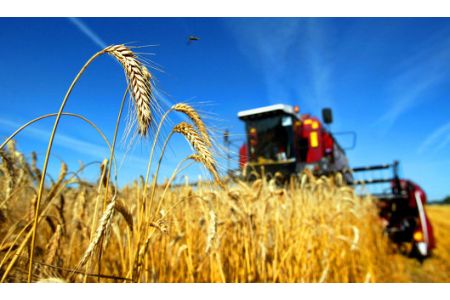
As Nvard Vardanyan, Deputy Chair of the RA Water Management Committee, noted in her speech, the loan resources are planned to be used to implement a comprehensive program for the development of the water and agricultural sectors. The significant deterioration of water and irrigation infrastructure in the Republic of Armenia, the high level of losses, and the increasing risks associated with climate change pose serious challenges to effective water resources management and sustainable agricultural development. The program offers a comprehensive and phased solution that simultaneously addresses existing problems at the national and local levels, through two main program areas. Specifically, the national-level water infrastructure investment component will be co-financed by the World Bank's Water Supply and Irrigation Improvement (WISE) project. A local-level component is being implemented in the Syunik region of the Republic of Armenia, aimed at restoring irrigation systems, improving water resource management, and developing sustainable and inclusive agriculture. Of particular importance is the implementation of this component, which will combine infrastructure development with the full utilization of local economic and agricultural potential. This latter component plans to gradually restore and modernize irrigation systems in the settlements of Sisian, Goris, and Meghri, utilizing gravity systems, pumping stations, and water reuse systems. Advisory services (research, detailed design, and supervision) are also provided. The program will be based on four main components, arranged in a logical and interconnected sequence: - Investments in the modernization and rehabilitation of water infrastructure and irrigation; - Investments in agricultural development; - Investments in agribusiness, including agritourism, aimed at increasing the added value of products, which is essential for sustainable agriculture; - Development of advanced financial mechanisms for the development of "green" and "smart" agricultural growth, with a key emphasis on digitalization.
The ADF financing consists of a multi-tranche credit line of up to EUR100 million in three tranches: a EUR30 million loan for the Syunik region of the Republic of Armenia, a first tranche of a loan for the Water Supply and Irrigation Improvement Project (WISE) of up to EUR30 million, and a second tranche of a loan for the Water Supply and Irrigation Improvement Project (WISE) of up to EUR40 million.
The World Bank is the project's co-financing agency. The EU also provides a grant of EUR12.456 million for technical assistance. The agreement is valid for three years from the date of signature. The borrower and lender may terminate the agreement at any time before its expiration without compensation (except for compensation calculated on outstanding loans).
It should be noted that, under the agreement, the 2026 state budget of the Republic of Armenia allocates 193.6 million drams, of which 161.3 million drams are loan funds and 32.3 million drams are co-financing from the Armenian government.
The French Development Agency (AFD) was founded in 1998 and operates the bilateral development finance mechanism of the French Republic. On December 18, 2025, the AFD opened its new office at the Yerevan Plaza Hotel. The AFD Group, present in Armenia since 2013, finances projects that contribute to the fight against climate change and work towards a just and inclusive transition. The agency supports the sustainable management and conservation of natural resources, the energy transition, public financial management, and urban services. Since 2013, AFD has allocated EUR555 million in loans and around EUR30 million in aid to Armenia, of which EUR23.5 million was provided by the European Union.