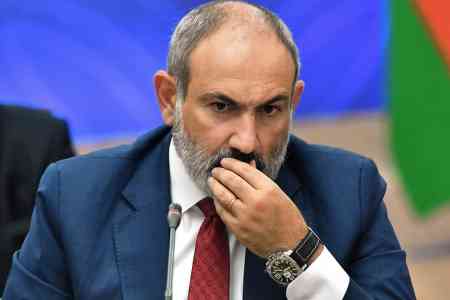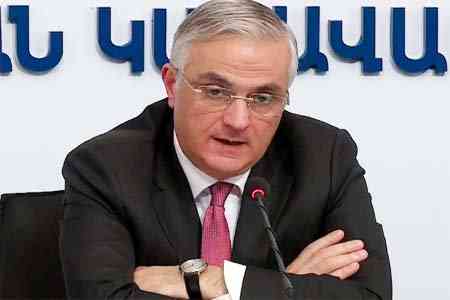



ArmInfo. "We are currently facing a major shortage of goods required to sustain our target export volumes," said Armenian Prime Minister Nikol Pashinyan during a press briefing on June 11.
He noted that boundless markets are open to Armenia, but the country needs to significantly increase its production volumes to supply these accessible markets. "The rest are operational matters that we will discuss," he said, commenting on a series of restrictions imposed on Armenian exports by the Russian side.
Recall, Rosselkhoznadzor (the Russian Federal Service for Veterinary and Phytosanitary Surveillance) introduced temporary restrictions on May 30 on the import of fresh tomatoes, cucumbers, peppers, greens, and strawberries originating from or shipped from Armenia due to detected violations. The agency explained that the agricultural products supplied by Armenia did not comply with EAEU and Russian standards.
Additionally, on May 28, Rospotrebnadzor (the Russian Federal Service for Surveillance on Consumer Rights Protection and Human Wellbeing) suspended the sale of 64.5 million units of "Jermuk" natural sparkling medicinal-table mineral water within the Russian Federation. The basis for the directive was the manufacturer's violation of mandatory technical regulation requirements. Testing revealed elevated levels of bicarbonate ions, chlorides, and sulfates in the water.
In 2025, Armenia exported 146,500 tons of fresh fruits and vegetables, 1.4% more than in 2024. Of this volume, approximately 90% went to the Russian market.
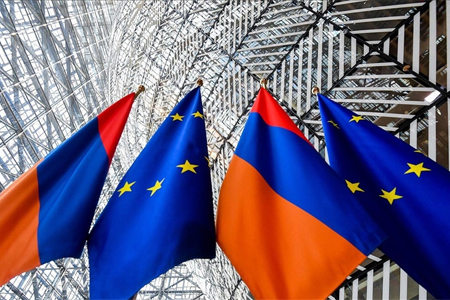
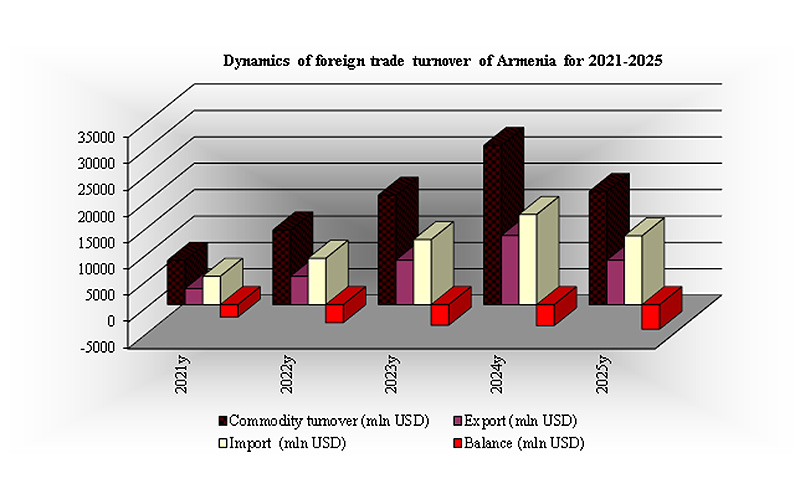
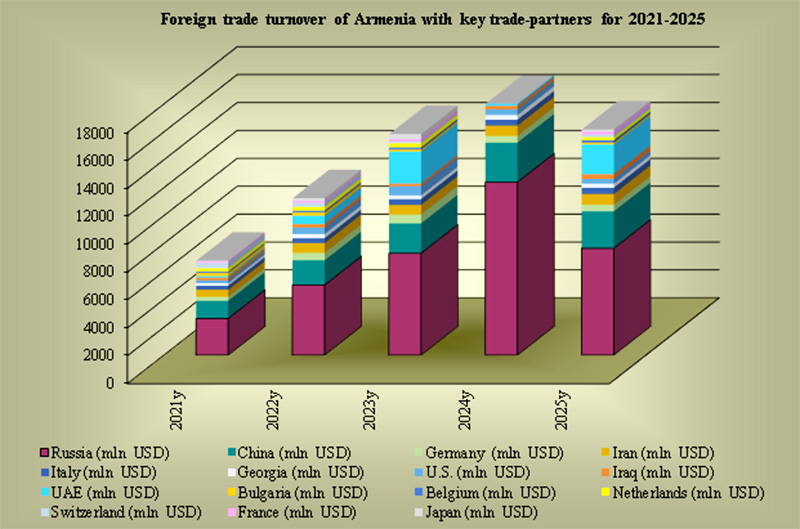
It should be noted that, according to the Statistical Committee of the Republic of Armenia, mutual trade with Russia in 2025 showed a 38.3% decline, amounting to $7.6 billion. Exports declined by 6.9% to $2.9 billion, while imports fell by 49.2% to $4.7 billion. In the first quarter of this year, volumes decreased by 17.2% to $1.3 billion. Exports amounted to $639.3 million, a 7.1% year-on-year decline, while imports amounted to $690.3 million, a 14.8% year-on-year decline. Meanwhile, trade turnover with EU countries increased by 7.2% in 2025, amounting to $2.5 billion (or 11.7% of total trade). Export deliveries increased by 9% to $666.8 million, against the backdrop of an increase in imports by 6.5% to $1.8 billion. In the first quarter of 2026, mutual trade with EU countries increased by 54.3%, amounting to $763.2 million. At the same time, exports demonstrated growth of 89.8% to $248.7 million, against the backdrop of an increase in imports by 41.5% to $514.5 million.