


ArmInfo.Tigran Petrosyan, Head of the Food Safety Inspection Body of Armenia, held an emergency meeting with local fish farmers and seafood producers to address current industry bottlenecks and future export prospects.
According to the Inspectorate's press service, Petrosyan emphasized that the purpose of the meeting is not simply to document issues and air accusations, but to transform the current serious challenge into an opportunity for industry transformation.
Addressing the recent suspension of Armenian fish exports to the Russian Federation, Petrosyan assured producers that every effort is being made to resolve the impasse, while clarifying that safety and hygiene standards remain non-negotiable. Moving forward, samples from all export-bound batches will undergo laboratory testing for bacteriological contamination, diseases, and prohibited chemical residues. Petrosyan stated that the Inspection Body will tighten internal controls over both raw materials and finished goods to restore the credibility of Armenian products within the Eurasian Economic Union (EAEU) market.
"Producers who continue to demonstrate negligence and jeopardize the development and export potential of the entire sector will be denied export rights, as the entire sector should not suffer because of a single company," the head of the inspection body warned. The potential for exporting fish products to European Union markets, which are already open to Armenian fish products, was also discussed, provided they fully comply with European standards.
Producers were informed of the mandatory, uninterrupted implementation of the Hazard Analysis and Critical Control Points (HACCP) system to guarantee complete transparency and traceability across the entire supply chain—from the quality of water and fish feed to the final packaged product.
It is also noted that the Inspection Authority acts as a partner for producers and is ready to provide professional advice if needed. Inspection Authority specialists are ready to visit farms, conduct inspections, and point out any deficiencies that hinder exports.
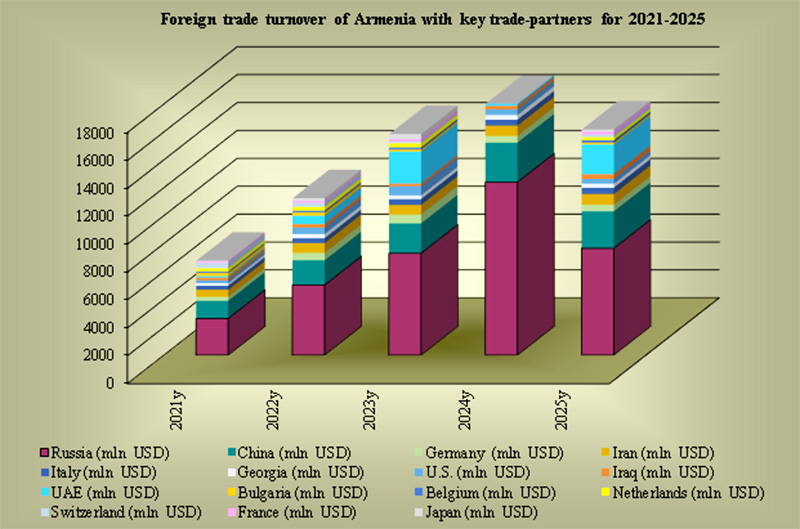
Russia has imposed a temporary ban on the import of stone fruits and grapes from Armenia, effective June 2. The restrictions apply to cherries, sweet cherries, apricots, plums, peaches, nectarines, and fresh grapes, allegedly due to "increased supply violations." This isn't the first restrictive measure Russia has imposed against Armenian exports in recent weeks. Previously, Rosselkhoznadzor banned the import of fish and fish products from Armenia, making an exception for only two companies that had passed Russian inspection. Russia also restricted the import of Armenian flowers, mineral water, cognac, wine, vegetables, and strawberries. Armenian authorities and observers attribute Moscow's actions not only to sanitary concerns but also to the sharp deterioration of relations amid the Armenian Prime Minister's policy of rapprochement with the EU and the US.