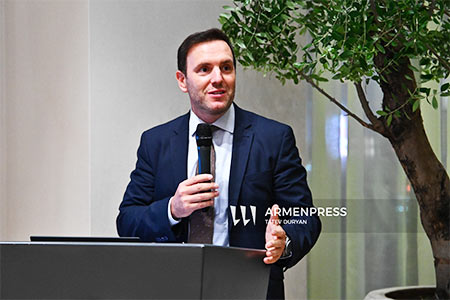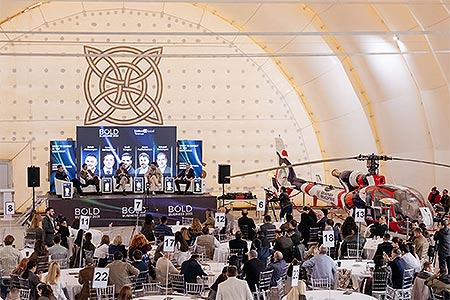



ArmInfo. It is time for Armenia to focus on developing the equity securities market to attract financing for the real sector of the economy. This was discussed at the conference "25 Years of Excellence, Growth, and Global Integration," dedicated to the 25th anniversary of the Armenia Securities Exchange (AMX), which concluded its work today.
As noted in one of his speeches by Tomasz Bardzilowski, representing the Warsaw Stock Exchange (GPW), there is some movement in the country toward developing the corporate securities market, but this movement is leaning toward debt bonds. Meanwhile, despite subsidies and support programs, the stock market seems frozen and is not moving. In his opinion, the necessary infrastructure has not been created in the country, even though there are already companies capable of launching an IPO. In this regard, he highlighted the information technology segment, which often finds financing abroad because it cannot find it in Armenia. Effectively, IT companies leave the Armenian market for this reason and continue their development where there is access to long-term capital, such as Silicon Valley. According to the Polish guest, if the government manages to create such financial instruments, institutional investors will certainly pay attention to Armenia and its well-developing high-tech market.
The conference highlighted that from this perspective, it is essential to build strong bridges between capital markets, exchange experiences and practices on using financial instruments, and establish personal connections. Institutional investors need to see Armenia as a market that is clear to them, transparent, stable, and trustworthy.
As Alexander Myulberger, Executive Director of ROEMER CAPITAL, a company that has been operating in Armenia for over two years, stated in an interview with an ArmInfo correspondent, the infrastructure of Armenia’s capital market has significantly expanded and deepened in recent years. Effectively, the infrastructure for developing integration and for the global capital market to work with the local one is ready in the country. Local companies are attracting financing for their portfolios. Agreements have been signed with Armenian banks and brokers, and the process of signing agreements has already begun with Armenian corporates that are considering entering foreign markets to attract both debt and equity capital. This takes time. However, for now, it is necessary to increase the number of local IPOs. Infrastructurally, legislatively, and regulatorily, everything is ready; it just remains for companies to "mature." After local companies increase the number of domestic IPOs, the next step will be to enter regional capital markets through regional exchanges. Only then can we talk about the Western direction.
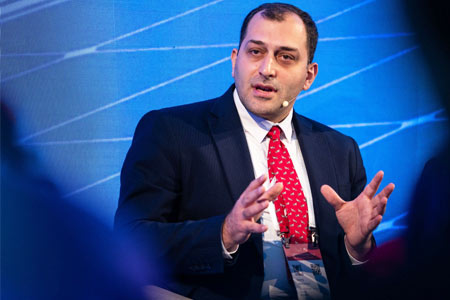
"We need a critical mass. We are a small country. We need to work with large countries and attract capital from there," says David Tavadyan, founding partner of the Armenian retailer KAMERTOON. He believes that in the current situation, Armenia could act as a unique offshore financial zone with "live trading" of stock assets from many countries, including trading in blue chips. According to Tavadyan, there is a significant amount of foreign direct investment in the country, and as can already be seen, demand outpaces supply, causing prices to rise. "We cannot increase FDI volumes indefinitely, as we will face serious structural issues. Armenia needs portfolio investments, and this is a crucial direction for the development of the real sector of the economy. This is what we must strive for. Everything has its time, and I am positive about this," the expert emphasized.
It is worth noting that Armenia's stock market is quite small: around three dozen companies are listed on the Armenia Securities Exchange (AMX), and less than half of them are actively quoted. The equity market is clearly dominated by banks, whose purpose on the exchange mostly comes down to maintaining the "level of exchange capitalization." The liquidity of Armenian companies' shares is extremely low, and the total capitalization barely exceeds half a trillion drams. A listing of non-financial companies exists, but it is limited to a small number of utility services, industrial companies, and a few consumer goods manufacturers.
According to the Governor of the Central Bank of Armenia, Martin Galstyan, the regulator's main goal in developing the corporate securities market is to strengthen trust and credibility in the country's economy. "At various times, many countries achieved this through anchor issuers, such as companies with stable income, strong reputations, transparency, and high creditworthiness, which regularly enter the market and reliably fulfill their obligations. Their successful issuances demonstrate the efficiency of the capital market, create positive success stories, and encourage other companies toward greater transparency and entering the market," he noted. Therefore, the chief banker believes that priority should be given to encouraging securities issuances by companies capable of delivering positive results in the short term—especially reliable, stable, profitable, and well-known companies. In this context, large infrastructure companies are particularly important. Armenia’s infrastructure needs significant improvement, while such companies can realistically attract financing from the capital market due to their visibility to investors and relatively stable future cash flows.
It is difficult to disagree with Galstyan in this context. Discussions about at least partial public privatization of infrastructure and municipal enterprises with steady cash flow have been going on for a long time, but things have not moved forward.