

ArmInfo. Regulations under the Green Agenda in both the EU and Armenia are quite bureaucratic.
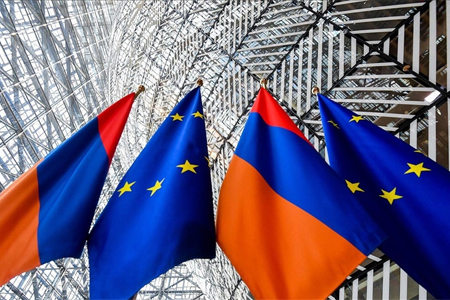
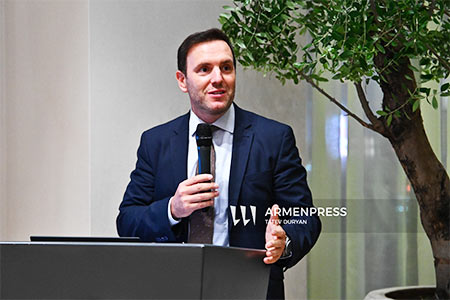
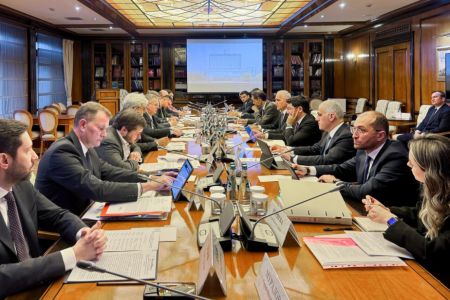
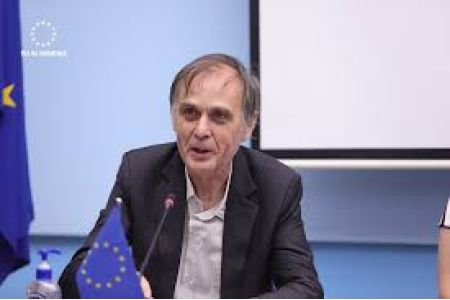
This opinion was expressed by Frank Hess, Head of Cooperation at the EU Delegation to Armenia, during the "Green Agenda for Armenia" conference.
According to him, the existing regulations pose a significant burden, especially for small businesses. "Both Armenia and Europe need to implement sensible regulations that simultaneously protect the environment and create incentives for businesses to become more environmentally responsible," Hess noted.
Pointing to the numerous environmental challenges facing Armenia, Hess expressed bewilderment that none of the current political forces are raising environmental issues in their election campaigns. "I haven't heard anything, nothing has been voiced. And this is an extremely important issue," he emphasized.
In turn, the Ambassador of the Kingdom of Sweden to Armenia, Patrik Svensson, noted that the transition to a green agenda is a necessity today. He noted that this is important both from the perspective of climate and environmental protection, and in terms of competitive advantages, as implementing this agenda accelerates development and contributes to the achievement of set goals. "As a country, we want to be a global leader in the field of circular economy. We have a strategic plan to reduce emissions by 2040, and Armenia is an important partner for us," the diplomat said.
He added that Sweden's priority areas of cooperation today are supporting democratic reforms and reducing Armenia's isolation.
Svensson also reported that the Green Agenda Transition Program is being implemented in Armenia by the Stockholm Environment Institute (SEI).
As part of this initiative, Sweden assists Armenia in developing and implementing policies related to the green agenda, promotes the fulfillment of national priorities, and also intends to facilitate the country's fulfillment of its international obligations. Nvard Vardanyan, Deputy Head of the Water Committee of Armenia, also participated in the conference. She noted that the green agenda has a broader significance and is the foundation of economic stability, national security, public health, and effective governance.
"In this process, responsible and rational water resource management is one of our key tasks. Armenia is rich in water resources, but we understand that climate change, deteriorating water systems, the risk of increasing water scarcity, and growing demand for water consumption pose serious challenges for all of us. In this context, we attach great importance to close cooperation with scientific organizations, the private sector, and international organizations," Vardanyan said.