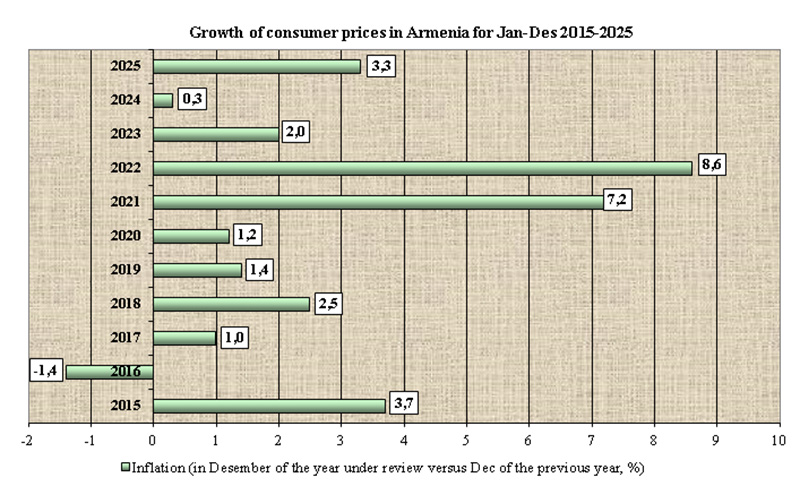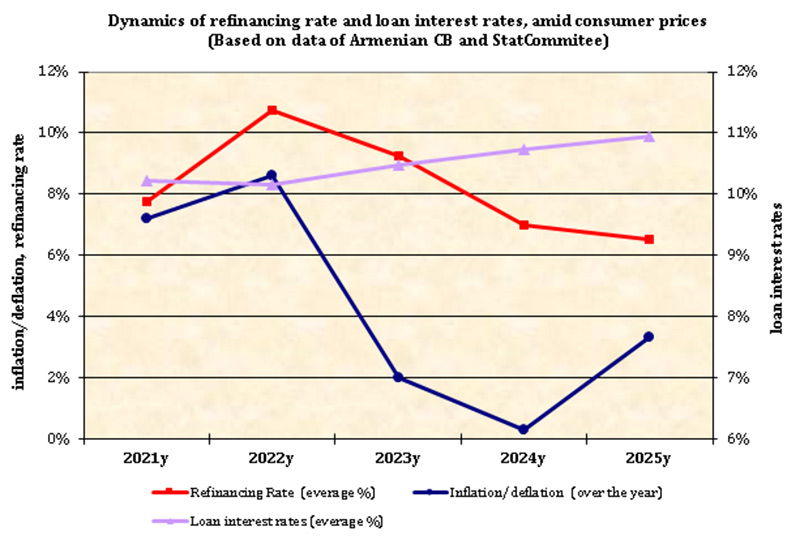


ArmInfo. In Armenia, rising food prices drove annual inflation from 3.2% to 5.3% in April 2026. Specifically, food prices increased by 9.3%, service tariffs increased by 2.6%, and non-food prices increased by 1.9%.
A year earlier, food and service prices increased by 5.3% and 2.7%, respectively, while non-food prices fell by 0.5%. According to data of the Statistical Committee of the Republic of Armenia, the most significant increase in price of food products year-on-year (April 2026 compared to April 2025) were eggs (31.3%), cocoa (22.4%), beef (20.5%), lamb (14.9%), pork (12.5%), sunflower oil (11.6%), pasta (11%), wheat groats ( 10.5%), fruits (10.3%), dairy products (9.3- 7.1%), chocolate (9%), butter (8.7%), cheese (8.5%), buckwheat (7.7%), coffee (6.8%), and vegetables (6.5%). Flour and bread also continue to rise in price. The services that experienced the most significant year-on-year price increases were vacation rentals (17.6%), compulsory motor vehicle liability insurance (11.7%), medical services (5.4-7.2%), and hotel services (6.1%). Jewelry prices also increased sharply year-on-year, from 18.9% to 45%.
Cigarette prices also accelerated year-on-year, from 6.4% to 7.7%, as did alcohol. Specifically, vodka prices accelerated from 6.8% to 9.8%, beer from 1.1% to 4.7%, and wine rose by 1.6% (almost the same as last year, at 1.5%). Bottled mineral water saw a more significant year-on-year increase, up 4.8% (compared to 1.9% the previous year). Gasoline and diesel fuel prices increased in April of this year. by 5.1% and 12.9%, respectively, while liquid hydrocarbons (butane, propane, etc.) rose by 4.9%. Year-on-year (April 2026 vs. April 2025), gasoline prices increased by 0.6%, diesel fuel by 7%, and liquid hydrocarbons (butane, propane, etc.) jumped by 48.8%.
A four-month inflation of the current year also accelerated to 4.5% (from 2.5% the year before), driven by a 9.6% rise in food prices, a slight increase in utility tariffs, and a rise in non-food prices of 0.7% and 0.3%, respectively. A year earlier, a similar picture was observed for food products, but then, in January-April 2025, their prices increased more modestly by 4.9%, services increased by 1.1%, and non-food goods fell by 0.4%.
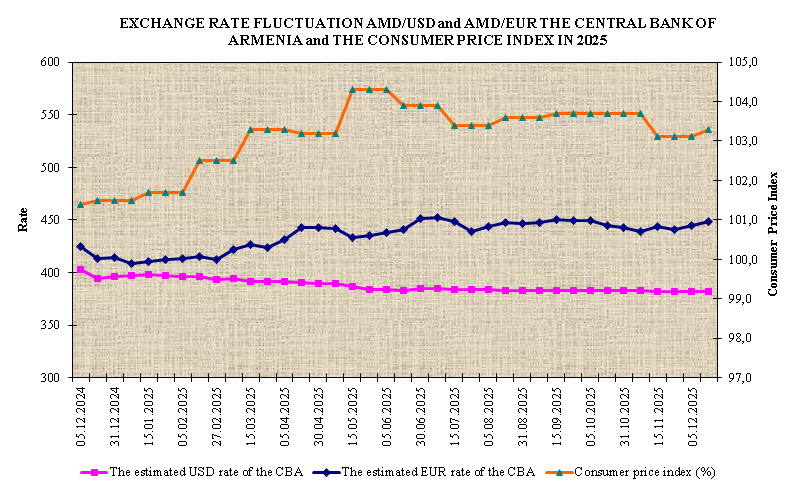
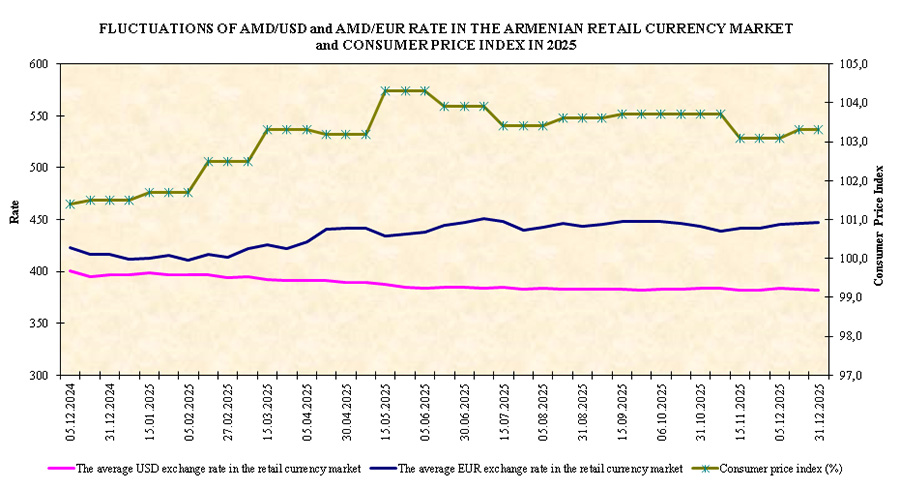
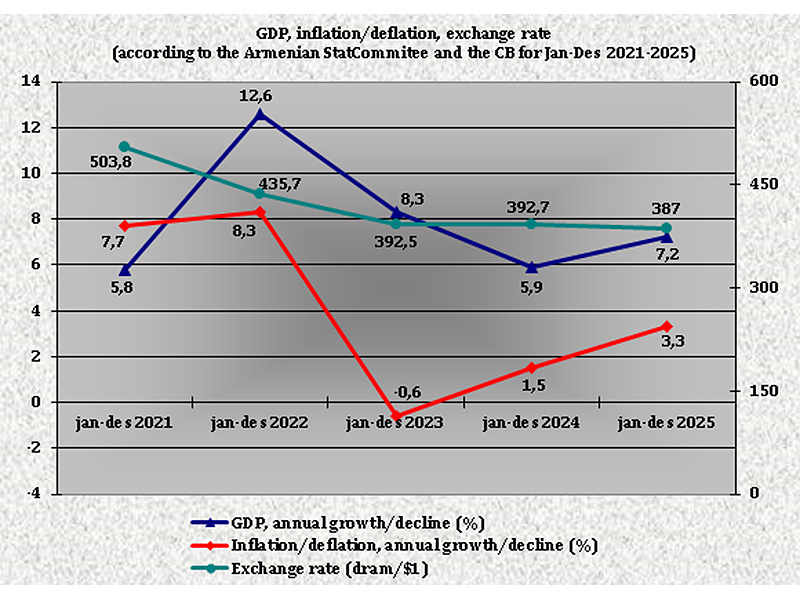
In January-April 2026, compared to January-April 2025, consumer price inflation was 4.5% (compared to 2.7% the previous year), driven by a 7.5% increase in food prices, 2.8% for services, and 1% for non-food goods. A year ago, food prices increased less noticeably by 4.4%, services by almost the same 2.7%, and non-food goods fell by 0.9%. April's annual consumer price inflation of 5.3% was accompanied by a 4.2% revaluation of the AMD against the USD, from AMD 390.7 to AMD 374.2/1$. This is similar to the more modest figures observed a year ago, when inflation was 3.2% and the AMD revalued against the USD by 0.1% (from AMD 391 to AMD 390.7/ $1). In April, 2026, inflation was 1.3% and the AMD revalued against the USD by 0.8%, repeating last year's pattern, when in April 2025, inflation was recorded at 0.5% and the AMD revalued against the USD by 0.5%.
It should be noted that starting in 2025, the inflation target is set at 3% with an acceptable range of +/- 1 percentage point (compared to the previous 4%, +/- 1.5 percentage points). The RA Law "On the State Budget of Armenia for 2025" stipulates that the Central Bank will henceforth be guided by a new inflation target (3%, +/- 1 percentage point) when making decisions on monetary policy.