


ArmInfo.Net foreign investment in Armenian economy's real sector increased by 16% in 2025, reaching a positive level of $90.5 million (34.5 billion drams). Moreover, net foreign direct investment (FDI) increased from a negative $119.8 million (47.5 billion drams) to a positive $244 million (93.02 billion drams), a significant fourfold increase year-on-year, as evidenced by data from the Statistical Committee of the Republic of Armenia.
According to statistics, the improved FDI dynamics were due to a significant increase in direct investment from Luxembourg and inflows from Moldova. The drivers of overall investment growth were the United States, Luxembourg, Kazakhstan, Singapore, and Switzerland.
The United States, Luxembourg, Kazakhstan, Singapore, and Switzerland led the way in positive net investment flows in the reporting year, while Canada, Russia, Germany, Sweden, and the UAE had the largest negative net investment flows. Moreover, in 2024, Canada and Sweden were among the leaders with positive net investment flows, while Russia already had the largest negative investment flow. In fact, investment growth rates would have been significantly higher if not for the sagging inflows from Russia, Canada, Germany, and Sweden, and the zeroing out of investments from Jersey. The top five countries (the United States, Luxembourg, Kazakhstan, Singapore, and Switzerland) saw a combined positive total investment flow of $504.8 million (192.5 billion drams) by the end of 2025, while the top three countries by positive FDI flow (Luxembourg, France, and the United States) provided a combined total of $164 million (62.6 billion drams). Meanwhile, the combined negative total investment flow of Canada, Russia, Germany, Sweden, and the UAE was $438 million (167 billion drams), while the combined negative FDI flow of Russia, Georgia, the UAE, Italy, and Germany was $49.6 million (19 billion drams).
The United States, the leader in positive net investment flow, provided $246.2 million (93.9 billion drams) in 2025, of which only 11% was FDI ($27 million or 10.2 billion drams). During the reporting year, net investment from the US increased 6.5-fold, but FDI as a share of its total investment decreased by 22%. The bulk of this investment went to the mining industry, while the remainder went to software development and related IT activities, cigarette and base metal production, and housing construction. At the same time, investment declined in beverage production, machinery and equipment manufacturing, wholesale trade, energy projects, the hotel business, and research and development. Investments in the legal and accounting sectors ceased entirely.
Luxembourg ranked second in terms of positive net investment (entirely in the form of FDI) at $108.8 million (41.5 billion drams), with a 35-fold increase year-on-year due to FDI turning negative and a 22-fold increase. The main volume is directed to the air transport sector, and the rest to energy projects, beverage production, warehousing and auxiliary transport activities, and scientific and technical professional activities.
Kazakhstan ranked third in terms of positive net investment flow, with $53.7 million (20.5 billion drams, a 150-fold increase annually). While this previously represented entirely FDI, its share is now negligible. Kazakhstan primarily directed its investments toward metal ore mining, a sector it had not previously invested in, while the remainder, as before, went into law and accounting.
Singapore ranked fourth in terms of positive net investment flow, with $49.5 million (18.9 billion drams, a 3.3-fold increase annually, and now in negative territory), although no FDI flows come from this sector. Singapore's investments, as before, are entirely directed toward metal ore mining. Switzerland ranks fifth in terms of positive net investment flow, with $46.5 million (17.7 billion drams, a 55.3% year-on-year increase), of which FDI accounts for 33% (5.8 billion drams, a 48% year-on-year decline). For the first time, the bulk of Swiss investment has been channeled into metal ore mining. Investments in wholesale and retail trade have increased, while investments in software development and related IT activities, the hotel industry, and research and development have continued. Investments in cigarette and beverage production, advertising, and market research have also begun. At the same time, investments in housing construction and energy projects have declined.
Canada leads with negative net investment flow, with $193.6 million (73.8 billion drams), a 6.1-fold year- on-year decline (from the leading positive level to negative). Moreover, FDI from Canada remained positive at $19.8 million (7.6 billion drams), with a 58% year-on-year decline (dropping from 1st to 4th position). Almost all FDI investment went into the metallurgical industry, while investments in the chemical industry and IT sectors were reduced. Investments in law and accounting completely fell to zero.
The second-largest negative net flow of total investment and the highest negative FDI flow were recorded in Russia - $97.7 million (37.3 billion drams) and $24 million (9.1 billion drams), respectively. Unlike 2024, when net investment from this destination rapidly fell into negative territory, in 2025 the negative value significantly decreased for total investment by 41% and for FDI by 89.3%, respectively. Russia significantly reduced investment in metal ore mining and other mining sectors, clothing manufacturing, construction, software development, real estate transactions, wholesale and retail trade, electricity and gas supply, and financial intermediation, while completely eliminating investments in pharmaceutical production. At the same time, small amounts of investment were directed to telecommunications, home improvement, research and development, law and accounting, land transportation (South Caucasus Railway), computer manufacturing, electronic and optical equipment, food and beverage production, crop production, livestock farming, and fisheries.
The third-largest negative net investment flow was from Germany - $96.6 million (36.8 billion drams), of which only a small portion was FDI. Moreover, net investment from Germany was already negative in 2024, but will increase sixfold in 2025. Investments in energy projects and basic metals production have been largely curtailed. Investments in electrical equipment production have been completely eliminated, with only small amounts retained in wholesale trade, software development, and related IT activities.
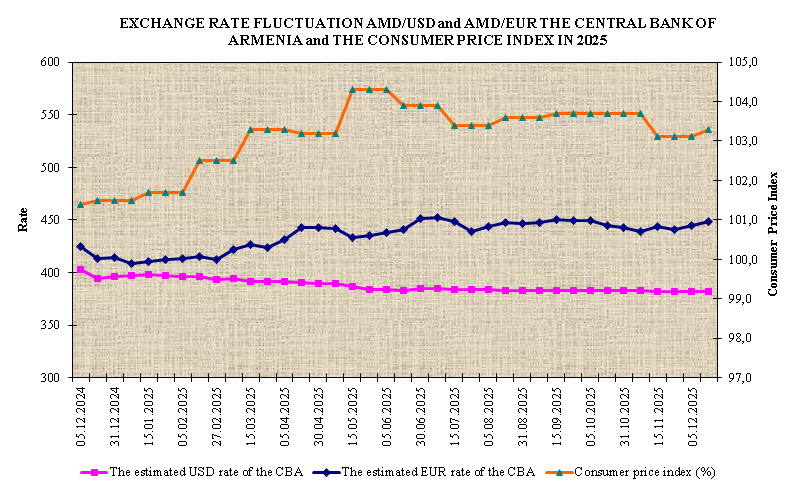
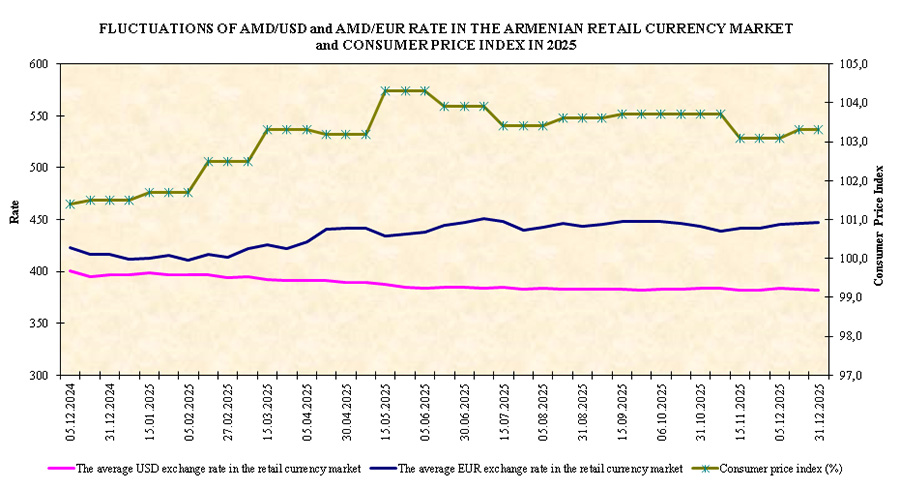
Note that the net flow reported in the statistical report is the difference between attracted and repaid foreign investment. (The calculated exchange rate for the dram against the US dollar on December 31, 2025, was AMD 381.36/$1, compared to AMD 396.56/$1 on December 31, 2024.)