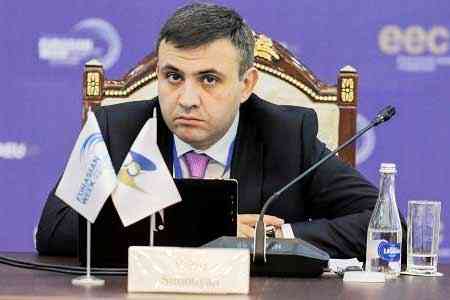



ArmInfo. At its April 6 meeting, the National Assembly Committee on Financial, Credit, and Budgetary Affairs approved the candidacy of Martin Galstyan, renominated by the ruling Civil Contract faction for the position of Chairman of the Central Bank of Armenia.
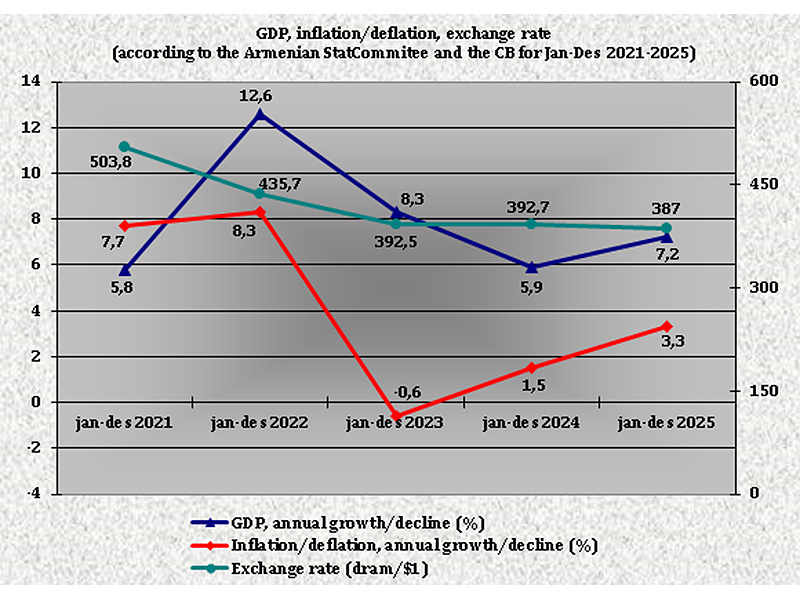
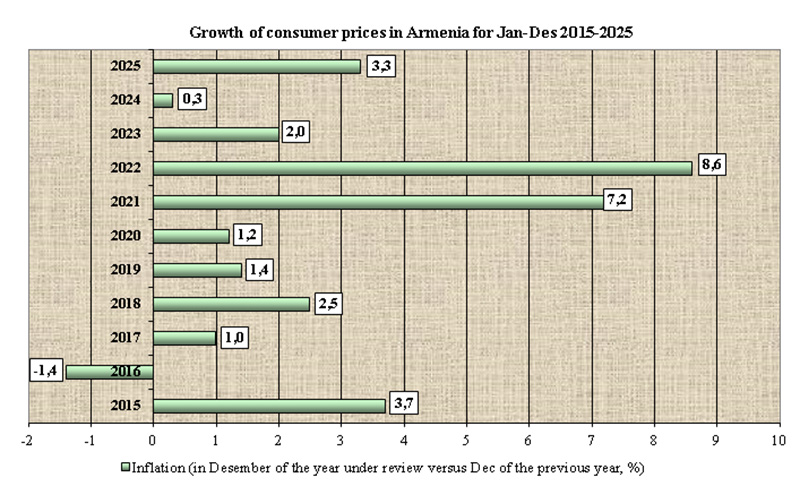
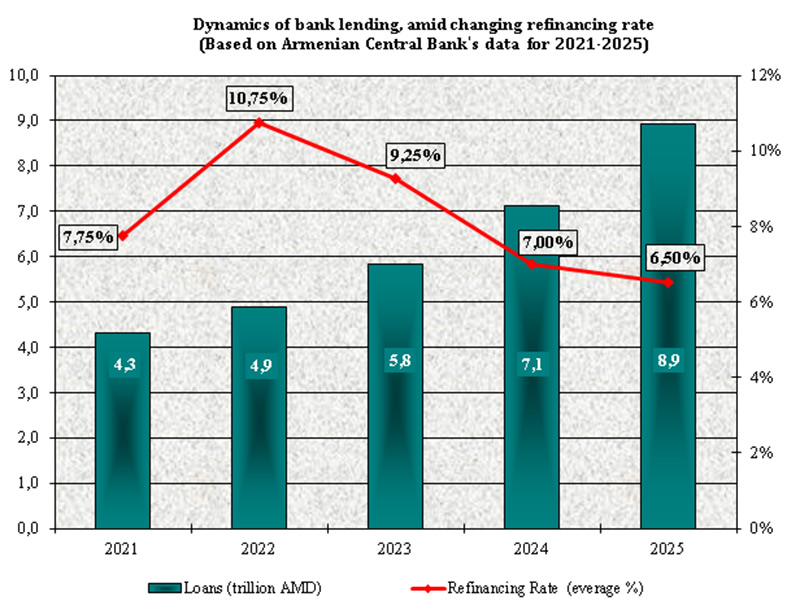
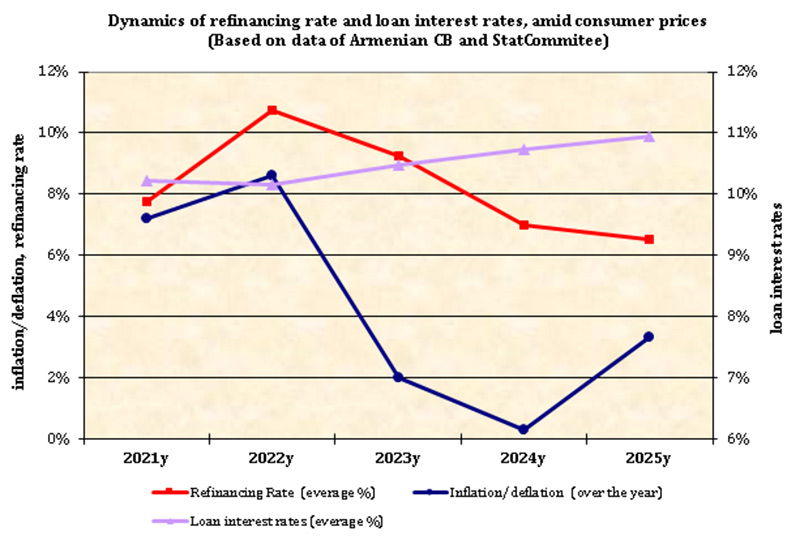
In his speech, Martin Galstyan recalled that one of the most important functions of the Central Bank is maintaining macroeconomic stability, which has no alternative and is aimed at the fundamental development of the state. Accordingly, all the Bank's efforts over the past six years have been directed toward achieving this goal. Galstyan noted that in June 2020, when he assumed the position of head of the Central Bank, the country was at the epicenter of the coronavirus epidemic, followed by a 44-day war in September, which led to a dire socioeconomic situation for the Armenian state. In this situation, the country's greatest challenge at the time was ensuring stability. Several important steps were taken, one of which, unlike the central banks of many countries, was raising the refinancing rate in December 2020, which created conditions for a stable macroeconomic environment. By comparison, the United States has still not achieved its inflation targets. In Armenia, by the end of 2021 and beginning of 2022, the Central Bank was already very close to the 4% target, but the outbreak of the Russian-Ukrainian war led to a new round of inflation in the country. In 2023, as a result of another increase in the refinancing rate, inflation declined and fell below the planned level. It was during this period that the process of reducing the refinancing rate began. However, as the candidate for Central Bank chairman emphasized, the country is now entering a new period of crisis, as it is currently difficult to predict the outcome of the Iranian-Israeli-American standoff.
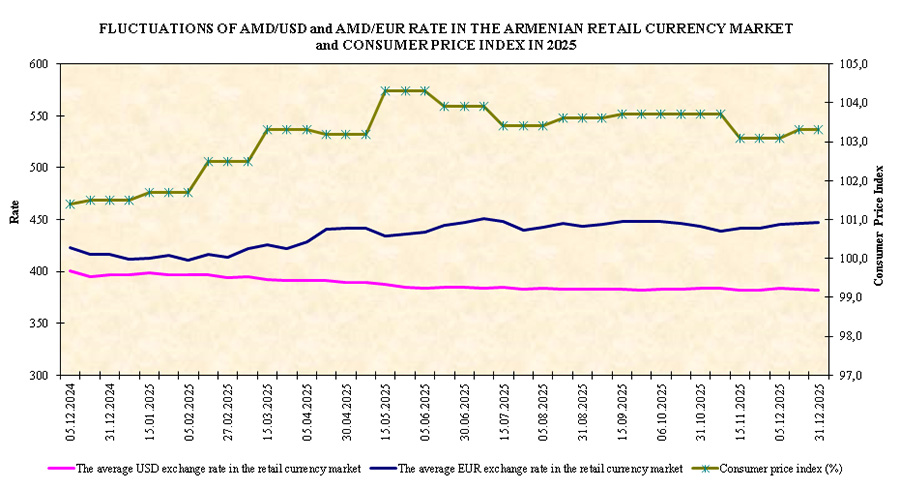
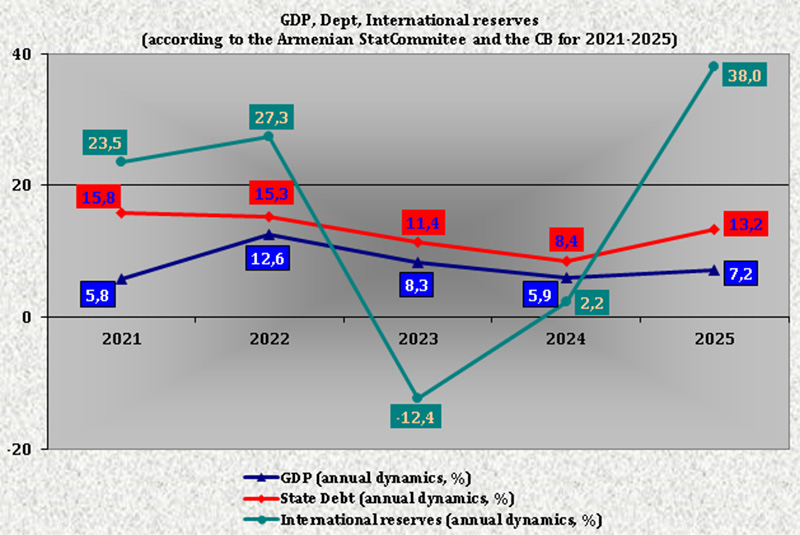
Martin Galstyan also noted the Central Bank's intervention in the foreign exchange market during various crises. These actions were carried out using the Central Bank's reserve funds to stabilize the situation. In 2008-2009, during the global financial crisis, 30% of these reserves were used; in 2014-2015, when the crisis in the Russian financial market began, 44% of funds were used. These volumes were significantly smaller in scale than those the country faced in 2020, but the volumes used did not exceed 15%. After this, the Central Bank's reserves began to increase, and today they amount to approximately $5.5 billion. This was achieved by leaving the exchange rate floating in 2020, which led to the devaluation of the national currency. As a result, it was possible not only to preserve reserves but also to issue and place Eurobonds on the international market in January 2021 with a yield of 3.18%.
Another factor that has positively impacted the Central Bank's policy is its impact on the yield of government treasury bonds. Currently, this yield is 8.8%, compared to 12.2% three years ago.
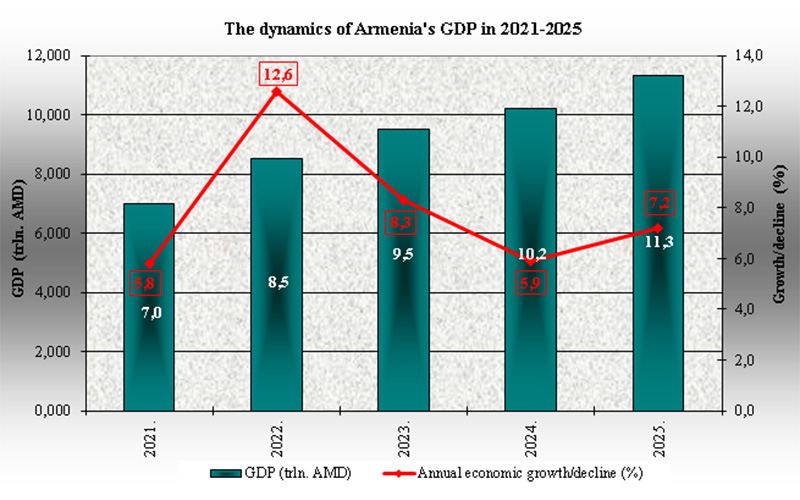
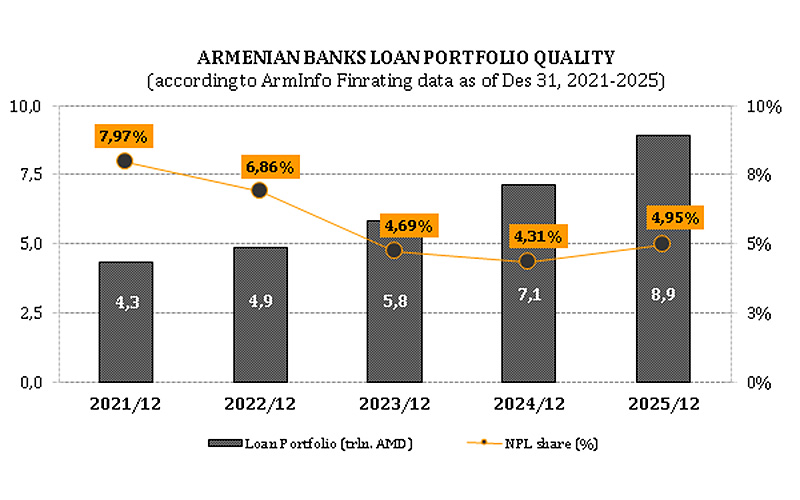
As a result of these steps, the government has saved 4%. All these steps, as Martin Galstyan noted, have also helped address the issue of financial stability. In 2020, when the economy contracted by 7%, a significant gap in loans to GDP developed. Loans, including non-performing loans, remained high amid falling GDP. As a result of the work done with the government, it was possible to mitigate the situation and create anti- cyclical capital buffers to counter future challenges. Currently, the buffers have been increased by another 180 billion drams. In terms of liquidity, Armenia's commercial banks are currently in very good shape, having accumulated 2 trillion drams in national currency and 790 billion drams in foreign currency buffers. Therefore, despite significant uncertainties, any potential shocks should not pose a problem. Furthermore, a deterioration in the quality of commercial banks' loan portfolios has been avoided, with only 1.3% of non-performing loans. Currently, the country's banking system assets account for 110% of GDP, and the loan portfolio accounts for 64%.
It should be noted that the Central Bank Board consists of the Chairman, two Deputy Chairman, and five Board members. The five Board members are elected by the National Assembly of the Republic of Armenia for a six-year term. The highest-ranking official of the Central Bank is the Chairman, who is elected by the National Assembly for a six-year term.