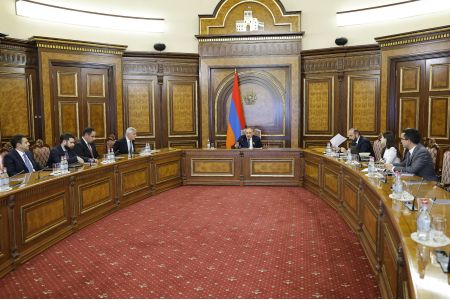


ArmInfo. The construction and operation of storage plants in Armenia will become a new activity subject to licensing. At its April 2 meeting, the RA government approved draft amendments to the laws "On Licensing," "On Energy," and "On State Duty."
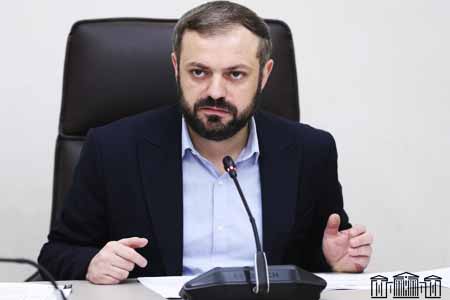
Presenting the package, RA Minister of Territorial Administration and Infrastructure David Khudatyan noted that in recent years, Armenia's energy system has seen a sharp increase in the use of renewable energy sources, particularly solar power plants, resulting in an increase in the share of capacity characterized by unstable and hourly fluctuations in the electricity generation structure. The country's strategic energy development plan until 2040 sets a target of constructing approximately 1,000 MW of solar power plants, including stand-alone power generation units, by 2030. At the current rate of solar power plant growth, this target has already been exceeded in 2025, which, for a number of reasons, is causing serious systemic problems. With such a large number of solar power plants, the system is left with an excess of electricity that cannot be stored due to a lack of storage capacity. The lack of appropriate infrastructure between Armenia and Georgia, and Iran and Armenia, and exports are also impossible, resulting in a number of system problems, including voltage fluctuations, frequency deviations, and more. The integration of renewable energy sources must be regulated, as during peak production periods, the system is often unable to accommodate additional electricity volumes. At the same time, there is high demand for backup capacity, increasing overall system costs and affecting end-user tariffs. As of the end of 2025, 14% of all electricity generated in the country was generated by solar power facilities, with an installed capacity approaching 1,250 MW. Once the Public Regulatory Commission (PRC) issues the appropriate licenses for the construction of new solar power plants, this figure will exceed 1,300 MW.
A solution to the above-mentioned problems could be the rapid implementation of energy storage systems, as well as the reserving of authority to the authorized body to set maximum capacity limits under licenses issued by the Public Utilities Regulatory Commission (PURC) for electricity generation at any type of power plant, as well as to connect generating units of autonomous electricity producers and micro-power producers. Specifically, it is proposed to introduce energy storage as a new activity subject to licensing, with periods of power plant construction and energy storage. The holder of such a license will be granted the right to build a storage plant on the territory specified in the license, purchase and sell electricity on the wholesale market in accordance with market rules, and provide storage services to market participants. Furthermore, energy storage at a facility with a capacity of up to 1 MW during the construction and storage periods, as well as energy storage at a facility with a capacity of over 1 MW exclusively for on-site use during the storage period, will not be subject to licensing. Almost all existing and new generation facilities will be required to have electricity storage capacity.
It is planned to create the possibility of issuing energy storage licenses on competitive terms. Thus, a license holder with a guaranteed energy storage will be required to provide energy storage services at a tariff set by the Public Utilities Regulatory Commission in accordance with the regulatory instructions of the electricity system operator. At the request of the authorized body, these licenses will be issued by the Commission on a competitive basis. The procedure and conditions for the tender will also be established by the Commission. At the same time, taking into account the relevant regulations governing the implementation of public-private partnership programs, including those related to tender procedures, the draft stipulates that the aforementioned tender will be conducted by the Public Utilities Regulatory Commission.