

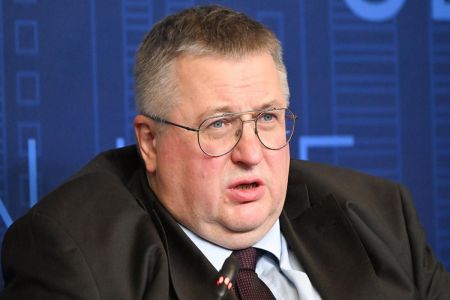
ArmInfo. Discussions about the undesirability of Russian companies' presence in Armenia will raise questions about the operation of Armenian businesses in Russia. Russian Deputy Prime Minister Alexei Overchuk stated this in an interview with TASS. "The reality is that the Armenian railway, if it survives, will remain a line serving the needs of its own economy, whose real prospects are tied to the EAEU.
Our interest is in increasing trade with Armenia, as with all states in the region, but if we are told that the presence of Russian companies in Armenia is not in Armenia's interests, then, based on the principle of reciprocity, it is fair to ask: if Russian companies and entrepreneurs cannot operate and make money in Armenia, then why can Armenian companies and entrepreneurs operate and make money in Russia?" he noted.
Overchuk emphasized that foreign economic relations are a "two-way street." "Without mutual trade, there is no freight movement, and the capacity of the Armenian railway also depends on this. Armenian businesses doing business in Russia should pay attention to this. After all, we believe that the issue is being posed precisely in this context, and this needs to be discussed openly," the Russian Deputy Prime Minister noted. Armenian Prime Minister Nikol Pashinyan has stated outright that Russian businesses in the republic are not under threat, but the facts speak to the contrary.
"Last summer, we directly asked the Prime Minister of the Republic of Armenia a question about the prospects for Russian investors in Armenia. He answered our direct question bluntly: Russian businesses in Armenia are not under threat. The facts, however, speak to the contrary. We see that we are being told one thing, while in reality, something completely different is happening. First, the property rights of a Russian businessman with interests in electricity procurement and retail were violated, and now a Russian state-owned company has been offered a concession," he said.
As Overchuk noted, Moscow is aware that, in addition to Westerners, there are those in Armenia itself who want to curtail relations with Russia and remove Russian businesses from the republic.
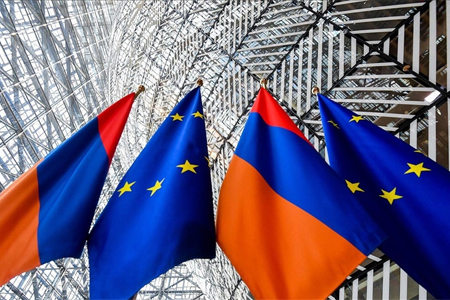
"We see that Armenia adopted a declaratory law last year on its desire to join the European Union, and efforts are being made to adopt EU standards. We cannot ignore the numerous statements by this country's leaders about their desire to join the European Union. The confiscation of the property of a Russian businessman and the proposed sale of a railway concession fit into this framework for us," the Russian Deputy Prime Minister noted.
According to him, Armenian business representatives should soberly assess the prospects for selling goods in the EU. "I am confident that Armenian businesses are soberly assessing the prospects for selling Armenian fruit and vegetable products, Armenian mineral water, and Armenian alcohol in the European market. Workers in these industries, as well as the transporters of these products, should also consider this," he noted. "Of course, some will argue that Armenia has a European perspective and only needs ties with the EAEU until trade with the EU replaces trade with the EAEU. However, Europeans' interest in allowing Armenian goods to enter the European market has already been expressed," Overchuk added.
At the same time, he emphasized that if Russia no longer has interests in Armenia, there will be few reasons for cargo traffic through its territory. "Obviously, tariffs will play a role, but if Russia no longer has interests in Armenia, there will also be few arguments in favor of moving our cargo in this direction," the Russian Deputy Prime Minister said.
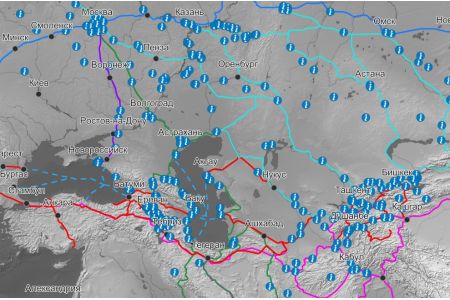
According to him, Armenia's ability to negotiate the direction of cargo flow after the Meghri section is limited; the issue has already been resolved differently. "The desire to route cargo through Armenia is understandable, but it must be acknowledged that this issue has already been resolved differently, and by signing the relevant documents, Armenia agreed to this. This should have been agreed upon on the shore, but now the room for negotiation is very limited," Overchuk noted.
"Western investors and neighbors may lose patience. If this deal is ever finalized, Armenia will receive only 26% of the Meghri section management company.
Incidentally, our railway colleagues are already wondering whether Russia will use the Turkish railway," he said.
According to him, Armenia has decided to cede 74% of its transit revenues by agreeing to the "Trump Route," and that is its right.
"Cargo traveling along the 'Trump Route' will go directly to Turkey, and Armenia will receive its 26% share. Their decision to cede 74% of their transit revenues is their right, but if Armenia had remained in the trilateral working group co-chaired by the deputy prime ministers of Azerbaijan, Armenia, and Russia, construction of this road would already be nearing completion, and it would remain the sole property of the country through whose territory it passes," he noted.
"There are no, and should be no, illusions about how the main cargo flow will proceed after Nakhichevan. The sections we were offered to restore will primarily serve the needs of the Armenian economy," Overchuk added.