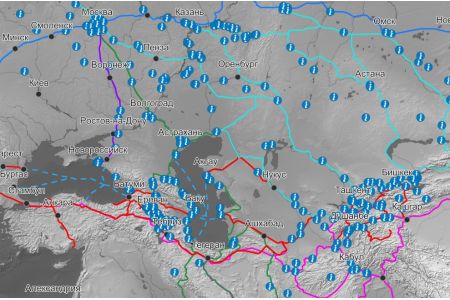



ArmInfo. Istanbul and Yerevan will become the main alternative transport hubs for Russian tourists in the 2026 summer season due to the escalating conflict in the Middle East. This opinion was expressed by Alexey Volkov, President of the National Union of Hospitality Industry, in an interview with TASS.
"Considering the situation in the United Arab Emirates, Russians will certainly try to avoid Dubai and Abu Dhabi as transport hubs in the near future. At the same time, they will actively use Istanbul and Yerevan as alternative hubs - traffic will increase by 35% and 15%, respectively," the expert said. He added that some transit traffic will also be redistributed to Azerbaijan, Georgia, and Egypt.
In the summer of 2026, Volkov noted, beach holidays traditionally remain the most popular. Every year, 80% of Russian tourists choose this option. This year, experts predict that Russians will choose Southeast Asian countries, with Turkish resorts also maintaining their leading position.
"Instead of Dubai, Thailand, Vietnam, and Bali will be in demand this summer. And, of course, Turkey and Egypt. Tour operators are also considering North Korea and Indonesia for our tourists. We expect a 30% increase in tourist flow in Turkey overall, as it will offer an alternative to the coast and the Krasnodar Krai due to flight cancellations and the drone threat, but also an alternative to the Middle East," the expert added. Discover Tech Advertisement
Dubai has been a popular resort destination for Russians in recent years due to its affordability and variety, from family vacations to extreme sports. According to the Dubai Department of Economy and Tourism, it will welcome 1.4 million tourists from Russia in 2025 alone, a 9% increase from 2024. However, already this spring, due to the escalation of the conflict in the Middle East and disruption of air travel, demand for tours to the UAE fell sharply by 20-50% compared to February, according to the Association of Tour Operators of Russia. Experts predict an even greater decline amid the unstable situation.
On February 28, the US and Israel launched a military operation against Iran. Major Iranian cities, including Tehran, were hit. The White House justified the attack by citing missile and nuclear threats allegedly emanating from Tehran. The Islamic Revolutionary Guard Corps announced a large-scale retaliatory operation, attacking targets in Israel. US targets in Bahrain, Jordan, Qatar, Kuwait, the UAE, and Saudi Arabia were also hit.