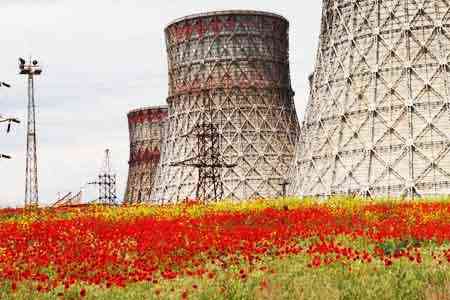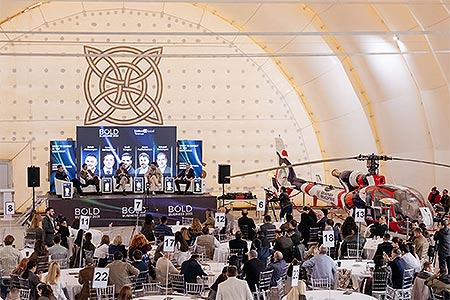


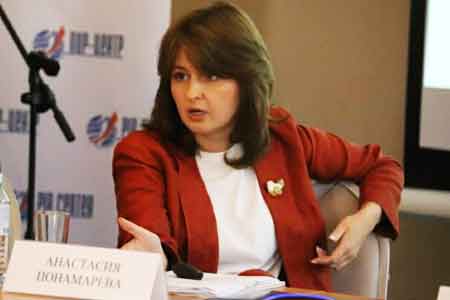
ArmInfo.Currently, Armenia is facing an important energy choice, one with a geopolitical dimension. Anastasia Ponomareva, PhD in sociology and professor at the Institute of International Relations at the National Research Nuclear University, made this statement at a press conference in Yerevan on "BRICS+ Nuclear Energy Cooperation." She acknowledged that Armenia is currently in the process of selecting a partner for the construction of a new nuclear power plant.
In this regard, the expert recalled that the BRICS Nuclear Energy Platform was established in 2024, and in September 2025, the first strategic document was adopted, outlining the platform's priorities, including attracting financing and ensuring sustainable supplies. Moreover, as Ponomareva noted, in 2025, the BRICS New Development Bank (NDB) announced its readiness to finance nuclear energy projects for the first time.
"At this rate, by the mid-21st century, BRICS countries will account for approximately half of the energy consumption market. Among the participants, in addition to the State Atomic Energy Corporation Rosatom, are the China National Nuclear Corporation (CNNC) and South African organizations. This is truly international cooperation, which is gradually gaining substance through the holding of relevant strategic sessions," the professor said.
Speaking about Armenia in this regard, she noted that the country, with its rich history in nuclear energy, is currently at a crossroads. She recalled that the construction of a new nuclear power unit using small modular reactor technology is currently under discussion, but a partner has not been selected yet. In this vein, Ponomareva called for a comparative analysis of proposals from Russia, the United States, and China. She pointed out that, following the signing of the "123 Agreement" with the United States on February 9, 2026 (on cooperation in the peaceful use of nuclear energy, which creates a legal basis for the export of American nuclear technology), the United States is actively seeking to participate in these processes. "However, the United States has virtually no operational industrial designs. Meanwhile, Russia is offering a water-moderated power reactor (VVER-1200), which is already successfully operating around the world. On one hand, the American proposal has an indefinite certification timeline, while on the Russian side, we see a working reactor and a promise to implement projects as quickly as possible. Furthermore, Rosatom is a long-standing partner of Armenia and offers a full cycle of services. Moreover, Russia is interested in maintaining its presence in this region," the professor noted.
Ponomareva noted that a new player has also emerged in these discussions: China, which is unveiling its first commercial land-based reactor, the Lin Long. The expert noted that China has a clear deadline for completing construction, and given the country's growing nuclear energy sector, 28 reactors are currently under construction, exceeding the number under construction in other countries.
"They are actively participating in this process, as for them, it is part of the Nuclear Silk Road, aimed at exporting Chinese nuclear technology, which, under the One Belt, One Road concept, envisions 30 Chinese reactors by 2030. Given all this, it is important to understand that Armenia's choice has a geopolitical dimension," Ponomareva noted.
She clarified that for the US, entering the market is an attempt to break Armenia's energy dependence on Russia, and if Armenia makes such a choice, it will mean the country adopts American safety standards and regulations. "For Russia, it's important to maintain its last line of defense in the South Caucasus, and for the Russian side, it's critical to uphold long-standing partnerships in all sectors, including nuclear energy. For China, this is an opportunity to enter the South Caucasus. Moreover, China has an advantage: electricity will be significantly cheaper," the expert noted.
Therefore, as Ponomareva noted, for Armenia, this is a choice for the future: if the country agrees to the US terms, it risks becoming technologically and politically dependent on a single source. "However, another path could be chosen-multi-vectorism-that is, interacting with Russia and simultaneously beginning cooperation with China through the BRICS nuclear platform. In other words, Armenia is faced with not only a technical but also a civilizational choice. The main thing is that ultimately, the choice is made in the interests of the Armenian people," Ponomareva concluded.
Recall, the possibility of constructing several small modular nuclear reactors with a capacity of 50-60 MW was previously discussed in Armenia. Moreover, the possibility of constructing them in several regions of the country was even considered. However, one of the most significant issues in this area is the lack of experience in operating these reactors on the part of Armenian nuclear scientists. Earlier, Gera Sevikyan, Advisor to the Director General of the Armenian Nuclear Power Plant, told ArmInfo that a fundamental decision had been made to build a new unit in the country using the Russian TOI reactor with a capacity of 1,200 MW. However, as Gnel Sanosyan, Minister of Territorial Administration and Infrastructure of the Republic of Armenia, noted, constructing a unit of such capacity is fraught with problems, since the capacity of Armenia's entire energy system remains the same: 1,200 MW. Later, Armenian Prime Minister Nikol Pashinyan announced that the country had made a fundamental decision to build a modular nuclear reactor. Moreover, according to Armenian authorities, the country of manufacture for the modular nuclear power plant will be determined in 2026-2027.