


ArmInfo. The construction of small modular reactors (SMRs) is not for Armenia. We need to find a more suitable option. This opinion was shared by energy security expert, PhD in engineering, and associate professor Artur Avetisyan.
Modular nuclear power plants are experimental projects, initially developed for two main purposes.
In large countries (Canada, Russia, China, the United States, etc.), there are regions that lack infrastructure and experience energy supply problems. The best example of this is the Akademik Lomonosov floating nuclear power plant (70 MW), which has been providing power to the city of Pevek in Russia since 2020. Incidentally, this nuclear power plant is one of only two modular power plants operating in the world. "The other is located in China and is the first small land-based modular power plant in operation, and so far the only land-based plant approved by the IAEA," Avetisyan wrote on social media.
Another goal of modular power plants, the expert continued, is to sell them to countries that do not have large conventional nuclear power plants but are interested in peaceful nuclear energy and wish to join this prestigious family. In this context, the example of Kyrgyzstan is noteworthy. Kyrgyzstan is exploring the possibility of building its first nuclear power plant and is interested in RITM-200N reactors with a capacity of 55 MW. According to the project, commissioning is scheduled for 2029.
"Armenia, a long-standing member of the prestigious family of countries using peaceful nuclear energy, is not included in the two aforementioned groups of countries. Therefore, the solutions must also be different," the energy security expert concluded.
As a reminder, three years ago, Maria Longhi, coordinator of US government assistance programs for Europe and Eurasia, reported that the United States was considering the construction of small modular nuclear reactors in Armenia and other Eurasian states, "seeking to strengthen their energy independence." She added that in a number of countries, including Armenia, the US is evaluating the possibility of creating small modular nuclear reactors built using American technology, which could lead to greater energy independence from both Russia and China.
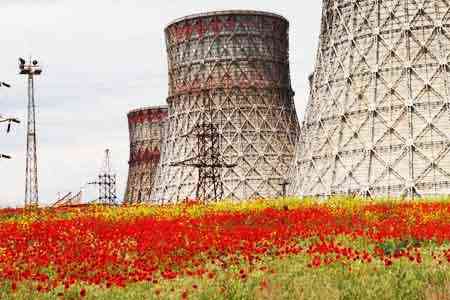
It is important to remember that Unit 2 of the Armenian Nuclear Power Plant (ANPP) is currently undergoing a second program to extend its service life by 10 years, until 2036. By that time, a new nuclear power unit is scheduled to be built in the republic.
Armenia has not yet decided on the design of the new unit. Negotiations are underway with potential technology suppliers. Countries such as the US, Russia, South Korea, and China have expressed interest in building a new NPP in Armenia. Back in July 2023, the Armenian government sent a working group to the United States to familiarize itself with American nuclear technologies, small modular reactors, and their developments. Pashinyan has repeatedly stated that a strategic decision has been made to build a small modular nuclear power plant. "Why? One important reason is that, as experts explained to us, accidents at modular nuclear power plants are considered local emergencies, meaning that in the event of an accident at a nuclear power plant, there would be no threat beyond a 500-meter radius," Pashinyan stated.
On January 29, when asked by an ArmInfo correspondent whether Armenia had chosen the United States as a partner in the construction of small modular reactors (SMRs), given the American president's recent announcement of the upcoming signing of an "excellent agreement on cooperation in the field of peaceful nuclear energy with Armenia," Prime Minister Pashinyan stated that Armenia is developing cooperation with all countries possessing nuclear technology, and the necessary decisions will be made after receiving reliable answers to all possible questions.
In response to the observation that many experts are inclined to believe that small modular reactors are risky because, aside from Russia and China, no other country has practical experience in their construction and operation, Pashinyan noted the need to verify the qualifications of these specialists. In this regard, he emphasized that Armenia is cooperating with institutional experts on this issue. "But no concern, no reaction will be ignored," he said.