


ArmInfo. Armenia is developing cooperation with all countries possessing nuclear technology. The Armenian Prime Minister stated this during a briefing on January 29, answering an ArmInfo correspondent's question about whether Armenia had chosen the United States as a partner in the construction of small modular reactors (SMRs), given the US President's recent announcement of the upcoming signing of an "excellent agreement on cooperation in the field of peaceful nuclear energy with Armenia."
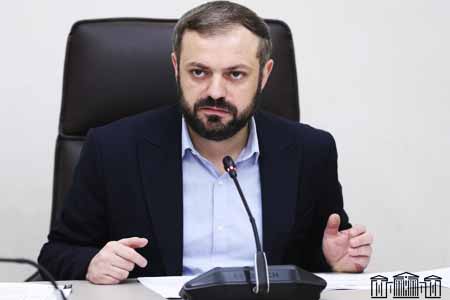
"We are currently working with all partners-France, Russia, the US, South Korea, and China-and the necessary decisions will be made after receiving reliable answers to all possible questions," the head of government said.
Responding to the observation that many experts are inclined to believe that small modular reactors are risky, since no other country besides Russia and China has practical experience in their construction and operation, Pashinyan noted that there is a need to test the qualifications of these specialists. In this vein, he emphasized that Armenia is cooperating with institutional experts on this issue. "But not a single concern, not a single reaction will be ignored," he said.
At the same time, when asked by a journalist to elaborate on the content of the so-called "excellent agreement with the US," the prime minister merely noted that it concerns cooperation in the field of nuclear energy.
As a reminder, three years ago, Maria Longhi, coordinator of US government assistance programs for Europe and Eurasia, reported that the United States was considering the construction of small modular nuclear reactors in Armenia. "The United States is considering the construction of small modular nuclear reactors in Armenia and other Eurasian states, seeking to strengthen their energy independence," Longhi noted. She added that in a number of countries, including Armenia, the US is evaluating the possibility of creating small modular nuclear reactors using American technology, which could lead to greater energy independence from both Russia and China.
Earlier, in an interview with ArmInfo, energy security expert Artur Avetisyan stated that, as a specialist, the SMR option, whether Russian, Chinese, American, or French, is unacceptable to him. "Firstly, because there is an element of uncertainty, and secondly, I think Armenia risks not meeting the deadline. After all, it's not just a matter of making a decision." "It will also take time to implement these untested technologies," Avetisyan notes.
"If Armenia had 10 or even 20 years to study and make a decision, then perhaps we could take a break and take stock, but we don't have that time; we need to make a decision today. Currently, given our capabilities and, most importantly, the information available, two options are preferable for Armenia. The first option is that of the American company Westinghouse (one of the leading electrical engineering companies in the US)-the construction of two nuclear power plants, each with a capacity of 300 MW. The second option is the nuclear power plant project proposed by the Russian side, with a capacity of 1,200 MW, but this would require a long-term electricity supply agreement with Iran, so that we could become a guaranteed supplier of electricity to Iran, which would ensure the safe and efficient operation of this nuclear power plant."
The first option will be more expensive, as American technology is more expensive. But perhaps the US will be willing to offer more favorable terms, which will offset the high cost. "In both cases, albeit with great difficulty, I think we will meet the deadline," Avetisyan noted.
In an interview with ArmInfo in 2024, Yuri Sviridenko, Head of Integrated Projects at Rosatom Service, said that, as of that time, Rosatom State Corporation had references for small modular reactors, as evidenced by the floating NPP in Pevek, the small NPP under construction in Yakutia, and Rosatom's first export contract for the construction of a small NPP in Uzbekistan. "These are practically all the SMR NPPs in the world. And that's not counting Russian icebreakers, which use these types of reactors." In other words, Russia has accumulated vast, unique experience working with SMRs-other examples outside the country, with the exception of China, are either at the design stage or in the process of obtaining design licenses," he noted.
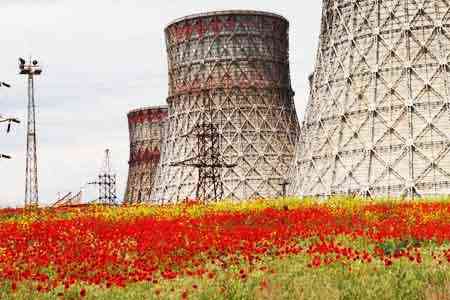
As a reminder, the existing nuclear power plant in Armenia was scheduled to be decommissioned in 2016, but its service life was extended to 2026. Authorities then decided to extend the service life of Unit 2 again until 2036.