

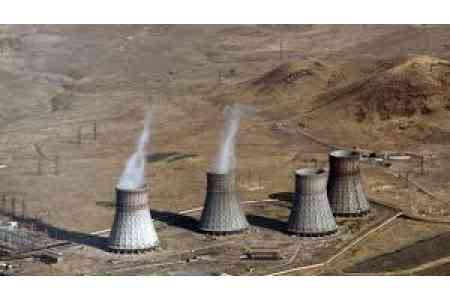
ArmInfo. The Turkish-Azerbaijani Solidarity and Culture Union has voiced support for the opening of the Alican border crossing on the Armenian-Turkish border, also reiterating the call for the prompt closure of the Armenian Nuclear Power Plant (ANPP) in Metsamor.
According to the Turkish newspaper Guvengazetesi, Sefer Karakoyunlu, President of the Union and spokesperson for the Federation of Turkish-Azerbaijani Unions, has described the potential opening of the Alican checkpoint as a strategic opportunity for regional peace and cooperation.
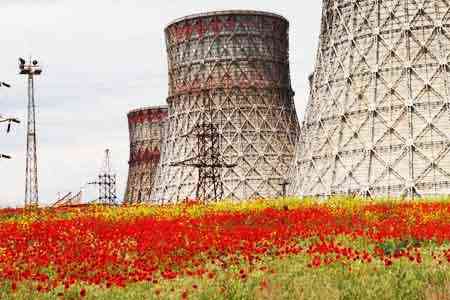
However, he touched on the issue of the Armenian Nuclear Power Plant, stating that the unions are categorically opposed to the continued operation of the plant and demand its immediate cessation. Karakoyunlu stated that the plant is located in an active seismic zone, too close to the Turkish border. The Union claims that the facility utilizes outdated technologies that endanger the entire Caucasus region. "There is no Metsamor, no nuclear energy in a seismic zone; yes to life, not death," Karakoyunlu stated, arguing that lasting peace is impossible while a nuclear threat persists.
Recall, the Armenian NPP continues to operate under rigorous international oversight. Currently, a project is underway to extend the life of the second power unit until 2036. As part of this process, the plant will undergo a scheduled six-month shutdown this year for technical upgrades. The International Atomic Energy Agency (IAEA) remains the primary authority on the station's viability. Director General Rafael Grossi has praised the life-extension efforts, noting significant safety enhancements. Since the plant's restart in 1995, there have been no emergency incidents. Alexey Likhachev, Rosatom CEO, recently described the facility as one of the most resilient Soviet-era projects, specifically noting its ability to withstand major seismic activity in the past.