

ArmInfo. Armenia's current account deficit increased in 2025 compared to 2024, reaching 4.4% of GDP, up from 1.6% in the same period last year, as stated in the World Bank's report "Armenia's Economic Pulse: Fairer Markets for Inclusive Growth."
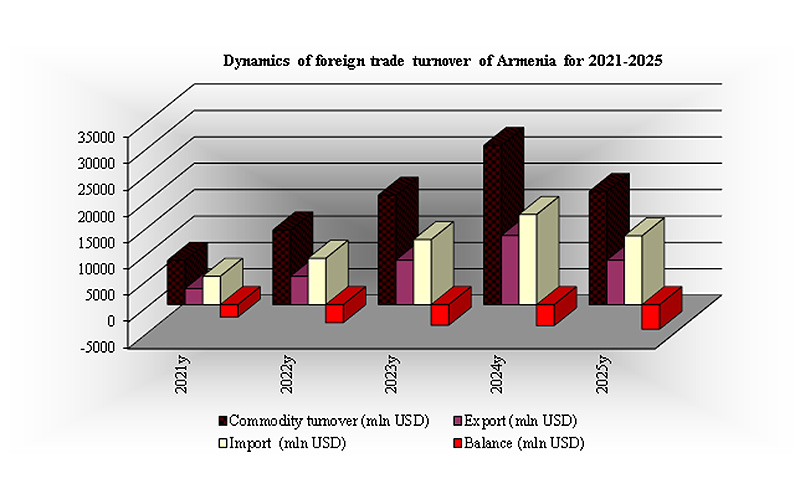
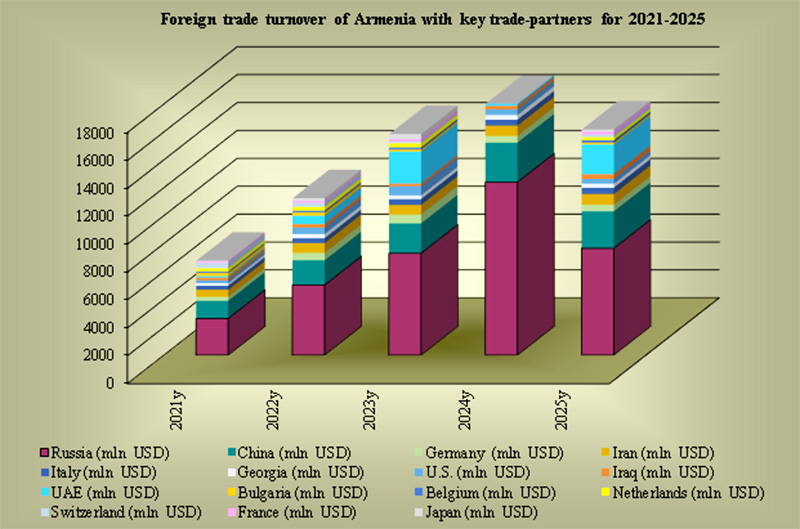
The indicator worsened in the first quarter, followed by a slight slowdown in the deficit growth rate in the second quarter, due to a significant recovery in the services sector since May, driven by an increase in tourist inflows. The report notes that Armenia's exports and imports decreased by 52.8% and 39.9%, respectively, in January-June. The 77% decline in trade volumes was due to a decrease in the re-export of precious stones and metals, which accounted for one-third of total exports.
Armenia's import base being four times larger than its export base, led to an 86% increase in the trade deficit year-on-year as a result of the volume decline. However, traditional export groups such as processed food products and agricultural products grew by 32% and 36%, respectively.
According to the report, the current account deficit in the first half of the year was financed through the issuance of Eurobonds and other investments. Specifically, in March 2025, the fifth Eurobond issue, worth $750 million, was issued, part of which was used to refinance the previous tranche.
The second major component of current account deficit financing concerned other investments in the form of bank deposits and foreign currency account balances. During this period, only 14% of the current account deficit was covered by FDI. The report states that net FDI inflows declined from 2.2% of GDP in 2023 to 0.3% in 2024, after which they increased slightly to 0.6% in the first half of 2025. Most of this FDI was directed toward the mining and aviation sectors. The World Bank attributed the overall decline in FDI to the outflow of Russian investment in the mining industry.
It should be noted that, according to the Central Bank's updated forecast in September, there will be a decrease in foreign trade turnover by the end of 2025. Experts are expecting a decline by 30.4-36.8% and imports by 32.1-32.7%, following nearly equal growth in exports and imports in 2024 of 35.6-31.4%. An earlier IMF forecast also predicted a decline in both exports and imports for Armenia in 2025, but by a more modest 10.4% and 5.4%, respectively. The World Bank, in its earlier forecast, unlike the Central Bank of Armenia and the IMF, expected only a slowdown in growth rates for both exports and imports in Armenia in 2025, to 5.6% and 7%, respectively.