


ArmInfo. Armenia's status as an electricity exporter may decrease significantly, and the time is not far when, having a nuclear power plant, rich hydropower resources and the potential of solar energy development, the country will simply turn into a net importer of electricity.
This opinion was expressed by Doctor of Political Sciences, expert on the development of transnational international infrastructure projects Vahe Davtyan, reacting to statements by Minister of Energy of the Russian Federation Nikolay Shulginov.
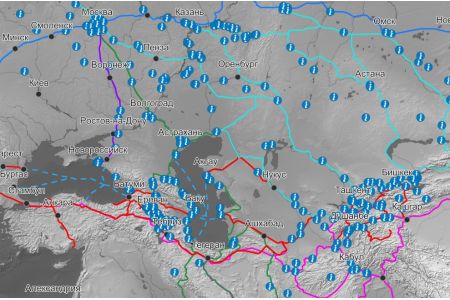
Yesterday, in an interview with RIA Novosti, Shulginov said that Moscow was holding negotiations with Tehran and Baku regarding the possibility of exporting 300 MW of electricity using the existing infrastructure through Azerbaijan to Armenia and further to Iran. According to the minister, the Russian side is now simply considering the possibility of supplying electricity through the territory of Azerbaijan to Armenia, then to Iran, and then, possibly, to other countries. Shulginov noted that at the first stage, Moscow agrees with Tehran and Baku to use the existing energy infrastructure without resorting to new construction. The minister emphasized that all participants in the project have an interest in its implementation.
According to the publication, in August the Ministry of Energy of the Russian Federation reported that Russia, Iran and Azerbaijan agreed to complete work on a feasibility study for unifying electric power systems by the end of 2023. During the work, various conditions for the transmission of electricity through the electrical networks of the participating countries are analyzed in detail, and the feasibility of constructing additional energy facilities is also considered, the ministry explained.
Meanwhile, according to Davtyan, in fact, Moscow shows that the Russia-Azerbaijan-Iran, energy corridor promoted by Azerbaijan in recent years, is not the only project through which Russia is ready to integrate into the energy systems of the region. And this, perhaps, is not bad, considering the fact that one of Azerbaijan's goals continues to be the blockade of Armenia's energy transport.
However, at the same time, the expert believes that if the Russia-Azerbaijan-Armenia-Iran electricity route comes to life, then the project of the North-South electricity corridor, which is planned to ensure mutual flows between Iran, Armenia, Georgia and Russia, will be under big question. "By delaying the construction of the third Iran-Armenia overhead power transmission line as much as possible, the current leaders of Armenia actually created the prerequisites for the recognition of the Azerbaijani factor in the energy system of the region. Although it was Armenia, that being a country with an excess of electricity, was considered as a key player in the "North-South" framework. Even if the construction of the third Iran- Armenia air line is completed, it turns out that it will be used to export Russian electricity coming from Azerbaijan>, the expert emphasizes.
Meanwhile, according to him, the supply of electricity to Iran through the logistics offered by Moscow means that Armenia will be increasingly squeezed out of the Iranian market. , he stressed.
According to the analyst, there are two ways to deliver Russian electricity to Iran through the territory of Azerbaijan and Armenia: swap contracts that do not involve direct deliveries, and the establishment of Azerbaijan-Armenia telecommunications through the territory of Artsakh.
If we consider the issue in the logic of Shulginov's statement (), then we can talk about power lines passing through Berdzor (Lachin), as well as Sotk-Aterk. Both are currently unavailable. In this regard, it should be noted that in the spring of 2022, Baku began laying a power line near the Berdzor corridor, near the village of Aghavno. "In any case, the implementation of such a scenario ultimately reduces the status of Armenia as an electricity exporting country. With such steps, the day is not far when, having a nuclear power plant, rich hydropower resources and the potential of solar energy development, we will simply turn into a net importer of electricity>, Davtyan. noted.