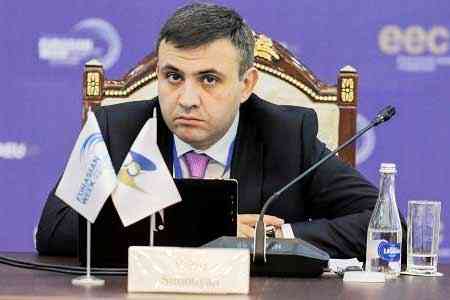


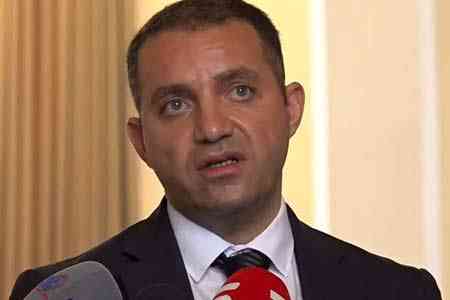
ArmInfo.The Ministry of Economy intends to transform anti-crisis state assistance programs into development programs. Vahan Kerobyan, head of the country's economic department, stated this in an interview on the telegram channel of the Ministry of Economy.
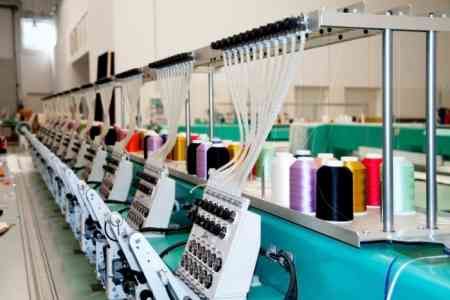
In particular, he said that at this stage, the Ministry modified the 1st anti-crisis program, within the framework of which it is planned to provide loans up to 1 million drams to SMEs working in the manufacturing industry. Kerobyan said that the state will allocate significant funds to modernize equipment, production lines and establish SMEs in the manufacturing industry. "We want to subsidize leasing rates for SMEs so that their share remains only 2%," Kerobyan said.
In this regard, the minister expressed hope that the government will approve this program next week.
In connection with the outbreak of the coronavirus pandemic, the Armenian authorities have developed 25 anti-crisis measures aimed at neutralizing the negative social and economic consequences. According to the data of the Statistical Committee of the Republic of Armenia, for 10 months of this year, the manufacturing industry of Armenia grew by 0.2% per annum (from a 2.9% decline a year earlier), amounting to 1.1 trillion drams, of which 153 billion drams fell in October with a monthly growth of 13.1%. Moreover, the subsidence of volumes in January-October 2021 was observed in the production of cigarettes (by 13.5%), computers, electrical and optical equipment (by 0.9%), the chemical industry (by 25.1%), basic metals (by 17, 3%), finished metal products (42.3%), jewelry (36.6%).
At the same time, a significant growth in the manufacturing industry was recorded in the production of textiles (2.1-fold), machinery and equipment (by 87.5%), clothing (by 24.9%), and other non-metallic mineral products (by 18.9%). and rubber products (by 18.3%). In the manufacturing industry, the leaders in terms of production are food (402.9 billion drams), beverages (160.4 billion drams), basic metals (114.5 billion) and cigarettes (111.1 billion drams).